
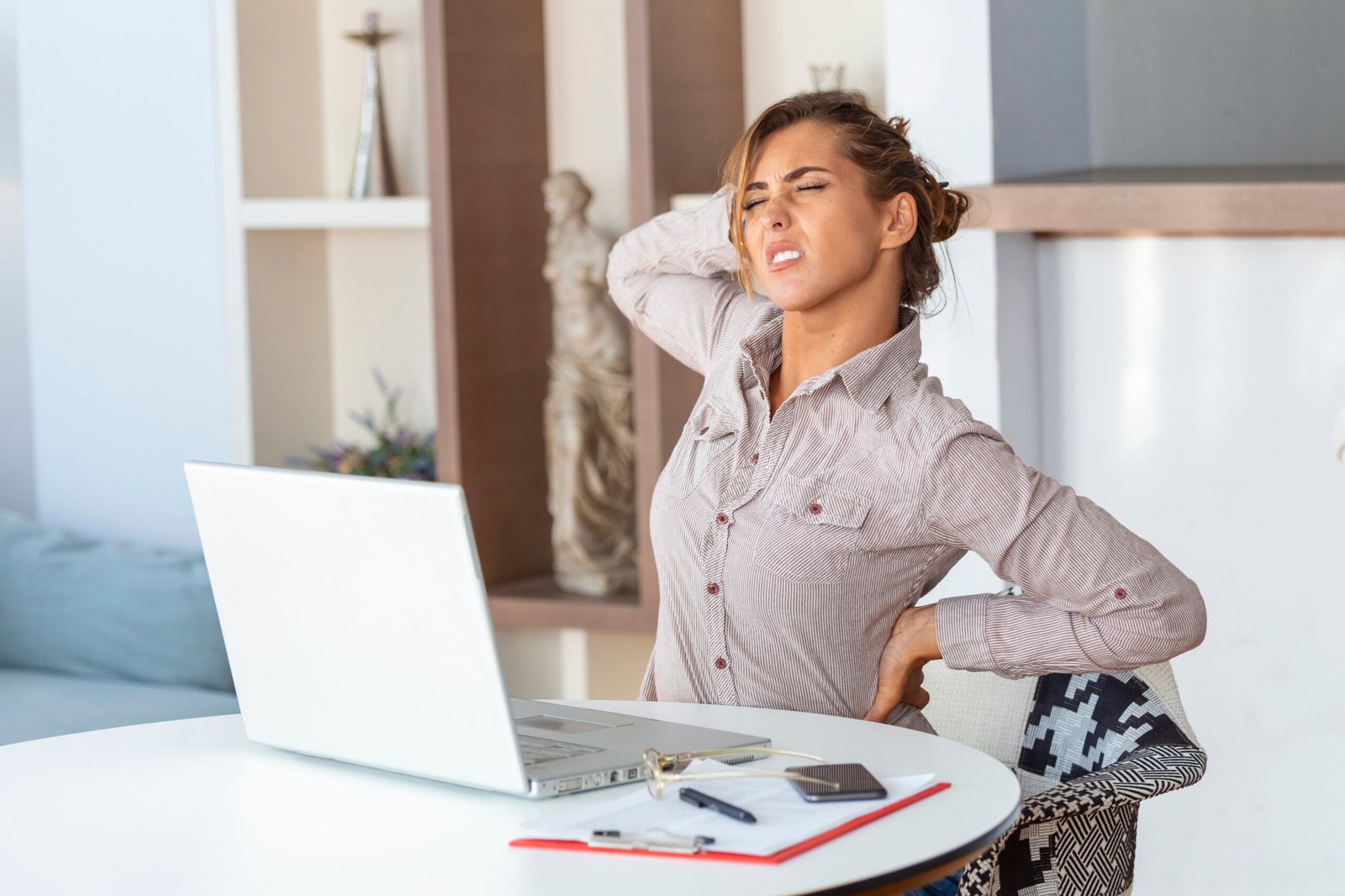
Why Back Pain Occurs
The spine, muscles, and ligaments in the back work together to support movement and posture. Strain on any of these structures can cause discomfort. Common reasons include:
-
Prolonged sitting on an uncomfortable chair
-
Muscle weakness or imbalance
-
Pregnancy-related changes
-
Period-related cramps and inflammation
-
Heavy lifting or sudden movements
-
Poor sleeping positions
Understanding the cause of your pain is the first step to finding the best solution on how reduce back pain effectively.
Office Tips: Sitting and Posture
If you spend long hours at a desk, choosing the right seating can help prevent or reduce discomfort. An office chair to reduce back pain or a supportive chair to reduce back pain can make a significant difference. Choose chairs that offer adjustable lumbar support, armrests, and seat height to help maintain correct posture.
Tips while sitting:
-
Keep your back straight and shoulders relaxed
-
Feet flat on the floor
-
-
Adjust the screen height to avoid leaning forward
These small adjustments help prevent strain and teach your back muscles to support your posture naturally.
Exercises to Reduce Back Pain
Regular movement strengthens your back and core muscles, which are essential for pain prevention. Simple exercises to reduce back pain include:
-
Cat-Cow Stretch: Increases spinal flexibility
-
Bridge Pose: Strengthens glutes and lower back
-
Child’s Pose: Relieves tension in the spine
-
Pelvic Tilts: Improves lower back mobility
-
Gentle Walking or Swimming: Keeps muscles active without strain
Incorporating these exercises consistently helps you manage discomfort and teaches you how can I reduce back pain naturally.
Pregnancy and Postpartum Back Care
Pregnancy often causes lower back discomfort due to weight gain and hormonal changes. Here’s how to manage it:
-
How to reduce back pain while pregnant: Focus on prenatal exercises, wear supportive shoes, and avoid standing for long periods.
-
How to reduce back pain during pregnancy: Use a pregnancy pillow while sleeping, maintain good posture, and consider gentle stretching.
-
How to reduce back pain after C-section naturally: Gentle walking, postpartum stretches, and supportive postures can help alleviate pain without medication.
For many women, understanding how to reduce back pain for female bodies during and after pregnancy can prevent long-term discomfort.
Back Pain During Menstruation
Period cramps often trigger lower back pain. Here’s how to manage it:
-
How to reduce period back pain: Apply heat packs, do gentle yoga stretches, and stay hydrated.
-
How to reduce back pain during period: Over-the-counter pain relief and light movement can ease tension.
These methods help reduce discomfort and allow you to continue daily activities with less disruption.
Nutrition for Back Health
Certain foods can reduce inflammation and support muscle and joint health. Consider including foods to reduce back pain such as:
-
Include fatty fish such as salmon and mackerel, which are high in omega-3 fatty acids.
-
Leafy greens for magnesium and calcium
-
Nuts and seeds for anti-inflammatory benefits
-
Turmeric or ginger for natural inflammation relief
A balanced diet complements physical activity in helping you how reduce back pain at home.
Sleeping Positions and Support
Proper sleep posture is crucial. How to sleep to reduce lower back pain includes:
-
-
Side sleeping with a pillow between the knees
-
Avoid sleeping on your stomach, which can strain the spine
Quality sleep helps muscles repair and reduces stiffness in the morning.
Tips for At-Home Relief
You don’t always need a doctor to manage mild back pain. Here are simple strategies for how to reduce back pain at home:
-
Apply heat or cold packs for short-term relief
-
Gentle stretching before and after sitting
-
Maintain good posture while using devices
-
Strengthen your core and back muscles gradually
-
Use supportive seating for long periods
These steps help you manage daily discomfort and improve your spine health.
FAQs
1. How can I decrease pain naturally?
Regular stretching, strengthening exercises, proper posture, and anti-inflammatory foods are effective ways to reduce back pain without medication.
2. How to decrease pain during pregnancy?
Focus on gentle prenatal exercises, supportive pillows while sleeping, proper footwear, and frequent movement to prevent stiffness.
3. What is the best chair to reduce pain?
A chair with lumbar support, adjustable height, and armrests helps maintain proper posture and reduces strain during prolonged sitting.
4. How to decrease period pain?
Heat therapy, light yoga, hydration, and over-the-counter pain relievers can ease lower back discomfort during menstruation.
5. How to sleep to decrease lower pain?
Sleep on your back with a pillow under the knees or on your side with a pillow between the knees. Avoid stomach sleeping to reduce spinal strain.
Conclusion
Back pain is a common issue that affects people of all ages, especially those who sit for long periods, are pregnant, or experience menstrual discomfort. Understanding how decrease back pain involves a combination of proper posture, exercise, nutrition, supportive seating, and sleeping habits. Whether you are looking for how to decrease lower back pain, postpartum care, or how to reduce back muscle, consistent healthy habits can significantly improve comfort and mobility.
By incorporating exercises, ergonomic seating, diet changes, and proper sleep, you can manage and prevent back discomfort, leading to better overall health and daily productivity.
Reference
https://health.ucdavis.edu/blog/cultivating-health/8-tips-to-help-ease-your-back-pain/2022/06
https://www.mayoclinic.org/healthy-lifestyle/adult-health/in-depth/back-pain/art-20546859
https://my.clevelandclinic.org/health/diseases/7936-lower-back-pain

1 Comment