
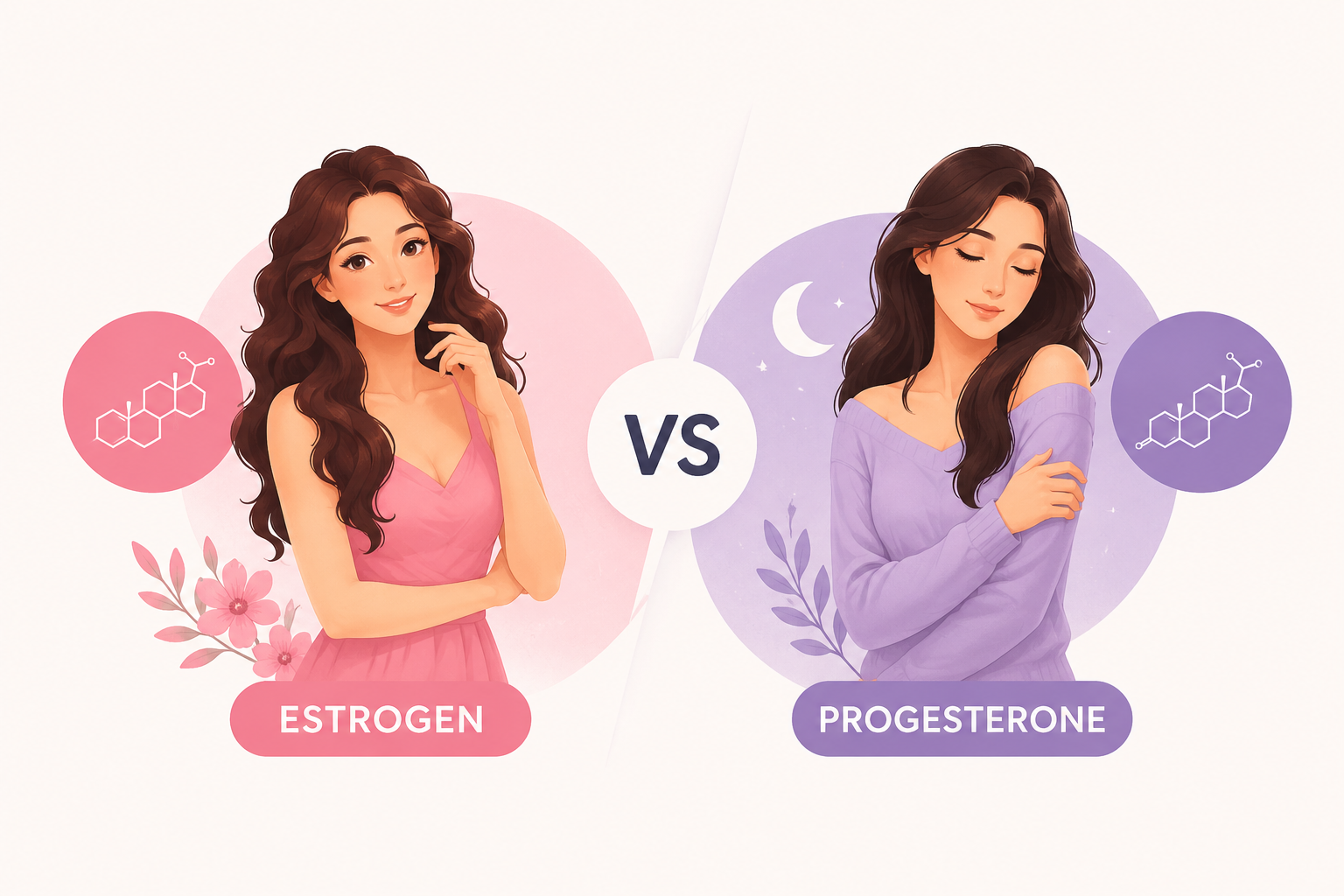
Estrogen and progesterone are two of the most important hormones in the human body, especially for reproductive health. They work together to regulate the menstrual cycle, support pregnancy, and influence many other body functions, including bone strength, heart health, mood, and skin. Although these hormones often work as a team, they have distinct roles. Understanding the difference between estrogen and progesterone can help you better manage hormonal health and recognize signs of imbalance.
What Is Estrogen?
The estrogen definition refers to a group of hormones primarily produced by the ovaries in women, although smaller amounts are also made by the adrenal glands and fat tissue. Men produce estrogen too, but at much lower levels.
The estrogen hormone plays a vital role in developing female reproductive organs and secondary sexual characteristics during puberty. It also supports healthy bones, the cardiovascular system, brain function, and skin health.
What Does Estrogen Do?
Many people ask, what does estrogen do? Estrogen is responsible for a wide range of functions throughout the body, including:
- Regulating the menstrual cycle
- Supporting fertility and ovulation
- Maintaining bone density
- Promoting healthy skin and hair
- Supporting brain function and mood
- Helping maintain healthy cholesterol levels
- Keeping vaginal tissues healthy and lubricated
These essential tasks highlight the importance of proper estrogen function throughout different stages of life.
What Is Progesterone?
Progesterone is another essential reproductive hormone produced mainly by the ovaries after ovulation. During pregnancy, the placenta becomes the body’s primary producer of progesterone, helping sustain a healthy pregnancy and support the growing baby.
The primary role of progesterone is to thicken and maintain the uterine lining, making it suitable for pregnancy. If fertilization occurs, progesterone helps maintain the uterine lining and supports fetal development. If fertilization does not occur, progesterone levels naturally decline, causing the uterine lining to shed and menstruation to begin.
Progesterone also contributes to:
- Regulating menstrual cycles
- Supporting early pregnancy
- Balancing estrogen activity
- Promoting restful sleep
- Maintaining healthy breast tissue
- Supporting mood stability
The Role of Estrogen and Progesterone
The role of estrogen and progesterone is complementary. Estrogen helps build the uterine lining during the first half of the menstrual cycle, while progesterone stabilizes and prepares that lining for a possible pregnancy after ovulation.
When these hormones remain balanced, they help regulate:
- Monthly menstrual cycles
- Ovulation
- Fertility
- Pregnancy
- Bone health
- Emotional well-being
- Heart health
A disruption in this balance may lead to irregular periods, mood changes, infertility, or menopausal symptoms.
Estrogen vs Progesterone
When comparing estrogen vs progesterone, it’s important to understand that they perform different yet interconnected functions.
| Estrogen | Progesterone |
|---|---|
| Builds the uterine lining | Maintains the uterine lining |
| Peaks before ovulation | Peaks after ovulation |
| Supports bone health | Supports pregnancy |
| Promotes female sexual development | Prepares the uterus for implantation |
| Influences mood and energy | Has calming effects on the nervous system |
This comparison clearly shows the difference between estrogen and progesterone and why both hormones are equally important.
What Is the Difference Between Estrogen and Progesterone?
Many people wonder, what is the difference between estrogen and progesterone?
The main difference lies in their functions:
- Estrogen promotes the growth and development of reproductive tissues.
- Progesterone prepares the uterus for pregnancy and maintains pregnancy after conception.
- Estrogen levels are highest during the first half of the menstrual cycle, helping prepare the body for ovulation.
- Progesterone becomes dominant after ovulation.
- Estrogen stimulates cell growth, while progesterone helps regulate and balance that growth.
Understanding the difference between estrogen and progesterone is essential when discussing fertility, menopause, and hormone replacement therapy.
Estrogen Effects on the Body
Healthy levels of estrogen provide numerous benefits. Some common estrogen effects include:
- Stronger bones
- Improved skin elasticity
- Better memory and concentration
- Healthy cholesterol levels
- Increased vaginal lubrication
- Normal menstrual cycles
However, both low and high estrogen levels may cause symptoms such as:
- Hot flashes
- Mood swings
- Weight changes
- Fatigue
- Irregular periods
- Reduced fertility
Healthcare providers often evaluate hormone levels when these symptoms become persistent.
Progesterone Estrogen Balance
Maintaining a healthy progesterone estrogen balance is essential for overall well-being.
When estrogen becomes too high relative to progesterone, some women experience:
- Heavy menstrual bleeding
- Breast tenderness
- Mood changes
- Water retention
- Headaches
Conversely, low estrogen levels during menopause can lead to:
- Hot flashes
- Night sweats
- Vaginal dryness
- Sleep disturbances
- Bone loss
Balanced hormone levels support both reproductive and long-term health.
Estrogen and Progestin
Many people mistakenly use the terms estrogen and progestin interchangeably with estrogen and progesterone, but they are not the same.
Progesterone is a hormone made naturally by the body to support reproductive health.
Progestin is a synthetic version designed to mimic many of progesterone’s effects. It is commonly used in hormonal medications such as birth control pills and hormone replacement therapy.
Estrogen vs Progesterone in Birth Control
Understanding estrogen vs progesterone in birth control can help patients choose the right contraceptive method.
Combined oral contraceptives include both estrogen and progestin to help prevent pregnancy. These medications work by:
- Preventing ovulation
- Thickening cervical mucus
- Thinning the uterine lining
Some contraceptives contain only progestin, making them suitable for women who cannot safely take estrogen.
When discussing progesterone vs estrogen in birth control, healthcare providers consider medical history, age, smoking status, migraine history, and risk of blood clots before recommending the most appropriate option.
Hormone Imbalance
Hormone imbalance can occur due to aging, pregnancy, menopause, stress, thyroid disorders, or certain medical conditions.
Possible symptoms include:
- Irregular menstrual cycles
- Acne
- Hair thinning
- Mood swings
- Difficulty sleeping
- Low libido
- Fatigue
- Weight fluctuations
A healthcare provider may recommend blood tests, lifestyle modifications, or hormone therapy depending on the underlying cause.
Conclusion
Estrogen and progesterone are essential hormones that work together to regulate reproductive health, fertility, pregnancy, and many other body functions. Understanding what estrogen does, the role of progesterone, and the difference can help individuals recognize symptoms of hormone imbalance and seek appropriate medical care. Whether discussing natural hormones or medications containing estrogen and progestin, maintaining hormonal balance is key to overall health and wellness.
FAQs
1. What does estrogen do in the body?
Estrogen regulates the menstrual cycle, supports bone health, maintains skin elasticity, promotes fertility, and contributes to brain, heart, and reproductive health.
2. What is the difference between estrogen and progesterone?
Estrogen primarily promotes growth of reproductive tissues and regulates the menstrual cycle, while progesterone prepares the uterus for pregnancy and helps maintain it after conception.
3. Is progestin the same as progesterone?
No. Progesterone is a naturally occurring hormone, while progestin is a synthetic hormone used in birth control and hormone therapy to mimic many progesterone functions.
4. Why are estrogen and progestin used together?
The combination of estrogen and progestin is commonly used in birth control pills and hormone replacement therapy to regulate hormones, prevent pregnancy, and protect the uterine lining.
5. Can low estrogen or progesterone cause health problems?
Yes. Low hormone levels may cause hot flashes, irregular periods, mood changes, sleep disturbances, decreased bone density, vaginal dryness, and fertility issues. A healthcare provider can recommend appropriate evaluation and treatment if symptoms persist.
Reference
https://www.healthline.com/health/womens-health/estrogen-vs-progesterone
https://pubmed.ncbi.nlm.nih.gov/11949965/
0 200
No Comments