
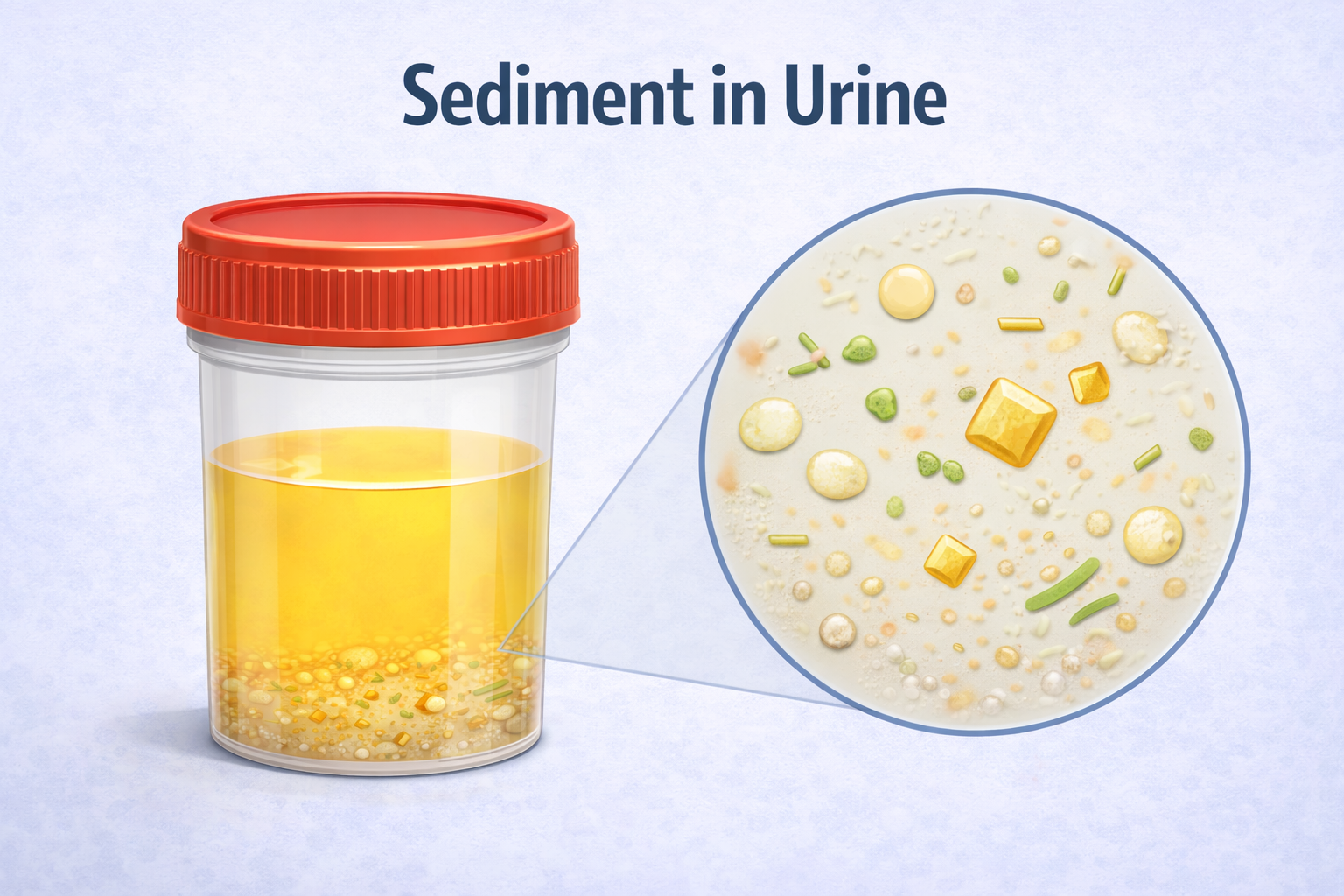
Seeing unusual particles in your urine can be alarming. Many people become concerned after noticing white sediment in urine or after receiving lab results mentioning amorphous sediment in urine. While the term may sound serious, it is often harmless. However, understanding what it means and when it may require attention is important for overall urinary health.
This guide explains everything you need to know about amorphous urine sediment, its causes, and when you should consult a healthcare provider.
What Is Amorphous Sediment in Urine?
Amorphous sediment refers to tiny, shapeless crystals that appear in urine. Unlike well-defined crystals, these particles do not have a specific structure when viewed under a microscope. When detected during a lab test, they may be described as urine amorphous material or crystals in urine amorphous.
In simple terms, amorphous means “without shape.” These sediments are usually made up of phosphate salts (in alkaline urine) or urate salts (in acidic urine). They often appear as cloudy or white sediment in urine and may settle at the bottom of the toilet or sample container.
What Is Amorphous Material in Urine?
If you’re wondering, “What is amorphous material in urine?” it typically consists of:
-
Amorphous phosphates
-
Amorphous urates
-
Mineral salts
-
Microscopic crystal deposits
During a urinalysis, amorphous crystals may be noted as a common finding, especially if the urine sample has been refrigerated or left standing for some time. In many cases, these sediments are considered a normal variation and do not indicate disease.
Why Does White Sediment in Urine Appear?
There are several reasons why white sediment in urine may occur:
1. Dehydration
Concentrated urine due to inadequate water intake can lead to crystal formation. When urine becomes highly concentrated, salts are more likely to clump together and form amorphous crystal urine.
2. Changes in Urine pH
Urine can be acidic or alkaline depending on diet, smart hydration, and metabolism.
-
Acidic urine often forms amorphous urates.
-
Alkaline urine tends to form amorphous phosphates.
Both may show up as amorphous sediment urine on lab results.
3. Diet
High intake of certain foods, such as meat (which increases uric acid), milk or dairy (which increases phosphate), can contribute to crystals in urine.
4. Cooling of Urine Sample
If a urine sample cools before testing, crystals may form artificially. This is a common reason urinalysis amorphous crystals are reported without any underlying health problem.
Is Amorphous Sediment Dangerous?
In most cases, amorphous sediment in urine is harmless and does not cause symptoms. Many people only discover it during routine ACR testing.
However, if white sediment in urine is accompanied by symptoms such as:
-
Painful urination
-
Frequent urination
-
Blood in urine
-
Lower abdominal pain
-
Fever
it may indicate infection, kidney stones, or another urinary condition. In such cases, further evaluation is necessary.
Amorphous Crystals vs. Kidney Stones
It’s important not to confuse amorphous crystal urine with kidney stones. While both involve mineral deposits, amorphous crystals are microscopic and usually pass without issue. Kidney stones are larger, structured formations that can cause significant pain.
Occasionally, persistent crystal formation can increase the risk of stone development, especially if hydration is poor.
How Is Amorphous Sediment Detected?
A routine urinalysis examines:
-
Color and clarity
-
pH level
-
Protein, glucose, and blood
-
Microscopic sediment
During microscopic analysis, the lab may report urine amorphous particles or urinalysis amorphous crystals. These findings are often noted as “few,” “moderate,” or “many.”
Most healthcare providers interpret amorphous sediment as clinically insignificant unless other abnormal findings are present.
How to Reduce Amorphous Sediment in Urine
If your report shows amorphous sediment urine, you can take simple steps to minimize recurrence:
1. Increase Water Intake
Drinking adequate water dilutes urine and reduces crystal formation. Aim for clear to pale-yellow urine.
2. Adjust Diet
Balance intake of high-protein foods and dairy. Adding fruits and vegetables can help regulate urine pH.
3. Avoid Holding Urine
Frequent urination prevents mineral buildup.
4. Follow Medical Advice
If crystals persist or symptoms develop, your healthcare provider may recommend further tests.
When Should You See a Doctor?
While amorphous sediment is often harmless, consult a healthcare professional if you notice:
-
Persistent cloudy or white sediment in urine
-
Pain or burning during urination
-
Strong urine odor
-
Blood in urine
-
Recurrent urinary tract infections
These may signal an underlying condition requiring treatment.
Conclusion
Finding amorphous sediment in urine can be concerning, but it is usually a benign and temporary finding. These shapeless crystals often result from dehydration, dietary changes, or urine pH fluctuations. In most cases, improving hydration and maintaining a balanced diet is enough to resolve the issue.
However, if symptoms accompany white in urine, or if lab findings are persistent, medical evaluation is important. Understanding what is amorphous material is in urine helps reduce unnecessary anxiety and ensures timely care when needed.
FAQs
1. What is amorphous sediment in urine?
Amorphous sediment in urine consists of tiny, shapeless crystals made of phosphate or urate salts. They are commonly detected during a urinalysis and are usually harmless.
2. Why do I see white sediment in urine?
White sediment in urine can result from dehydration, dietary factors, or changes in urine pH. It may also appear if the urine sample cools before testing.
3. Are amorphous crystals in urine dangerous?
In most cases, crystals in urine amorphous are not dangerous and do not cause symptoms. However, if they are accompanied by pain, blood in urine, or infection symptoms, medical evaluation is necessary.
4. What is amorphous material in urine during urinalysis?
During urinalysis, amorphous crystals are identified under a microscope. They appear as small, shapeless particles and are often reported as a normal finding unless they are present in large numbers with other abnormalities.
5. How can I reduce amorphous crystal urine?
To reduce amorphous crystal urine, increase water intake, maintain a balanced diet, and follow healthy urinary habits. Proper hydration is the most effective way to prevent crystal buildup.
Reference
https://www.healthline.com/health/sediment-in-urine
https://www.vinmec.com/eng/blog/why-is-urine-sediment-en
https://pubmed.ncbi.nlm.nih.gov/30249419/
0 200
No Comments