
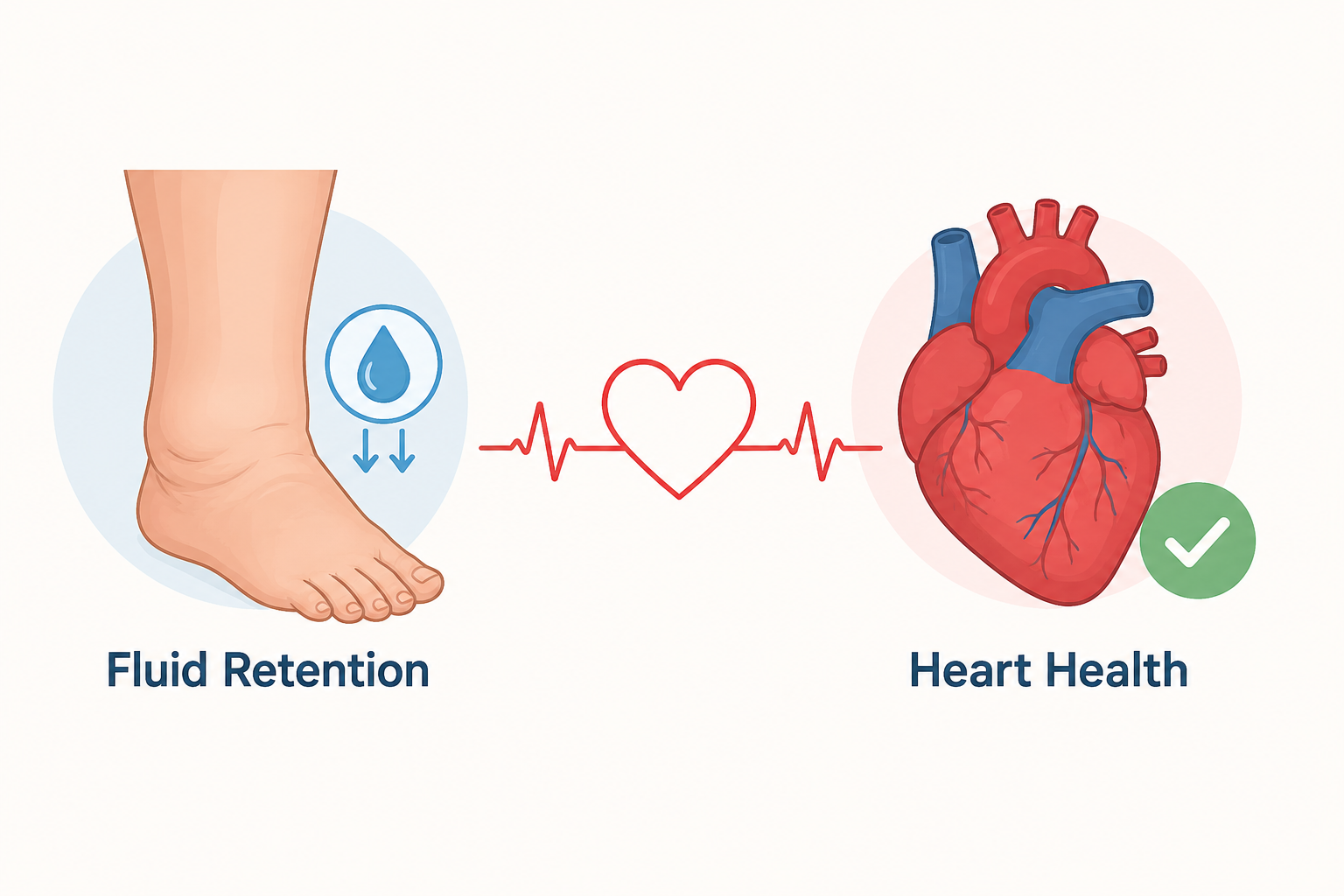
Fluid retention, also known as edema, happens when excess fluid builds up inside the body’s tissues. Fluid retention can occur in various parts of the body, including the legs, feet, hands, abdomen, and areas beneath the eyes. Many people experience mild swelling occasionally, but persistent fluid retention may point to an underlying health condition that needs attention.
Understanding what causes fluid retention is important because the condition can affect comfort, mobility, and overall health. In some cases, fluid retention may also be connected to heart disease, kidney problems, or high blood pressure.
What Is Fluid Retention?
The body naturally maintains a balance of fluids through the kidneys, blood vessels, hormones, and lymphatic system. When this balance is disrupted, excess fluid accumulates in tissues, resulting in swelling and puffiness.
Fluid retention can be temporary or chronic. Mild cases may occur after eating salty foods or sitting for long periods, while severe or recurring edema may signal a more serious medical issue.
Common signs of fluid retention include:
- Swelling in feet, ankles, or legs
- Puffiness around the eyes
- Bloated stomach or abdomen
- Tight or shiny skin
- Rapid weight gain
- Stiff joints
- Difficulty walking comfortably
What Causes Fluid Retention?
Many people wonder what causes fluid retention in the body. There are several possible reasons, ranging from lifestyle habits to chronic illnesses.
1. Excess Salt Intake
Eating too much sodium causes the body to hold onto water. Processed foods, fast foods, and packaged snacks are common culprits.
2. Hormonal Changes
Hormonal fluctuations during pregnancy, menstruation, or menopause can lead to temporary water retention.
3. Poor Circulation
When blood circulation slows down, fluid may accumulate in the lower limbs.
4. Heart Conditions
5. Kidney Disease
The kidneys regulate fluid and sodium balance. Kidney dysfunction can lead to swelling throughout the body.
6. Liver Disease
Liver disorders may decrease protein production, leading to fluid leakage into tissues and the abdomen.
7. Medications
Certain medications, such as steroids, blood pressure drugs, and anti-inflammatory medicines, may trigger water retention.
What Causes Fluid Retention in Legs?
One of the most common complaints is swelling in the lower body. People often ask what causes fluid retention in the legs because the legs and ankles are especially vulnerable to fluid buildup due to gravity.
Common causes include:
- Standing or sitting for long periods
- Poor blood circulation
- Varicose veins
- Heart failure
- Kidney disease
- Pregnancy
- Obesity
Leg swelling may worsen at the end of the day and improve after resting or elevating the legs.
What Causes Fluid Retention in Legs and Stomach?
In some individuals, swelling affects both the lower body and abdomen. Understanding what causes fluid retention in the legs and stomach can help identify underlying health concerns.
Possible causes include:
- Congestive heart failure
- Liver disease, such as cirrhosis
- Kidney disorders
- Severe malnutrition
- Hormonal imbalances
Abdominal fluid buildup, also known as ascites, may cause bloating, discomfort, and rapid weight gain.
What Causes Fluid Retention in the Abdomen?
People experiencing abdominal swelling often wonder what causes fluid retention in the abdomen. The condition may develop gradually or suddenly.
Potential causes include:
- Liver disease
- Heart failure
- Kidney problems
- Certain cancers
- Infections
- Pancreatic disorders
Medical evaluation is important if abdominal swelling becomes severe or painful.
What Causes Fluid Retention Under the Eyes?
Puffiness beneath the eyes is another common form of water retention. Many individuals wonder what causes fluid retention under the eyes, as it can impact both facial appearance and self-confidence.
Common reasons include:
- Lack of sleep
- High salt intake
- Allergies
- Aging
- Dehydration
- Stress
- Kidney problems
Reducing sodium intake, staying hydrated, and getting enough sleep may help decrease under-eye puffiness.
Can Water Retention Cause High Blood Pressure?
A common question is whether water retention can cause high blood pressure. Excess fluid in the body increases the amount of fluid circulating through blood vessels. This added pressure can contribute to elevated blood pressure levels.
In some cases, the relationship works both ways. High blood pressure may damage the kidneys and blood vessels, leading to fluid buildup.
Does Fluid Retention Cause High Blood Pressure?
Many people also ask does fluid retention cause high blood pressure because the two conditions are closely connected. When the body retains excess sodium and water, blood volume increases. Increased blood volume places additional strain on the heart and arteries.
Chronic fluid retention may therefore worsen hypertension and increase the risk of heart complications.
Does Water Retention Cause High Blood Pressure?
Water retention can often contribute to high blood pressure, particularly when a sodium imbalance or kidney problems are present. Fluid overload forces the cardiovascular system to work harder.
This is why people with heart disease or hypertension are often advised to:
- Limit sodium intake
- Maintain a healthy weight
- Stay physically active
- Monitor swelling regularly
Hypertension Fluid Retention: Understanding the Link
The connection between hypertension and fluid retention is significant. High blood pressure can damage blood vessels and reduce kidney efficiency, making it harder for the body to eliminate excess fluid.
At the same time, retained fluid raises blood pressure further, creating a harmful cycle. Managing both conditions together is essential for long-term heart health.
Doctors may recommend lifestyle changes, medications, or diuretics to help reduce fluid buildup and control blood pressure.
Tips to Reduce Fluid Retention
Simple lifestyle changes can help reduce swelling and improve overall health.
Reduce Salt Intake
Avoid processed and salty foods whenever possible.
Stay Hydrated
Staying properly hydrated helps the body regulate and maintain a healthy balance of fluids.
Exercise Regularly
Physical activity improves circulation and reduces swelling.
Elevate the Legs
Raising the legs above heart level may decrease fluid accumulation.
Wear Compression Socks
Compression garments can support circulation in the legs.
Maintain a Healthy Weight
Being of high weight can increase the risk of edema and contribute to high blood pressure levels.
When to See a Doctor
Seek medical attention if water retention is severe, sudden, or accompanied by symptoms such as:
- Chest pain
- Shortness of breath
- Rapid weight gain
- Severe abdominal swelling
- Persistent leg swelling
These symptoms may indicate serious heart, liver, or kidney conditions.
FAQs
1. What causes water retention in the body?
Water retention may result from high salt intake, hormonal changes, poor circulation, kidney disease, liver disease, or heart conditions.
2. Can water retention cause high blood pressure?
Yes, excess water increases blood volume, which can raise pressure inside blood vessels and contribute to hypertension.
3. What causes water retention in the legs?
Long periods of standing, poor circulation, heart problems, kidney disease, pregnancy, and obesity are common causes of leg swelling.
4. What causes water retention under the eyes?
Under-eye puffiness may occur due to lack of sleep, dehydration, allergies, stress, aging, or excessive sodium intake.
5. What causes water retention in the abdomen?
Fluid buildup in the abdomen may be linked to liver disease, heart failure, kidney disorders, infections, or certain cancers.
Reference
https://www.health.harvard.edu/heart-health/fluid-retention-what-it-can-mean-for-your-heart
https://my.clevelandclinic.org/health/diseases/17069-heart-failure-understanding-heart-failure

No Comments