

Watermelon is a refreshing and delicious fruit enjoyed around the world, especially during hot weather. With its high water content, natural sweetness, vitamins, minerals, and antioxidants, watermelon can be a nutritious addition to a balanced diet. But what are the advantages of watermelon, and why is it considered a healthy fruit?
From supporting hydration to providing important nutrients, there are several health benefits of eating watermelon. It can also be enjoyed as fresh fruit or juice, while its seeds contain useful nutrients as well.
Nutritional Benefits of Watermelon
Watermelon is mostly water, which makes it a refreshing choice for helping maintain fluid intake. It also provides nutrients such as vitamin C, vitamin A, potassium, and magnesium, along with antioxidants.
One important compound found in watermelon is lycopene, a naturally occurring antioxidant that gives the fruit its red color. Watermelon also contains citrulline, an amino acid that has been studied for its potential role in supporting blood flow.
The nutritional benefits of watermelon make it a convenient fruit to include in meals, snacks, and smoothies.
10 Benefits of Watermelon
Here are 10 potential health benefits of adding watermelon to a balanced diet:
1. Supports Hydration
Because watermelon contains a high percentage of water, eating it can contribute to your daily fluid intake. This is particularly useful during warm weather or after physical activity.
2. Provides Antioxidants
Watermelon is rich in antioxidants such as lycopene and vitamin C, which help protect the body’s cells from damage caused by free radicals and oxidative stress.
3. Supports Heart Health
The nutrients and plant compounds in watermelon may contribute to overall cardiovascular health when consumed as part of a balanced eating pattern. Lycopene and potassium are among the nutrients that make watermelon a nutritious choice.
4. May Support Digestion
Watermelon provides some fiber and plenty of water. Together, these can support normal digestive function. If you are wondering, is watermelon good for your gut, it can be a helpful part of a varied diet, although individual tolerance can differ.
5. Supports Healthy Skin
Vitamin C is needed for normal collagen production, while vitamin A supports normal skin health. Including watermelon alongside other fruits and vegetables can help provide these nutrients.
6. Helps Provide Essential Vitamins
Watermelon provides vitamin C and vitamin A, along with smaller amounts of other nutrients. Regularly eating different fruits helps create a more varied and nutrient-rich diet.
7. May Support Exercise Recovery
Watermelon contains water and the amino acid citrulline. Some research has explored citrulline’s relationship with exercise performance and muscle recovery, although watermelon should not be considered a replacement for a balanced post-workout meal.
8. Can Be a Light, Refreshing Snack
Fresh watermelon is naturally sweet and relatively low in calories per serving. It can be a convenient snack when you want something refreshing without adding heavily processed ingredients.
9. Provides Potassium
Potassium is an essential mineral involved in normal muscle function, nerve signaling, and fluid balance. Watermelon contributes a modest amount of potassium to the diet.
10. May Help You Eat More Fruit
One of the simple advantages of watermelon is that it is easy to enjoy on its own. Adding fruit to your daily meals can help increase your overall intake of important vitamins and minerals, and plant compounds.
Advantages of Watermelon Juice
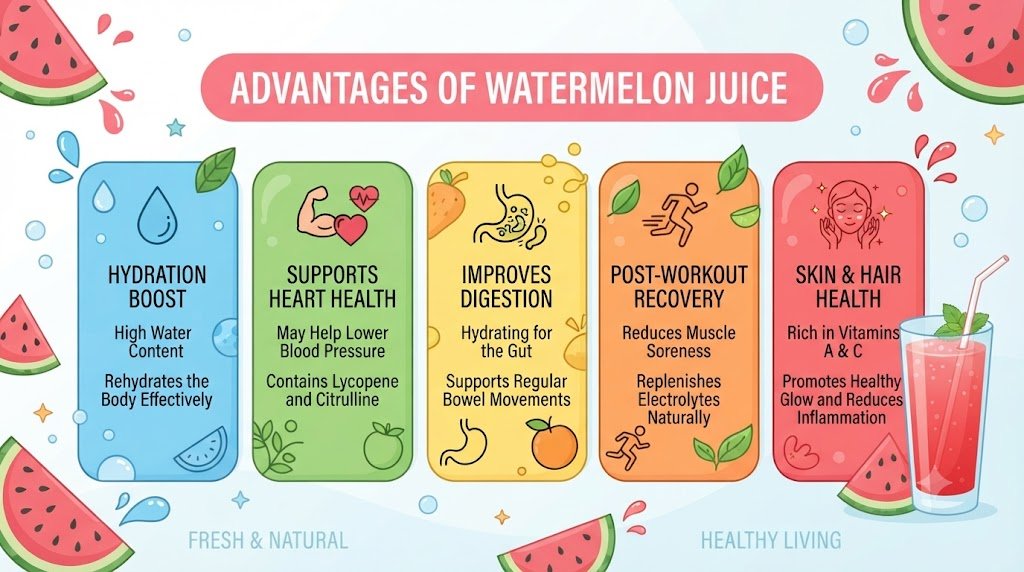
Fresh watermelon juice can provide many of the same nutrients found in the fruit, including water, vitamin C, and lycopene. If you are asking what are the benefits of watermelon juice, hydration and antioxidant intake are two notable points.
The advantages of watermelon juice also include convenience. It can be used in smoothies or consumed as a refreshing beverage. However, whole watermelon contains fiber, while juice generally provides less fiber. For this reason, whole fruit can be a more filling option.
What Does Watermelon Juice Do for the Body?
So, what does watermelon juice do for the body? It can contribute to hydration and provide nutrients and plant compounds found naturally in watermelon. Its effects should be viewed as part of an overall healthy diet rather than as a detox or treatment.
Benefits of Watermelon Juice for Women
The benefits of watermelon juice for women are not fundamentally different from its benefits for men. It can contribute to fluid intake and provide nutrients such as vitamin C and potassium. The phrase watermelon juice benefits for women is often used in searches about hydration, skin healthy, and general nutrition, but there is no need to consider watermelon juice a women-specific health remedy.
Advantages of Watermelon Seeds
Many people remove watermelon seeds, but they are edible and contain nutrients. The advantages of watermelon seeds include providing protein, healthy fats, magnesium, iron, and other minerals.
Roasted watermelon seeds can be eaten as a snack in some cuisines. However, portion size matters because seeds are more calorie-dense than the fruit itself.
Benefits of Eating Watermelon at Night
There is no strong reason that most healthy people need to avoid watermelon at night. The benefits of eating watermelon at night can include enjoying a refreshing, hydrating snack.
However, eating large amounts immediately before bed may cause some people to wake up to urinate because of its high water content. People with specific medical or dietary conditions should follow advice from their healthcare professional.
Disadvantages of Watermelon
Although watermelon is nutritious, there can be some disadvantages of watermelon depending on the individual. Eating very large amounts may cause bloating, loose stools, or digestive discomfort in some people.
What Nutrients in Watermelon Make It Good for You?
If you are wondering what is in watermelon that is good for you, the answer includes water, vitamin C, vitamin A, potassium, magnesium, lycopene, citrulline, and small amounts of fiber and other nutrients.
FAQs
1. Is watermelon healthy to eat every day?
For most healthy people, watermelon can be included in a balanced diet regularly. Eating a variety of fruits and vegetables is generally preferable to relying heavily on one food.
2. Is watermelon good for your gut?
Yes, watermelon can be part of a gut-friendly diet because it provides water and some fiber. However, large portions may cause digestive discomfort in people who are sensitive to certain foods.
3. What are the benefits of watermelon juice?
Watermelon juice can provide hydration along with nutrients and antioxidants such as vitamin C and lycopene. Whole watermelon generally provides more fiber than juice.
4. Are watermelon seeds good for you?
Yes. Edible watermelon seeds contain nutrients including protein, healthy fats, magnesium, and iron. They can be eaten roasted or incorporated into meals in moderate amounts.
5. Can I eat watermelon at night?
Yes, most people can eat watermelon at night. It can be a refreshing snack, although its high water content may increase urination for some people if consumed in large quantities before bed.
Reference
https://www.healthline.com/nutrition/watermelon-health-benefits
https://health.clevelandclinic.org/benefits-of-watermelon
0 200

No Comments