
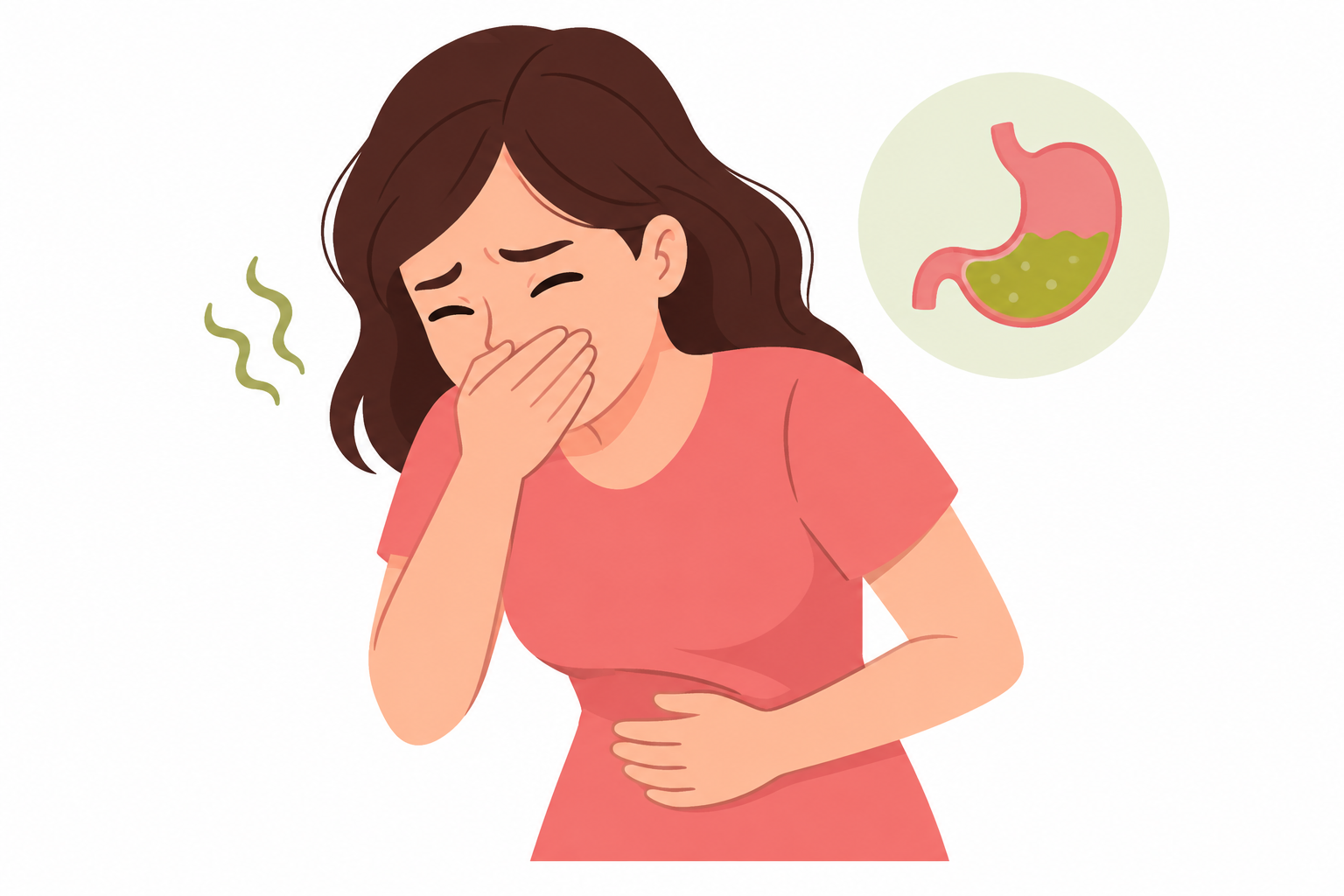
Nausea is an uncomfortable sensation that makes you feel like vomiting. It can occur due to several reasons, including digestive problems, infections, motion sickness, migraines, medication side effects, and pregnancy. Although nausea is usually temporary, persistent symptoms can interfere with daily activities and affect your overall well-being.
Understanding nausea causes, recognising the warning signs, and knowing how to manage the condition can help you find appropriate relief. Let’s explore what nausea feels like, its common symptoms, and effective treatment options.
What Is Nausea?
Nausea is the unpleasant feeling of sickness in the stomach that often creates an urge to vomit. It is not a disease itself but a symptom associated with various health conditions.
Nausea may occur suddenly or develop gradually. Some people experience it after eating, while others may feel motion sickness due to hormonal changes, bacterial infections, or certain medications. It may also occur alongside dizziness, headaches, sweating, and stomach discomfort.
Common Nausea Causes
Several factors can trigger motion sickness. Identifying the underlying cause is important for choosing the right treatment.
Common motion sickness causes include:
-
Digestive problems: Indigestion, acid reflux, food poisoning, and stomach infections can trigger motion sickness.
-
Pregnancy: Hormonal changes during early pregnancy can cause motion sickness and vomiting.
-
Motion sickness: Travelling by car, bus, train, or boat may disturb the body’s balance system.
-
Migraine: Severe headaches can sometimes be accompanied by motion sickness and vomiting.
-
Medications: Certain antibiotics, painkillers, and other medicines may cause motion sickness as a side effect.
-
Stress and anxiety: Emotional distress can affect digestion and trigger feelings of sickness.
-
Dehydration: Insufficient fluid intake may contribute to motion sickness, dizziness, and weakness.
-
Viral infections: Stomach infections and other illnesses can cause motion sickness, vomiting, and fever.
What Is Nausea in Pregnancy?
Pregnancy-related nausea is commonly known as morning sickness. It usually begins during the first trimester, although it can occur at any time of the day or night.
If you are wondering what is nausea in pregnancy, it is mainly associated with hormonal changes, particularly rising pregnancy hormone levels. Although commonly called morning sickness, motion sickness can happen throughout the day.
What Is Nausea in Pregnancy Feel Like?
Many pregnant females describe motion sickness as a constant unsettled feeling in the stomach, similar to motion sickness or indigestion. It may be accompanied by food aversions, sensitivity to smells, excessive saliva, and occasional vomiting.
Common nausea symptoms of pregnancy include:
-
Feeling sick, especially in the morning
-
Sensitivity to certain food smells
-
Reduced appetite
-
Vomiting or retching
-
Increased sensitivity to tastes
-
Feeling tired or weak
Some common morning nausea symptoms may improve as pregnancy progresses. However, persistent vomiting, dehydration, or difficulty keeping food and fluids down requires medical attention.
Common Symptoms Associated with Nausea
motion sickness can occur independently or alongside other symptoms, depending on its underlying cause.
Common nausea symptoms in female and men include:
-
An uncomfortable or unsettled stomach
-
Excessive sweating
-
Loss of appetite
-
Increased saliva production
-
Dizziness or light-headedness
-
Vomiting or retching
-
Abdominal discomfort
Sometimes, motion sickness may occur with other symptoms that provide clues about an underlying health issue.
For example, back pain nausea symptoms may occur together due to kidney infections, digestive conditions, or other medical problems. Similarly, headache with nausea symptoms may be associated with migraines, dehydration, or infections.
If you experience what are headache and nausea symptoms of, possible causes include migraine, viral illness, dehydration, or other conditions. Neck pain headache and nausea symptoms may sometimes indicate migraine or an infection. Seek urgent medical attention if these symptoms occur with fever, a stiff neck, confusion, or a sudden severe headache.
Additionally, vomit dizziness nausea symptoms may indicate dehydration, an inner-ear problem, or an infection. Persistent or severe symptoms should be evaluated by a healthcare professional.
How to Get Relief from Nausea
Treatment depends on the underlying cause. However, some simple lifestyle changes and home remedies can help manage mild motion sickness.
1. Drink Enough Fluids
Sip water regularly throughout the day. If vomiting occurs, an oral rehydration solution (ORS) can help replace lost fluids and electrolytes.
2. Eat Small, Frequent Meals
Avoid large meals that may worsen motion sickness. Choose light foods such as bananas, rice, toast, crackers, and plain potatoes.
3. Try Ginger
Ginger tea or small amounts of ginger may help relieve motion sickness in some people. Pregnant female should consult their healthcare provider before using ginger supplements.
4. Avoid Strong Smells
Strong perfumes, cooking odours, and smoke can trigger motion sickness. Staying in a well-ventilated environment may help reduce discomfort.
5. Get Enough Rest
Fatigue and stress may worsen motion sickness. Take adequate rest and avoid sudden movements, particularly if you feel dizzy.
Medicines and Remedies for Nausea
Depending on the cause and severity, healthcare professionals may recommend different treatment options.
Over-the-Counter Remedies for Nausea
Some over the counter remedies for nausea include motion-sickness medicines and certain antacids, depending on the underlying cause. However, not every medicine is suitable for everyone.
Medicine for Nausea and Throwing Up
A doctor may prescribe antiemetic medicines to control persistent motion sickness and vomiting. The appropriate medicine for nausea and throwing up depends on factors such as age, pregnancy status, medical history, and the cause of symptoms.
Nausea and Vomiting Natural Remedies
Some nausea and vomiting natural remedies include ginger tea, small meals, fresh air, and regular hydration. These approaches may help manage mild symptoms.
Homeopathic Remedies for Nausea
Some people explore homeopathic remedies nausea as an alternative approach. However, there is insufficient reliable scientific evidence that homeopathy effectively treats motion sickness. It should not replace proven medical treatment.
If you are wondering what can i take nausea, consult a healthcare professional or pharmacist before taking medication, especially during pregnancy or while using other medicines.
When Should You See a Doctor?
Occasional motion sickness usually improves without medical treatment. However, seek medical attention if you experience persistent vomiting, severe abdominal pain, blood in vomit, high fever, severe headache, or signs of dehydration.
Immediate medical evaluation is important if you cannot keep fluids down, feel faint, or experience a sudden severe headache with neck stiffness.
FAQs
1. What is the most common cause of nausea?
Common causes include indigestion, food poisoning, stomach infections, pregnancy, motion sickness, migraines, and medication side effects.
2. Can nausea be an early sign of pregnancy?
Yes. motion sickness is a common early pregnancy symptom and may begin during the first trimester. It can occur at any time of the day.
3. How can I get rid of nausea naturally?
Drinking water in small sips, eating light meals, avoiding strong smells, resting, and trying ginger may help relieve mild motion sickness.
4. Which medicine is best for nausea and vomiting?
The appropriate medicine depends on the cause of motion sickness. A healthcare professional can recommend suitable antiemetic medication based on your symptoms and medical history.
5. When is nausea a serious concern?
Nausea requires medical attention when accompanied by severe abdominal pain, persistent vomiting, blood in vomit, dehydration, high fever, or severe headache and neck stiffness.
Reference
https://my.clevelandclinic.org/health/symptoms/nausea
https://medlineplus.gov/ency/article/003117.htm
0 200

No Comments