
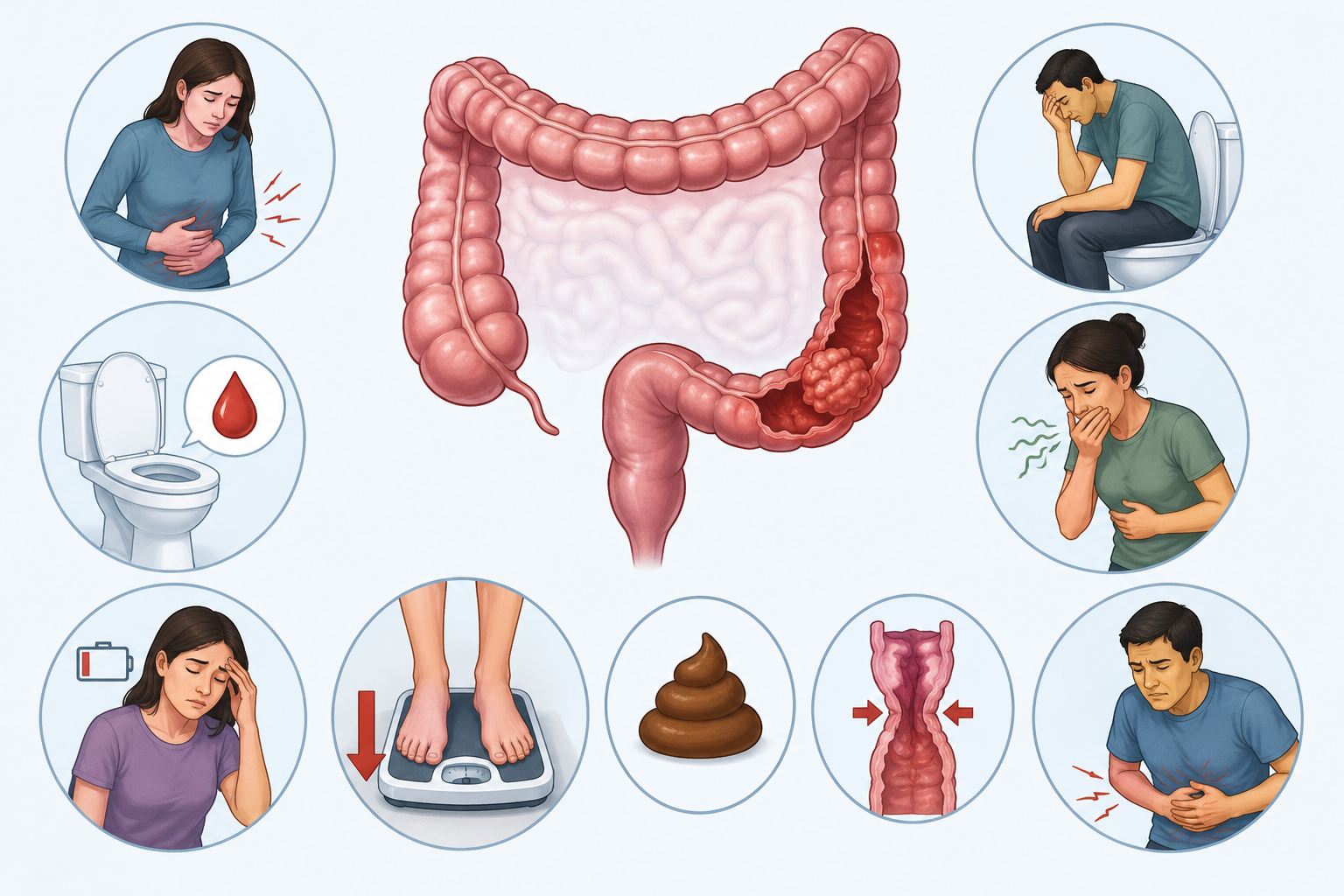
Colon cancer is one of the most common types of cancer worldwide, but early detection can significantly improve treatment outcomes. Understanding the early colon cancer symptoms and recognizing changes in your digestive health can help in timely diagnosis and better recovery chances. This guide explains the symptoms, causes, risk factors, and important warning signs you should never ignore.
What is Colon Cancer?
Colon cancer, also known as colorectal cancer, begins in the large intestine (colon), which is part of the digestive system. It often starts as small, non-cancerous growths called polyps that can slowly turn into cancer over time. If detected early, treatment is highly effective, but in later stages, it can become more serious and harder to manage.
Early Signs of Colon Cancer
One of the most important things to understand is the early signs of colon cancer, as they are often subtle and easily overlooked. Some people may not experience symptoms in the beginning, but when they do appear, they may include:
- Ongoing changes in bowel habits, such as diarrhea or constipation that continue over time
- Blood in stool or rectal bleeding
- Unexplained weight loss
- Abdominal pain or cramps
- Feeling that the bowel does not empty completely
These symptoms can also be linked to other digestive issues, but persistent problems should always be checked by a doctor.
What Are the Symptoms of Colon Cancer?
If you are wondering what the symptoms of colon cancer are, they typically become more noticeable as the disease progresses. Common symptoms include:
- Persistent tiredness and weakness caused by low iron levels (iron deficiency anemia)
- Narrow or ribbon-like stools
- Ongoing bloating or gas
- Persistent discomfort in the abdomen
- Changes in appetite
These symptoms should not be ignored, especially if they continue for more than a few weeks.
Stage 1 Colon Cancer Symptoms
Stage 1 colon cancer symptoms are usually very mild or even absent. In many cases, it is detected during routine screenings like a colonoscopy. However, some early signs may include:
- Mild changes in bowel movements
- Occasional blood in stool
- Slight abdominal discomfort
Since symptoms are not obvious at this stage, regular screening is important, especially for people over 45 or those with a family history of intestinal cancer.
Symptoms of Colon Cancer in Women
The symptoms of colon cancer in women are similar to those in men, but they are sometimes mistaken for gynecological or digestive issues. Women may experience:
- Fatigue and weakness
- Abdominal bloating (often confused with menstrual symptoms)
- Irregular bowel movements
- Iron deficiency anemia
- Unexplained weight loss
Because these symptoms can overlap with hormonal and menstrual changes, women may delay seeking a diagnosis, which makes awareness even more important.
Bowel Cancer Woman Symptoms
When discussing bowel cancer woman symptoms, it is important to note that persistent digestive changes should not be ignored. Women may notice:
- Long-term constipation or diarrhea
- Blood in stool
- Persistent stomach cramps
- Feeling full even after small meals
Early consultation with a doctor can help rule out or confirm serious conditions like colorectal cancer.
Colon Cancer Causes
Understanding colon cancer causes helps in prevention and risk reduction. While the exact cause is not always known, several factors increase risk:
- Age (most cases occur over 50)
- Family history of colorectal cancer
- A diet rich in red or processed meats
- Low fiber intake
- Sedentary lifestyle
- Smoking and alcohol use
These risk factors contribute to changes in colon cells that may eventually become cancerous.
What Causes Colon Cancer?
If you are asking what causes colon cancer, it usually develops when the DNA in colon cells changes and grows uncontrollably. These abnormal cells form tumors that can spread if not treated. Lifestyle and genetic factors both play a role, making prevention and screening essential.
Intestinal Cancer and Its Link to Colon Cancer
Intestinal cancer often refers to cancers that develop in the small or large intestine, including colon cancer. While not all intestinal cancers are the same, colon cancer is the most common type. Symptoms often overlap, such as abdominal pain, changes in stool, and weight loss.
Diagnosis and Screening
Early detection is key in managing colon cancer effectively. Common diagnostic methods include:
- Colonoscopy
- Stool tests for blood
- CT scans
- Biopsy of suspicious tissue
Routine screening is highly recommended for individuals above 45 or those at higher risk.
When to See a Doctor
You should consult a healthcare professional if you experience:
- Blood in stool
- Persistent bowel changes
- Unexplained fatigue
- Ongoing abdominal pain
- Sudden weight loss
Early medical attention can make a significant difference in treatment success.
Prevention Tips
- Limiting red and processed meats
- Exercising regularly
- Avoiding smoking and alcohol
- Getting regular screenings
FAQs
1. What symptoms are associated with colon cancer?
The most common symptoms include blood in stool, changes in bowel habits, abdominal pain, fatigue, and unexplained weight loss.
2. What causes colon cancer?
Colon cancer is caused by genetic mutations in colon cells, often influenced by diet, lifestyle, age, and family history.
3. Are early signs of colon cancer easy to detect?
4. What is bowel cancer in women?
Women may experience bloating, fatigue, blood in stool, and irregular bowel movements, often mistaken for other conditions.
5. Can stage 1 colon cancer be cured?
Yes, stage 1 colon cancer has a high survival rate when detected early and treated promptly.
Reference
https://www.mayoclinic.org/diseases-conditions/colon-cancer/symptoms-causes/syc-20353669
https://my.clevelandclinic.org/health/diseases/14501-colorectal-colon-cancer
0 200
No Comments