
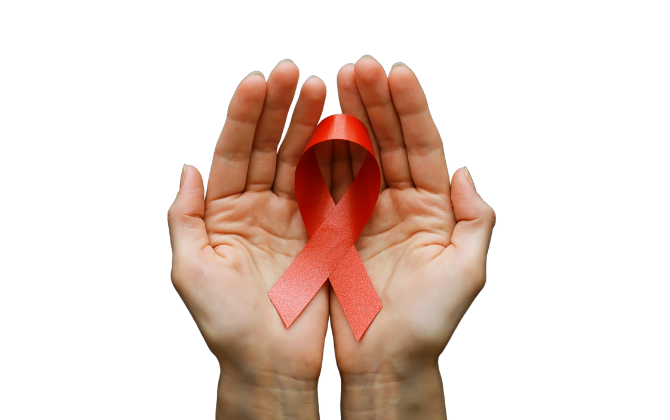
1. What is HIV?
HIV stands for Human Immunodeficiency Virus. It’s a virus that attacks the body’s immune system, specifically the CD4 cells (also known as T cells), which help the body fight infections. If left untreated, HIV can weaken the immune system over time and lead to AIDS (Acquired Immunodeficiency Syndrome), the most advanced stage of HIV infection.
HIV is a chronic but manageable condition. With proper medical care, including antiretroviral therapy (ART), people with HIV can live long, healthy lives and reduce the risk of transmitting the virus to others.
2. How is HIV different from AIDS?
HIV is the virus that causes damage to the immune system over time.
AIDS (Acquired Immunodeficiency Syndrome) is the final stage of HIV infection, when the immune system is severely weakened and the body becomes vulnerable to certain infections and cancers.
Think of it this way:
- HIV is the virus you can live with—sometimes for decades—with proper treatment.
- AIDS is a condition that develops only if HIV is not treated and the immune system becomes badly damaged.
3. How is HIV transmitted?
HIV is transmitted through certain body fluids from a person who has the virus. These fluids include:
- Blood
- Semen and pre-seminal fluid
- Vaginal fluids
- Rectal fluids
- Breast milk
The most common ways HIV is spread include:
- Unprotected sex (vaginal, anal, or oral) with someone who has HIV
- Sharing needles or syringes
- Receiving contaminated blood products (rare today due to screening)
- From mother to baby during pregnancy, childbirth, or breastfeeding (without treatment)
HIV cannot be spread through casual contact like hugging, shaking hands, sharing food, or using the same toilet.
4.No, you cannot get HIV from kissing or sharing food.
HIV is not spread through saliva, and there is no risk from everyday activities like:
- Kissing (including open-mouth kissing, unless both people have large open sores and blood is exchanged—extremely rare)
- Sharing drinks, utensils, or food
- Coughing, sneezing, or touching
- Using the same toilet or shower
HIV transmission requires direct contact with specific body fluids (like blood, semen, vaginal fluids), and those fluids must enter the bloodstream.
So feel free to share a meal or a hug—you’re not at risk.
5. What are the early signs or symptoms of HIV?
In the first 2 to 4 weeks after infection, some people develop flu-like symptoms. This is known as acute HIV infection, and it’s the body’s natural response to the virus.
Common early symptoms may include:
- Fever
- Fatigue
- Sore throat
- Swollen lymph nodes
- Rash
- Muscle aches
- Headache
- Night sweats
- Mouth ulcers
However, some people have no symptoms at all during this early stage, which is why getting tested is the only way to know for sure.
Without treatment, HIV continues to damage the immune system even if you feel fine. Early diagnosis and treatment make a huge difference.
6. How soon after exposure can HIV be detected?
It depends on the type of HIV test, but generally:
- Nucleic acid tests (NATs) – can detect HIV 10 to 33 days after exposure.
- Antigen/antibody tests (lab-based) – usually detect HIV 18 to 45 days after exposure.
- Rapid tests & self-tests (antibody only) – typically detect HIV 23 to 90 days after exposure.
This period is called the “window period”—the time between exposure and when a test can reliably detect the virus. Testing too early can give a false negative, so if you’ve been exposed, it’s best to test at the appropriate time and possibly retest later.
If you’ve had a recent high-risk exposure, talk to a healthcare provider right away—they may recommend PEP (post-exposure prophylaxis), which must be started within 72 hours.
7. How do HIV tests work?
HIV tests detect HIV antibodies or HIV antigens in the blood, saliva, or urine. These tests are designed to identify the presence of the virus or the body’s immune response to it.
There are several types of HIV tests:
- Antibody Tests: These are the most common type. They look for antibodies your body makes in response to HIV. Antibody tests are usually done through a blood sample or oral fluid (using a cheek swab). These tests may take anywhere from 20 minutes to a few days for results.
- Antigen/Antibody Tests: These tests look for both antibodies and antigens (proteins from the virus itself). They’re usually done through blood samples and can detect HIV earlier than antibody-only tests, often 2-6 weeks after exposure.
- Nucleic Acid Tests (NATs): These tests look for the actual virus in the blood. They are highly accurate and are usually used if you’ve had a recent high-risk exposure or if someone has flu-like symptoms early on. They can detect HIV within 10 to 33 days after exposure.
- Rapid Tests: These tests are fast and can give results in 20 minutes. They detect antibodies or antigens from blood or oral fluid. They are convenient for home testing or in clinics.
The results of an HIV test help determine if you have HIV or if you might need further testing.
8. Can HIV be cured?
Currently, there is no cure for HIV. However, with proper treatment, people with HIV can live long, healthy lives.
The most effective treatment is antiretroviral therapy (ART). ART involves taking a combination of medications that lower the amount of virus in the body, known as the viral load. While ART doesn’t cure HIV, it suppresses the virus to undetectable levels and helps the immune system stay strong.
When the viral load is undetectable, it means HIV can no longer be transmitted to a partner through sex—a concept known as undetectable = untransmittable (U=U).
Ongoing research is exploring potential cures and vaccines, but for now, ART is the key to managing HIV and preventing its progression to AIDS.
9. What treatments are available for HIV?
The primary treatment for HIV is antiretroviral therapy (ART). ART involves taking a combination of antiretroviral drugs that work together to control the virus, reduce its ability to reproduce, and keep the immune system healthy.
Key points about ART:
- ART helps lower the viral load (the amount of HIV in the blood) to undetectable levels. This greatly reduces the risk of developing AIDS.
- It also boosts the CD4 cells (T cells), which are essential for a strong immune system.
- Consistent adherence to ART can help people with HIV live long, healthy lives and prevent transmission to others (undetectable = untransmittable or U=U).
ART typically consists of three or more medications from different classes. Some common classes include:
- Nucleoside reverse transcriptase inhibitors (NRTIs) – Block the virus from copying itself.
- Non-nucleoside reverse transcriptase inhibitors (NNRTIs) – Also prevent the virus from copying itself but in a slightly different way.
- Protease inhibitors (PIs) – Prevent the virus from maturing into a form that can infect new cells.
- Integrase inhibitors – Stop the virus from integrating its genetic material into the host cell’s DNA.
- Entry inhibitors – Prevent HIV from entering healthy cells.
In addition to ART, people with HIV may need supportive treatments to address specific health concerns (like infections or other complications) and mental health support to help manage living with a chronic condition.
10. How effective is HIV treatment today?
HIV treatment today is extremely effective when taken as prescribed. With the right combination of antiretroviral therapy (ART), most people with HIV can:
- Achieve undetectable viral loads, meaning the virus is so low in the blood that it cannot be detected with standard tests.
- Prevent the progression to AIDS, allowing the immune system to remain strong.
- Live long, healthy lives: People with HIV who take ART consistently can expect similar life expectancy as people without HIV.
- Prevent transmission: If the viral load is undetectable, there is no risk of transmitting HIV to a partner through sex (undetectable = untransmittable or U=U).
ART has transformed HIV from a fatal disease into a manageable chronic condition. The key to its effectiveness is early diagnosis and consistent treatment.
However, treatment is lifelong, and missing doses or stopping ART can allow the virus to rebound and become resistant to the medications.
11. Can people with HIV live normal, healthy lives?
Yes, with proper treatment and care, people with HIV can live long, healthy lives. Thanks to antiretroviral therapy (ART), HIV is now considered a chronic but manageable condition, similar to diabetes or hypertension.
Key factors that help people with HIV live well include:
- Early diagnosis and starting ART as soon as possible to reduce the viral load and protect the immune system.
- Adherence to ART: Taking medications as prescribed is crucial to keeping the virus undetectable and preventing the development of drug resistance.
- Regular medical check-ups to monitor viral load, CD4 counts, and overall health.
- Healthy lifestyle choices, including a balanced diet, exercise, and avoiding smoking or excessive alcohol use.
- Mental health support: Coping with the emotional and psychological aspects of living with HIV can improve overall well-being.
With today’s treatments, people with HIV can expect to live nearly the same lifespan as those without HIV—especially if the virus is well-controlled and there are no other major health complications.
12. Can I have children if I have HIV?
Yes, people with HIV can have children safely with the right precautions.
Thanks to advances in HIV treatment and care, it is possible for individuals with HIV to have a HIV-negative child. Here’s how:
- For people with HIV who are pregnant:
- Antiretroviral therapy (ART) is used during pregnancy to reduce the viral load to undetectable levels, minimizing the risk of transmission to the baby.
- HIV transmission during childbirth can be reduced by taking ART, performing a planned cesarean delivery (if necessary), and avoiding breastfeeding (since HIV can be passed through breast milk).
With proper treatment, the risk of transmitting HIV to the baby can be as low as 1% or less.
- For individuals with HIV who want to conceive:
- Couples with one partner living with HIV can use assisted reproductive technologies (like sperm washing or in vitro fertilization) to prevent transmission.
- The HIV-positive partner can also take ART to maintain an undetectable viral load, which reduces the risk of transmitting the virus during conception and pregnancy.
It’s important to discuss family planning with a healthcare provider who can guide you through the safest options for having a healthy baby.
13. How can I protect myself from HIV?
There are several ways to protect yourself from HIV, whether you’re sexually active, using needles, or concerned about other potential exposures. Here are the most effective methods:
- Use Condoms Consistently and Correctly
- Condoms (male or female) are one of the most effective ways to prevent HIV transmission during sex. They create a barrier that prevents the exchange of body fluids, including semen, vaginal fluids, and blood.
- Pre-Exposure Prophylaxis (PrEP)
- PrEP is a medication that HIV-negative individuals can take to reduce the risk of getting HIV. When taken daily, it reduces the risk of HIV infection by more than 90%. It’s highly recommended for those at high risk, such as people with HIV-positive partners.
- Post-Exposure Prophylaxis (PEP)
- If you think you’ve been exposed to HIV in the past 72 hours (such as through unprotected sex or needle sharing), PEP can be started to prevent the virus from establishing itself. It must be taken within 72 hours after exposure and continued for 28 days.
- Limit Your Number of Sexual Partners
- Reducing the number of sexual partners can reduce your chances of encountering someone with HIV, but it’s still important to use protection, as HIV can be present even in a single exposure.
- Get Regular HIV Tests
- If you’re at risk of HIV, getting tested regularly helps catch the virus early and allows for prompt treatment. Early diagnosis allows for better health outcomes and minimizes the risk of spreading HIV to others.
- Don’t Share Needles
- Needle-sharing is a high-risk behavior for HIV transmission. If you inject drugs, always use clean needles and never share them with others. There are needle exchange programs in many areas to help reduce this risk.
- Circumcision
- Male circumcision can reduce the risk of heterosexual men acquiring HIV. However, it’s not a replacement for other prevention methods like condom use.
- Consider HIV Treatment as Prevention
- If your partner has HIV, and they are on ART and have an undetectable viral load, the risk of transmission is nearly zero. This is known as undetectable = untransmittable (U=U).
14. What is PrEP and how does it help prevent HIV?
PrEP stands for Pre-Exposure Prophylaxis. It’s a medication that HIV-negative individuals can take to prevent getting HIV if they are at high risk of exposure. When taken correctly, PrEP is highly effective at reducing the risk of HIV infection.
PrEP is usually a combination of two antiretroviral drugs: tenofovir and emtricitabine. It works by stopping HIV from establishing an infection in the body after potential exposure.
How PrEP Helps Prevent HIV:
- When taken consistently, PrEP reduces the risk of HIV infection from sex by up to 99%.
- It also reduces the risk of HIV transmission among people who inject drugs by around 74% (when used alongside safer injection practices like not sharing needles).
PrEP is available in the form of a daily pill (brand names like Truvada and Descovy) or a long-acting injectable (Cabenuva), which can be given every one or two months.
Who Should Consider Taking PrEP?
- People with an HIV-positive partner (especially if their partner’s viral load is not undetectable or if they don’t consistently use ART).
- Individuals who have multiple sexual partners or engage in unprotected sex (especially those who don’t know their partner’s HIV status).
- People who inject drugs or share needles.
- Individuals who are at high risk due to certain activities or lifestyle.
Important Considerations:
- Regular medical check-ups are necessary while on PrEP to ensure it’s working effectively and to check for potential side effects.
- Adherence to the medication is crucial—missing doses reduces its effectiveness.
PrEP is an additional tool in the fight against HIV and should be used alongside other prevention strategies like condoms and regular HIV testing.
15. What should I do if I think I’ve been exposed to HIV?
If you believe you’ve been exposed to HIV, it’s important to act quickly. Here are the steps you should take:
- Get Tested for HIV
- Get tested as soon as possible to know your HIV status. Many tests can detect HIV within 2-6 weeks of exposure, but testing too soon might result in a false negative. If the first test is negative, consider retesting after a few weeks.
- Start Post-Exposure Prophylaxis (PEP)
- If the exposure was recent (within 72 hours), you may be prescribed PEP—a short course of antiretroviral medication that can prevent HIV infection if started within 72 hours of exposure.
- PEP must be taken for 28 days and is most effective when started as soon as possible after exposure. The sooner you start, the better.
- Contact a Healthcare Provider
- See a doctor or visit an emergency room if you think you’ve had a high-risk exposure to HIV. They can help assess your risk, offer PEP, and guide you through the process of testing and prevention.
- If you are not sure if your exposure was risky, a healthcare provider can help you determine the next steps.
- Take Care of Your Health
- In the meantime, take care of your physical and mental health. If you’re feeling anxious, reach out to a counselor or support group for help.
- Make sure to follow any instructions from your healthcare provider, including adhering to PEP if prescribed.
- Stay Informed and Follow-Up
- After starting PEP, make sure to schedule a follow-up appointment for HIV testing after the 28-day course. It’s important to confirm your HIV status and ensure that PEP was effective.
Remember, acting quickly can significantly reduce the chances of HIV becoming established in your body. If in doubt, don’t wait—seek help immediately.
16. Is there still a stigma around HIV today?
Yes, stigma around HIV still exists, but the level of stigma varies depending on where you live, cultural attitudes, and individual experiences. While society has made progress in terms of understanding and treatment of HIV, some people still face discrimination and negative stereotypes.
Common forms of HIV-related stigma include:
- Social Isolation: Some individuals with HIV may be excluded from social, professional, or family settings due to fear or misunderstanding about the virus.
- Judgment: People living with HIV may face judgment or blame for how they contracted the virus, particularly if it’s linked to behaviors like sex work, drug use, or being part of communities historically affected by HIV.
- Healthcare Discrimination: In some cases, healthcare providers may treat people with HIV differently, or fail to provide equal care, due to prejudice or fear of transmission.
- Internalized Stigma: Many individuals with HIV may experience shame or self-blame, which can impact their mental health and make it harder to seek treatment or disclose their status.
However, progress is being made:
- Education and awareness: The more people understand that HIV is a manageable condition and cannot be spread through casual contact, the less stigma there is.
- U=U (Undetectable = Untransmittable): Scientific breakthroughs have shown that people living with HIV who have an undetectable viral load cannot transmit the virus to others through sex, which helps challenge misconceptions.
- Support communities: Many groups and organizations work to empower individuals living with HIV and reduce stigma through advocacy, education, and support networks.
While the stigma surrounding HIV has lessened in many parts of the world, it still exists, and it’s important to continue challenging these stereotypes and misconceptions. Advocacy, open conversations, and compassionate care are key to eradicating the stigma once and for all.
0 200
No Comments