
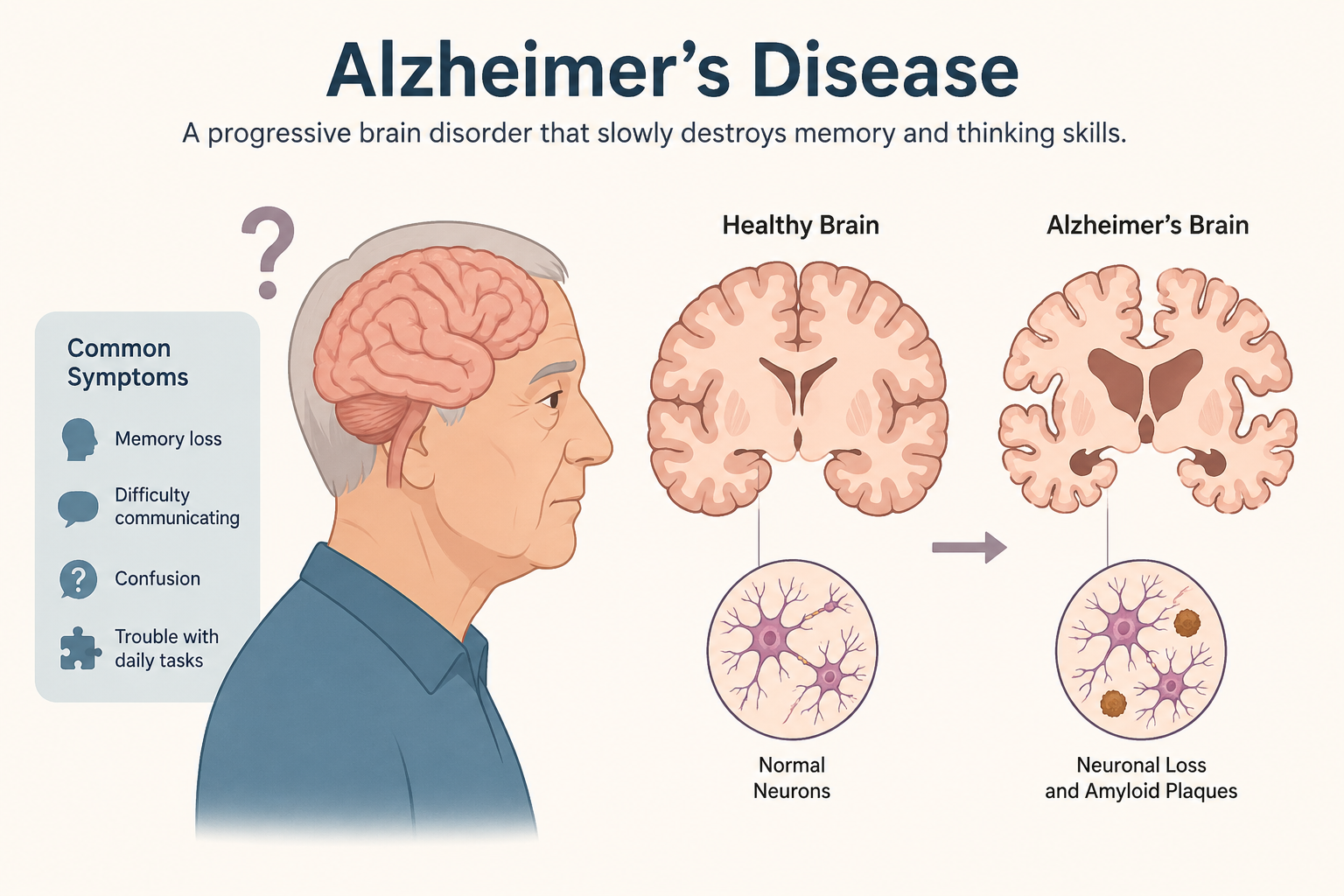
Alzheimer’s disease is a progressive brain disorder that slowly destroys memory, thinking ability, and essential cognitive functions. It is the most common cause of dementia, affecting millions of people worldwide, especially older adults. Over time, it interferes with daily life, making even simple tasks challenging.
Understanding Dementia and Alzheimer’s Disease
Many people confuse dementia and Alzheimer’s, but they are not the same. Dementia is a general term for a decline in mental ability severe enough to affect daily life, while Alzheimer’s disease is a specific type of dementia. In fact, Alzheimer’s causes dementia in the majority of cases.
Alzheimer’s Disease Symptoms
Recognizing Alzheimer’s symptoms early can help in better management and care. The symptoms usually develop gradually and worsen over time.
Common Symptoms of Alzheimer’s Disease:
- Memory loss that disrupts daily life
- Difficulty solving problems or planning
- Confusion with time or place
- Trouble understanding visual images
- Problems with speaking or writing
- Frequently misplacing items and being unable to track them back
- Changes in mood and personality
The symptoms of Alzheimer’s can vary from person to person, but memory decline is typically the earliest sign.
Common Indicators of Alzheimer’s Disease and Dementia
The signs and symptoms of Alzheimer’s and dementia often overlap. These may include:
- Poor judgment and decision-making
- Withdrawal from social activities
- Difficulty completing familiar tasks
- Increased anxiety, confusion, or aggression
As the condition progresses, individuals may require full-time care.
Early Onset Alzheimer’s Disease
While Alzheimer’s mostly affects older adults, early-onset Alzheimer’s can occur in people under 65. This form is less common but often more aggressive. It may be linked to genetic factors and can progress faster than late-onset Alzheimer’s.
Stages of Alzheimer’s Disease
Understanding the stages of Alzheimer’s helps caregivers and families prepare for changes.
1. Early Stage (Mild)
- Mild memory loss
- Difficulty finding words
- Trouble organizing tasks
2. Middle Stage (Moderate)
- Increased confusion
- Difficulty recognizing family members
- Behavioral changes
3. Late Stage (Severe)
- Loss of ability to communicate
- Dependence on others for care
- Physical decline
Each stage requires different levels of support and care.
Causes of Alzheimer’s Disease
The exact cause of Alzheimer’s is not fully understood. However, researchers believe it involves a combination of genetic, environmental, and lifestyle factors.
Key Causes and Risk Factors:
- Age (the biggest risk factor)
- Family history and genetics
- Brain cell damage due to abnormal protein buildup
- Lifestyle factors like poor diet, lack of exercise, and smoking
It is important to understand that Alzheimer’s disease causes dementia by damaging brain cells and disrupting communication between them.
Alzheimer’s Disease Treatment
Currently, there is no complete cure for Alzheimer’s, but treatments can help manage symptoms and improve quality of life.
Available Alzheimer’s Disease Treatments:
- Medications to improve memory and cognitive function
- Behavioral therapies
- Supportive care and lifestyle adjustments
Alzheimer’s treatment focuses on slowing progression and managing symptoms rather than curing the condition.
Alzheimer’s Disease Medication
Several types of Alzheimer’s medication are available to help manage symptoms:
- Cholinesterase inhibitors (for memory improvement)
- NMDA receptor antagonists (to regulate brain activity)
- Medications for mood and behavioral symptoms
These medications may not stop the disease, but can provide temporary relief and improve daily functioning.
Alzheimer’s Disease Treatments and Care Strategies
Effective Alzheimer’s treatments often combine medical care with lifestyle support:
- Regular physical activity
- Brain-stimulating activities (puzzles, reading)
- Healthy diet (Mediterranean diet recommended)
- Strong social connections
Caregivers play a crucial role in ensuring safety, emotional support, and proper routine for patients.
Prevention of Alzheimer’s Disease
While there is no guaranteed prevention, certain lifestyle choices may reduce the risk:
- Maintain a healthy diet
- Exercise regularly
- Keep the brain active
- Manage chronic conditions like diabetes and hypertension
- Avoid smoking and excessive alcohol use
Early diagnosis and intervention can significantly improve outcomes.
Is There a Cure for Alzheimer’s Disease?
Many people ask if there is a cure for Alzheimer’s. As of now, there is no permanent cure. However, ongoing research is exploring new therapies, including drugs targeting brain proteins and advanced treatments to slow disease progression.
This comprehensive guide helps you understand what Alzheimer’s is, its symptoms, causes, and available Alzheimer’s disease treatments. Early awareness and proper care can make a significant difference in managing this challenging condition.
FAQs
1. What is Alzheimer’s disease?
Alzheimer’s is a progressive brain disorder that affects memory, thinking, and behavior, eventually interfering with daily life.
2. What are the early Alzheimer’s symptoms?
Early Alzheimer’s symptoms include memory loss, confusion, difficulty concentrating, and trouble completing familiar tasks.
3. What is the difference between dementia and Alzheimer’s?
Dementia is a general term for cognitive decline, while Alzheimer’s is a specific type of dementia and the most common cause.
4. Is there a cure for Alzheimer’s?
Currently, there is no complete cure for Alzheimer’s, but treatments can help manage symptoms and improve quality of life.
5. What are the stages of Alzheimer’s?
The stages of Alzheimer’s include early (mild), middle (moderate), and late (severe), each with increasing levels of cognitive decline and care needs.
Reference
https://www.mayoclinic.org/diseases-conditions/alzheimers-disease/symptoms-causes/syc-20350447
https://my.clevelandclinic.org/health/diseases/9164-alzheimers-disease
0 200
No Comments