
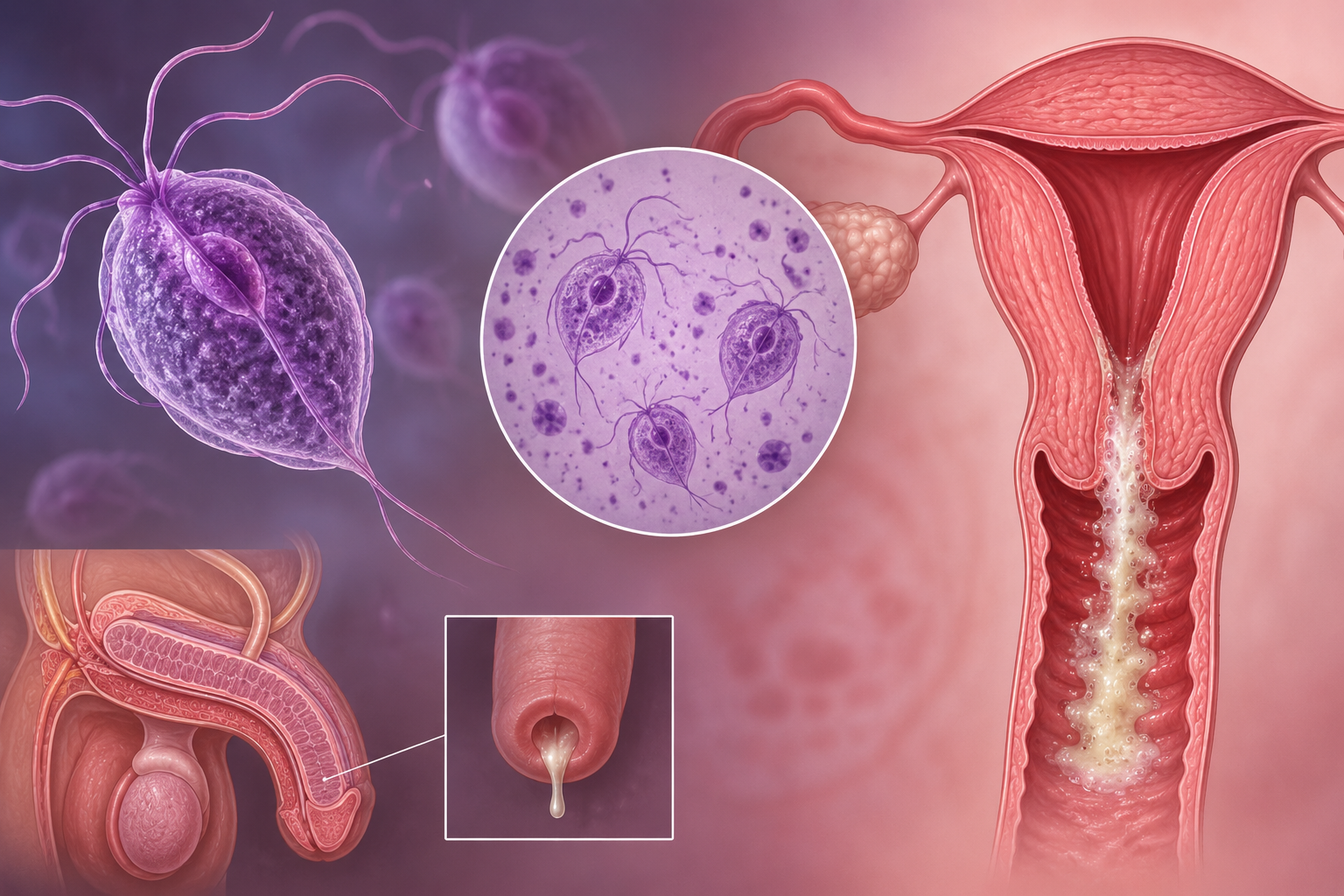
Trichomoniasis disease is one of the most common sexually transmitted infections (STIs) worldwide. It is caused by a microscopic parasite that affects the urogenital tract in both males and females. Many people may not realize they are infected because the condition can sometimes show mild or no symptoms, yet it can still be passed to others during sexual contact.
What is Trichomoniasis?
trichomoniasis meaning refers to a sexually transmitted infection caused by a protozoan parasite. It mainly spreads through unprotected sexual intercourse and affects the genital and urinary areas. Understanding what trich is helps in identifying early signs and seeking timely medical attention.
The parasite responsible for this infection is known as Trichomonas vaginalis. Learning what is trichomonas vaginalis is important because it helps explain how the infection behaves inside the human body and why treatment is necessary.
Causes of Trichomoniasis
trichomoniasis caused by a parasite called Trichomonas vaginalis, which spreads during sexual contact. It does not spread through casual contact like hugging, sharing food, or using public toilets.
The infection is more likely to spread when there is unprotected sex or multiple sexual partners. Both males and females can carry and spread the parasite even when no visible symptoms are present.
Trichomoniasis Life Cycle
The trichomoniasis life cycle begins when the parasite enters the human body through sexual contact. It attaches itself to the epithelial cells of the urogenital tract, where it multiplies. The parasite does not require an intermediate host and survives only within humans, making sexual transmission the primary mode of spread.
Symptoms of Trichomoniasis
The trichomoniasis symptoms can vary depending on the individual. Some people may not notice any signs, while others experience discomfort within a few days to weeks after infection.
Common symptoms include:
- Itching or irritation in the genital area
- Burning sensation during urination
- Unusual genital discharge
- Discomfort during sexual intercourse
One of the most noticeable signs in women is discharge with trichomoniasis, which may appear yellow-green, frothy, and have a strong odor.
Trichomoniasis in Men
trichomoniasis for men often shows fewer symptoms compared to women. Many men remain asymptomatic carriers, which increases the risk of unknowingly spreading the infection to sexual partners.
When symptoms do appear in men, they may include mild irritation inside the penis, burning after urination, or slight discharge.
Diagnosis and Medical Testing
Doctors usually diagnose trichomoniasis by examining a sample of vaginal or urethral discharge under a microscope or through laboratory tests. Since symptoms may resemble other infections, proper testing is important for accurate diagnosis.
Treatment Options
The treatment trichomoniasis usually involves prescription medication, most commonly antibiotics that are effective against the parasite.
antibiotics for trichomoniasis are typically prescribed in a single-dose or short-course treatment plan. Both sexual partners should be treated at the same time to prevent reinfection.
The trichomonas treatment approach focuses on eliminating the parasite from the body and preventing recurrence. It is important to avoid sexual activity during treatment to ensure full recovery.
Treating Trichomoniasis Effectively
Treating trichomoniasis requires completing the full course of medication, even if symptoms disappear early. Stopping treatment too soon can lead to reinfection or incomplete healing.
Patients are also advised to avoid alcohol while taking certain medications, as it may reduce effectiveness or cause side effects.
How to Manage and Prevent Infection
Knowing how to treat trichomoniasis also includes understanding preventive measures. Safe sexual practices such as using condoms, limiting the number of sexual partners, and regular STI screening can significantly reduce the risk of infection.
Understanding trichomonas vaginalis infection helps individuals become more aware of transmission patterns and the importance of hygiene and protection.
Understanding Trichomoniasis in Simple Terms
If someone asks, can man get trichomoniasis? The answer is yes. Men can easily get infected and unknowingly spread the parasite to others. Early diagnosis and prompt treatment are important for controlling the infection.
The infection is commonly referred to in short form as what is trich, especially in medical discussions and informal contexts.
Importance of Medical Care
Seeking professional medical care is crucial if symptoms appear. Self-medication is not recommended because incorrect treatment can lead to complications or reinfection. Proper diagnosis ensures the right medication and dosage are used.
FAQs
1. What causes trichomoniasis infection?
Trichomoniasis is caused by a protozoan parasite that spreads through sexual contact with an infected person.
2. Can trichomoniasis go away without treatment?
No, the infection usually requires antibiotics prescribed by a doctor for complete recovery.
3. How long does trichomoniasis last?
With appropriate treatment, it can be cured within a week, whereas untreated infections may persist for months.
4. Is trichomoniasis dangerous?
While not usually life-threatening, it can cause discomfort and increase the risk of other infections if untreated.
5. Can trichomoniasis come back after treatment?
Yes, reinfection is possible if a sexual partner is not treated or if safe practices are not followed.
Reference
https://my.clevelandclinic.org/health/diseases/4696-trichomoniasis
https://www.ncbi.nlm.nih.gov/books/NBK534826/
1 250
No Comments