
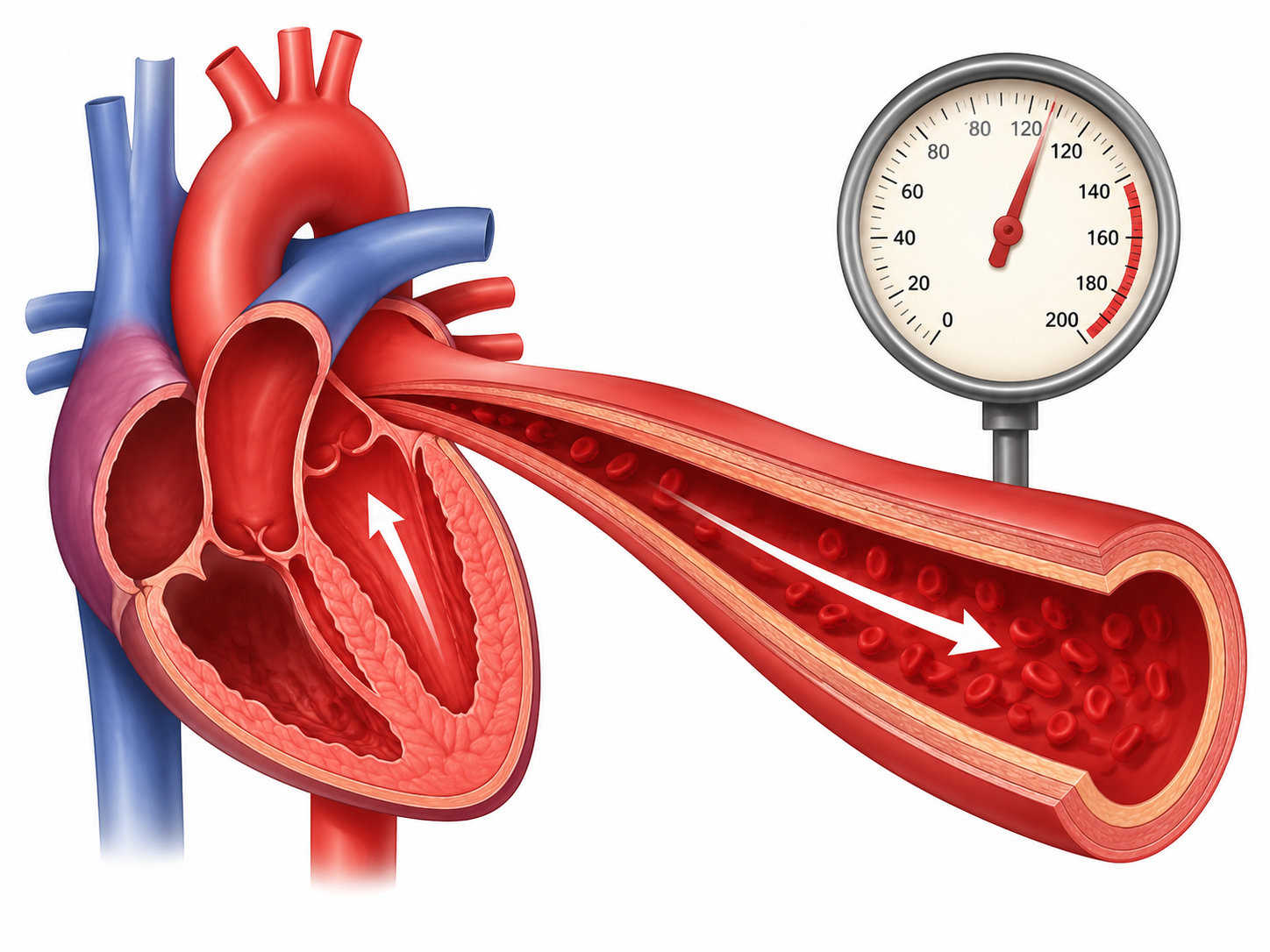
Blood pressure is one of the most important indicators of overall heart health. It reflects how strongly blood pushes against the walls of arteries as the heart pumps and relaxes. This measurement is always written as two numbers, commonly known as systolic pressure and diastolic pressure. Understanding these values is essential for maintaining good cardiovascular health and preventing serious diseases.
Understanding Systolic Pressure
The systolic pressure meaning refers to the force exerted on artery walls when the heart contracts and pushes blood out to the body. It is the upper value in a blood pressure reading, such as 120/80 mmHg, where 120 represents this pressure level.
In simple terms, what is systolic pressure can be explained as the pressure created in arteries during each heartbeat. This is when oxygen-rich blood is actively pumped from the heart to organs and tissues.
The definition of systolic pressure is the maximum arterial pressure during xheart contraction. It reflects how hard the heart is working to circulate blood throughout the body.
Understanding Diastolic Pressure
To fully understand what is systolic pressure and diastolic pressure, it is important to also know what happens between heartbeats. While systolic pressure measures force during contraction, diastolic pressure measures the pressure when the heart relaxes and fills with blood.
Together, they form a complete picture of heart function. This diastolic systolic pressure definition helps doctors assess how efficiently the cardiovascular system is working.
Key Difference Between the Two Measurements
The distinction between systolic and diastolic pressure is based on when each occurs in the heartbeat cycle and the role they play in measuring heart function. Systolic pressure occurs when the heart beats and pumps blood, while diastolic pressure occurs when the heart rests between beats.
Both values are important. If either reading is too high or too low, it may indicate an underlying health issue that requires attention. Maintaining a healthy balance ensures proper circulation and oxygen delivery throughout the body.
Importance of Monitoring Blood Pressure
Regular monitoring of systolic pressure and diastolic pressure is important for detecting early signs of hypertension. Many people do not experience symptoms even when their blood pressure is high, which makes regular checks essential.
Consistently elevated readings can lead to complications such as heart disease, stroke, kidney damage, and vision problems. Early detection allows lifestyle changes and treatment to reduce risks significantly.
Pulmonary Circulation and Pressure
Another related concept is pulmonary systolic pressure, which refers to the pressure in the arteries that carry blood from the heart to the lungs. This is different from systemic blood pressure because it focuses only on lung circulation.
When pulmonary pressure becomes elevated, it may indicate a condition known as pulmonary hypertension. This condition can cause symptoms such as fatigue, chest discomfort, and shortness of breath, and requires medical evaluation.
In clinical documentation, pulmonary artery systolic pressure icd 10 is used as a diagnostic classification code. It helps healthcare professionals record and track diseases related to abnormal pressure in the pulmonary arteries for proper treatment planning and insurance reporting.
Causes of High Blood Pressure
High systolic blood pressure occurs when the upper reading consistently rises above normal levels, usually 130 mmHg or more. This condition is often associated with aging, as arteries naturally become stiffer over time.
Other contributing factors include unhealthy diet, excessive salt intake, lack of exercise, obesity, chronic stress, smoking, and excessive alcohol consumption. In some cases, genetics and underlying medical conditions also play a role.
If left unmanaged, high readings can strain the heart and increase the risk of cardiovascular complications.
Lifestyle and Prevention
Maintaining healthy blood pressure depends on steady lifestyle habits, and a balanced diet that includes fruits, vegetables, whole grains, and lean proteins helps support good heart health. Reducing salt intake can help control fluid balance and prevent pressure from rising.
Regular physical activity helps strengthen the heart and enhances blood circulation. Stress management techniques such as meditation, deep breathing, and adequate sleep also contribute to maintaining stable readings.
Avoiding smoking and limiting alcohol intake further reduces strain on the cardiovascular system.
Conclusion
Blood pressure is a vital health indicator that should never be ignored. Knowing what systolic pressure is helps individuals understand how their heart functions and what changes may be needed to stay healthy. Regular monitoring, healthy lifestyle choices, and medical guidance play a key role in maintaining cardiovascular wellness.
FAQs
1. What is systolic pressure?
It is the pressure in the arteries when the heart contracts and pumps blood throughout the body. It represents the upper number in a blood pressure reading.
2. What is the main difference between systolic and diastolic readings?
The difference between systolic and diastolic readings is that systolic measures arterial force during heartbeats, while diastolic reflects arterial force when the heart is at rest.
3. Why is blood pressure measured in two numbers?
Blood pressure consists of systolic and diastolic values because it captures both the heart’s pumping phase and its resting phase within the overall cardiovascular cycle.
4. What causes high systolic blood pressure?
Common causes include aging, unhealthy lifestyle, high salt intake, stress, obesity, smoking, and lack of exercise.
5. What is pulmonary systolic pressure?
It is the pressure in the arteries that carry blood from the heart to the lungs, and it is important for assessing lung circulation health.


No Comments