
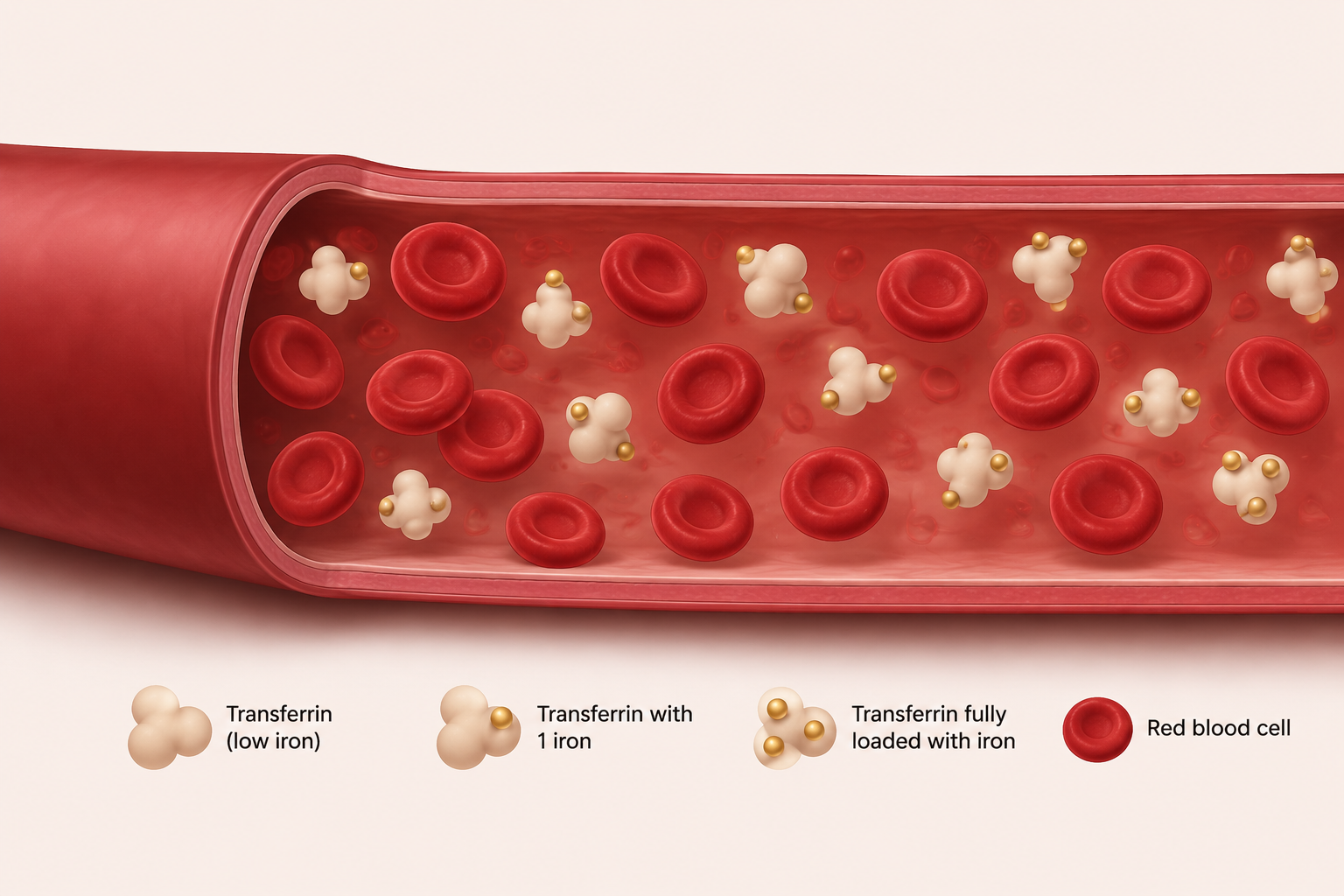
Iron plays a vital role in the body by helping produce hemoglobin, the protein in red blood cells that carries oxygen. When iron levels become insufficient, your body may struggle to function properly, leading to fatigue, weakness, and other health concerns. One common indicator of iron status is iron saturation percentage, which measures how much iron is bound to transferrin, the protein responsible for transporting iron through the bloodstream.
What Does Low Iron Saturation Mean?
Many people wonder, what does low iron saturation mean? Iron saturation measures the percentage of transferrin in the bloodstream that is bound to iron. When this percentage is low, it may indicate that your body does not have enough available iron to meet its needs.
The low iron saturation meaning can vary depending on the individual and their overall health. In most cases, low transferrin saturation is associated with iron deficiency, chronic illness, poor iron absorption, or blood loss. Healthcare providers often evaluate iron saturation alongside ferritin, serum iron, and other laboratory markers to determine the underlying cause.
Understanding Iron Saturation Percentage
The transferrin saturation percentage is calculated using serum iron and total iron-binding capacity (TIBC). Normal values generally range from about 20% to 50%, although reference ranges may differ between laboratories.
A low saturation iron value may suggest:
- Iron deficiency
- Chronic inflammation
- Poor dietary iron intake
- Gastrointestinal disorders affecting absorption
- Blood loss from menstruation or internal bleeding
Your doctor may order a saturation blood test as part of an iron panel to assess your iron status more accurately.
Low Iron Saturation Symptoms
Recognizing low transferrin saturation symptoms is important for early diagnosis and treatment. Since iron is essential for oxygen transport, low levels can affect multiple body systems.
Common symptoms of low transferrin saturation include:
- Persistent fatigue
- Weakness
- Pale skin
- Shortness of breath
- Dizziness
- Headaches
- Cold hands and feet
- Difficulty concentrating
- Rapid heartbeat
- Brittle nails
Some individuals may experience symptoms even before developing full-blown anemia. If these symptoms persist, a healthcare professional may recommend a low iron test or a complete iron panel.
What Level of Iron Saturation Is Dangerously Low?
A frequently asked question is, what level of transferrin saturation is dangerously low?
Although the exact threshold may vary, many healthcare providers consider iron saturation below 15% to be significantly low. Levels below 10% may indicate severe iron deficiency and warrant prompt medical evaluation.
However, test results should always be interpreted in context with symptoms, medical history, and additional laboratory values. A dangerously low iron saturation percentage can reduce oxygen delivery throughout the body and potentially affect overall health and quality of life.
Low Iron but Normal Ferritin
Some people receive test results showing low iron but normal ferritin, which can be confusing. Ferritin reflects stored iron, while serum iron and iron saturation reflect circulating iron available for immediate use.
In certain situations, ferritin levels may remain normal despite reduced available iron. This can occur due to:
- Chronic inflammation
- Early-stage iron deficiency
- Liver disease
- Infection
- Autoimmune conditions
When evaluating low iron but normal ferritin, healthcare providers often review multiple blood markers rather than relying on a single test result.
Normal Ferritin Low Iron: Why It Happens
The situation of normal ferritin, low iron, is not uncommon. Ferritin is also an acute-phase reactant, meaning it can increase during inflammation or illness.
As a result, ferritin may appear normal while transferrin saturation and serum iron levels are low. This is why doctors frequently order a complete iron panel, including ferritin, serum iron, transferrin saturation, and TIBC, to obtain a more accurate picture of iron status.
Understanding TIBC and Iron Binding Capacity
Total Iron-Binding Capacity (TIBC) is a blood test that measures how much iron your blood can carry. It helps healthcare providers evaluate how efficiently transferrin transports iron throughout the body.
Low TIBC Blood Test
A low TIBC blood test result may indicate that the body is producing less transferrin than normal. Unlike classic iron deficiency, where TIBC is often elevated, low TIBC may be associated with:
- Chronic inflammatory diseases
- Liver disease
- Malnutrition
- Certain chronic infections
TIBC Blood Test Low Results
If your TIBC blood test result appears alongside low transferrin saturation, your healthcare provider may investigate underlying inflammatory or chronic medical conditions. These results can provide important clues about the cause of iron-related abnormalities.
Total Iron Binding Capacity Low
When total iron binding capacity has low values, the body may have a reduced ability to transport iron. This finding does not always indicate iron deficiency but can point toward other health conditions that require medical attention.
Causes of Low transferrin saturation
Several factors can contribute to low transferrin saturation, including:
Poor Dietary Intake
A diet lacking iron-rich foods can gradually reduce iron stores and lower transferrin saturation
Blood Loss
Chronic blood loss from heavy menstrual periods, ulcers, gastrointestinal bleeding, or surgery can lead to iron deficiency.
Reduced Iron Absorption
Conditions such as celiac disease, inflammatory bowel disease, and certain stomach surgeries may impair iron absorption.
Chronic Disease
Inflammatory conditions can affect iron metabolism and contribute to low transferrin saturation even when iron stores appear adequate.
How Low Iron Saturation Is Diagnosed
Doctors typically use several laboratory tests to evaluate iron status:
- Serum iron
- Ferritin
- Transferrin saturation
- Complete blood count (CBC)
- TIBC
- Reticulocyte count
A saturation blood test combined with these measurements provides valuable information about iron availability and storage.
Treatment Options
Treatment depends on the underlying cause of low transferrin saturation.
Common approaches include:
- Increasing dietary iron intake
- Taking iron supplements under medical supervision
- Treating sources of blood loss
- Managing chronic inflammatory conditions
- Addressing gastrointestinal absorption disorders
Foods rich in iron include lean meats, poultry, fish, beans, lentils, spinach, and fortified cereals.
Conclusion
Low transferrin saturation can be an important indicator of iron deficiency or other underlying health conditions. Understanding what low transferrin saturation means, recognizing low transferrin saturation symptoms, and interpreting related test results such as transferrin saturation percentage, ferritin, and TIBC can help identify potential problems early. If you experience symptoms or receive abnormal iron test results, consult a healthcare professional for proper evaluation and personalized treatment.
FAQs
1. What does low transferrin saturation mean?
Low transferrin saturation means that a lower percentage of transferrin is carrying iron, which may indicate iron deficiency, inflammation, or other health conditions affecting iron metabolism.
2. What are the symptoms of low transferrin saturation?
Common symptoms include fatigue, weakness, dizziness, headaches, shortness of breath, pale skin, and difficulty concentrating.
3. What level of transferrin saturation is dangerously low?
Transferrin saturation below 15% is generally considered low, while levels below 10% may indicate severe transferrin saturation deficiency requiring medical evaluation.
4. Can I have low iron but normal ferritin?
Yes. Conditions such as inflammation, infection, or early-stage iron deficiency can cause low iron levels while ferritin remains within the normal range.
5. What does a low TIBC blood test indicate?
A low TIBC blood test may suggest chronic inflammation, liver disease, malnutrition, or other conditions that affect transferrin production and iron transport.
Reference
https://www.medicalnewstoday.com/articles/low-iron-saturation.
https://pmc.ncbi.nlm.nih.gov/articles/PMC8002799/
https://www.mayoclinic.org/diseases-conditions/iron-deficiency-anemia/symptoms-causes/syc-20355034


No Comments