
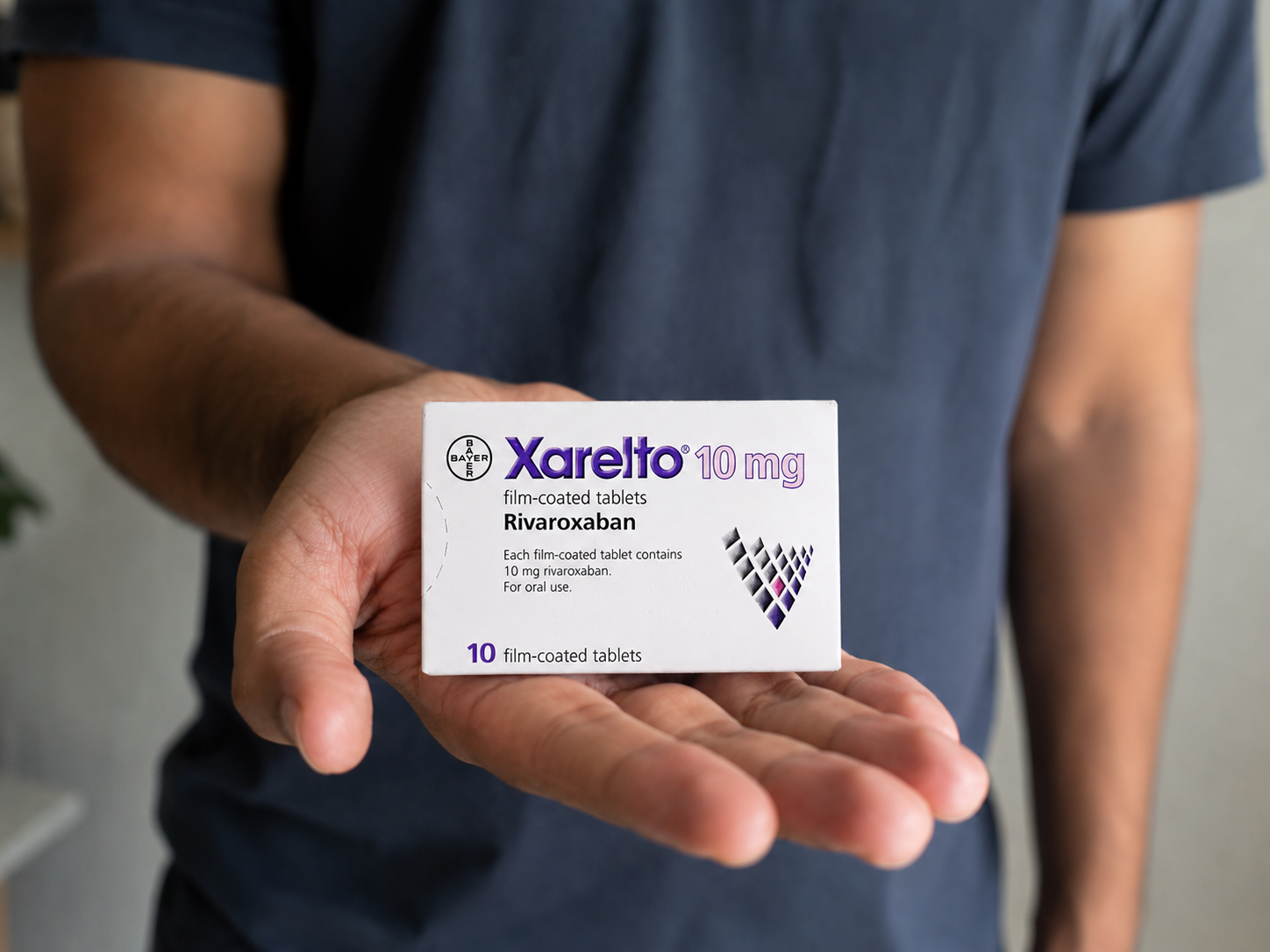
Rivaroxaban (Xarelto) is a prescription anticoagulant, commonly known by its brand name Xarelto, that helps prevent and treat blood clots. It is classified as a direct oral anticoagulant (DOAC). Doctors prescribe rivaroxaban for conditions such as atrial fibrillation (AF), deep vein thrombosis (DVT), pulmonary embolism (PE), and the prevention of clot-related complications after certain surgeries. Your doctor selects the appropriate Rivaroxaban dose based on your medical condition, making it important to follow the recommended dosing guidelines carefully.
What Is the Normal Dosage of Xarelto?
The normal dosage of Xarelto depends on the condition being treated, age, kidney function, and other individual factors. There is no single normal Xarelto dose that applies to everyone.
Common dosing regimens include:
- Atrial Fibrillation (AF): 20 mg once daily with the evening meal.
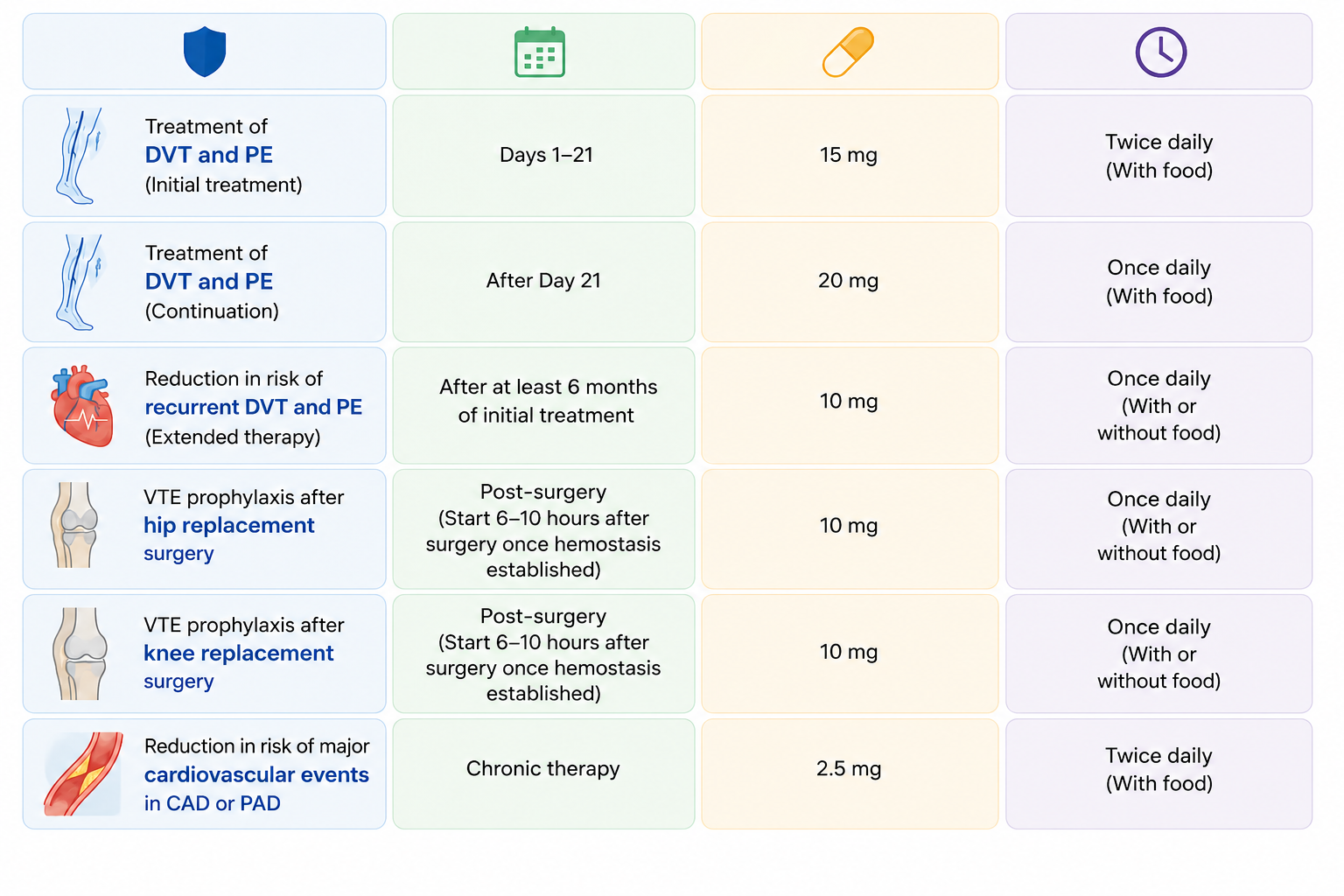
- DVT and PE Treatment: 15 mg twice daily for the first 21 days, followed by 20 mg once daily.
- Prevention of Recurrent DVT or PE: 10 mg once daily in selected patients.
- Coronary or Peripheral Artery Disease: Lower-dose regimens may be prescribed alongside aspirin.
Always consult your healthcare provider before making any changes to your medication schedule.
Rivaroxaban Dose in AF
The rivaroxaban dose in AF is generally 20 mg taken once daily with food for patients with non-valvular atrial fibrillation. This dosage helps reduce the risk of stroke and systemic embolism.
Patients with reduced kidney function may require a lower dose. Since AF increases the risk of blood clot formation, taking rivaroxaban consistently is essential for effective protection.
Rivaroxaban Dose in Pulmonary Embolism
Treatment of pulmonary embolism with rivaroxaban typically starts with an initial intensive phase. For most adults:
- 15 mg taken twice daily for the first 21 days
- followed by 20 mg once daily for ongoing treatment.
This regimen is often referred to as the rivaroxaban PE dose or dose of Xarelto for PE. The goal is to quickly reduce the clotting risk and prevent future embolic events.
When discussing rivaroxaban and pulmonary embolism, healthcare professionals often consider factors such as clot severity, kidney function, and bleeding risk before determining the ideal treatment duration.
Rivaroxaban Dosing for PE
Proper rivaroxaban dosing for PE is critical because pulmonary embolism can be life-threatening. Many patients continue therapy for at least three to six months, while others may require longer treatment depending on their risk factors.
Studies have shown that rivaroxaban in pulmonary embolism management can be effective and convenient because it does not typically require routine blood monitoring like warfarin.
Rivaroxaban Dose in Cerebral Venous Thrombosis
The rivaroxaban dose in cerebral venous thrombosis may vary depending on the patient’s condition and physician recommendations. Cerebral venous thrombosis (CVT) is a rare form of blood clot affecting veins in the brain.
Although treatment approaches differ among healthcare providers, rivaroxaban is sometimes used after initial anticoagulation therapy. Because CVT requires specialised management, patients should follow the guidance of a neurologist or haematologist.
Rivaroxaban Dose Per Kg
Unlike some anticoagulants, the rivaroxaban dose per kg is generally not calculated strictly according to body weight in adults. Standard dosing protocols are usually followed based on the condition being treated.
However, factors such as extreme body weight, kidney function, age, and other medications may influence treatment decisions. Pediatric dosing, when applicable, may involve weight-based calculations under specialist supervision.
Rivaroxaban Maximum Daily Dose
The rivaroxaban maximum daily dose depends on the indication. For many adult patients, 20 mg once daily represents the highest standard maintenance dose.
During the initial treatment phase for DVT or PE, patients may receive 15 mg twice daily, resulting in a total daily dose of 30 mg. Patients should never exceed prescribed doses without medical supervision.
Many people ask, is 40 mg Xarelto an overdose? Taking 40 mg daily may exceed the recommended dose for most adults and could increase the risk of serious bleeding. If an accidental overdose occurs, seek immediate medical attention.
What Is the Lowest Dose of Xarelto?
A common question is, what is the lowest dose of Xarelto? Depending on the medical indication, doses as low as 2.5 mg twice daily may be prescribed in specific cardiovascular conditions.
For extended prevention of recurrent blood clots, some patients may receive 10 mg once daily. The appropriate Xarelto reduced dose should always be determined by a healthcare provider.
Best Time of Day to Take Xarelto
Many patients wonder about the best time of day to take Xarelto. The answer depends on the prescribed dosage.
For doses of 15 mg or 20 mg, rivaroxaban should generally be taken with food, often during the evening meal. Taking it at the same time each day helps maintain consistent blood levels.
If you are asking, what is the best time of day to take rivaroxaban, the most important factor is consistency. Follow your doctor’s instructions and avoid missing doses.
How to Take Xarelto Correctly
Understanding how to take Xarelto can help maximise effectiveness and minimise complications.
Important tips include:
- Take the medication exactly as prescribed.
- Use food when required for higher doses.
- Do not skip doses.
- Inform healthcare providers about all medications and supplements you use.
- Watch for signs of unusual bleeding.
Patients should never stop rivaroxaban suddenly without consulting a healthcare professional, as doing so may increase the risk of blood clots.
Half Life Rivaroxaban
The half-life of rivaroxaban refers to the time it takes for half of the drug to leave the body. In healthy adults, the half-life is generally around 5 to 9 hours, while it may be longer in older adults.
Xarelto PAD Dosing
Xarelto PAD dosing is commonly used for patients with peripheral artery disease (PAD). In certain cases, healthcare providers prescribe a low-dose rivaroxaban regimen in combination with aspirin to reduce the risk of cardiovascular complications.
The exact dosing schedule depends on the patient’s medical history and overall risk profile.
Xarelto for CVA
Some patients ask about Xarelto for CVA (cerebrovascular accident or stroke). Rivaroxaban is often used in patients with atrial fibrillation to reduce the risk of stroke caused by blood clots. However, treatment decisions depend on the type of stroke and individual medical circumstances.
FAQs
1. What is the normal dosage of Xarelto?
The normal dosage varies by condition. Common doses include 20 mg once daily for atrial fibrillation and specific regimens for DVT or PE treatment.
2. What is the best time of day to take rivaroxaban?
Doctors typically recommend taking 15 mg or 20 mg doses of rivaroxaban with food, often during the evening meal.
3. What is the lowest dose of Xarelto?
The lowest prescribed dose can be as low as 2.5 mg twice daily in certain cardiovascular conditions, depending on the treatment goal.
4. Is 40 mg Xarelto an overdose?
For most adults, 40 mg daily exceeds standard recommended dosing and may increase bleeding risk.
5. What is the half-life of rivaroxaban?
The half-life of rivaroxaban is generally 5 to 9 hours in healthy adults and may be longer in aged patients.
Conclusion
Rivaroxaban helps prevent and treat blood clots across a wide range of conditions. Whether discussing the rivaroxaban dose in AF, rivaroxaban dose in pulmonary embolism, or rivaroxaban dose in cerebral venous thrombosis, the correct dosage depends on the individual patient’s medical needs. Always follow your healthcare provider’s recommendations, take the medication consistently, and seek medical advice if you have questions about your treatment plan.
Reference
https://www.ncbi.nlm.nih.gov/books/NBK557502/
https://www.nhs.uk/medicines/rivaroxaban/how-and-when-to-take-rivaroxaban/
0 200

No Comments