
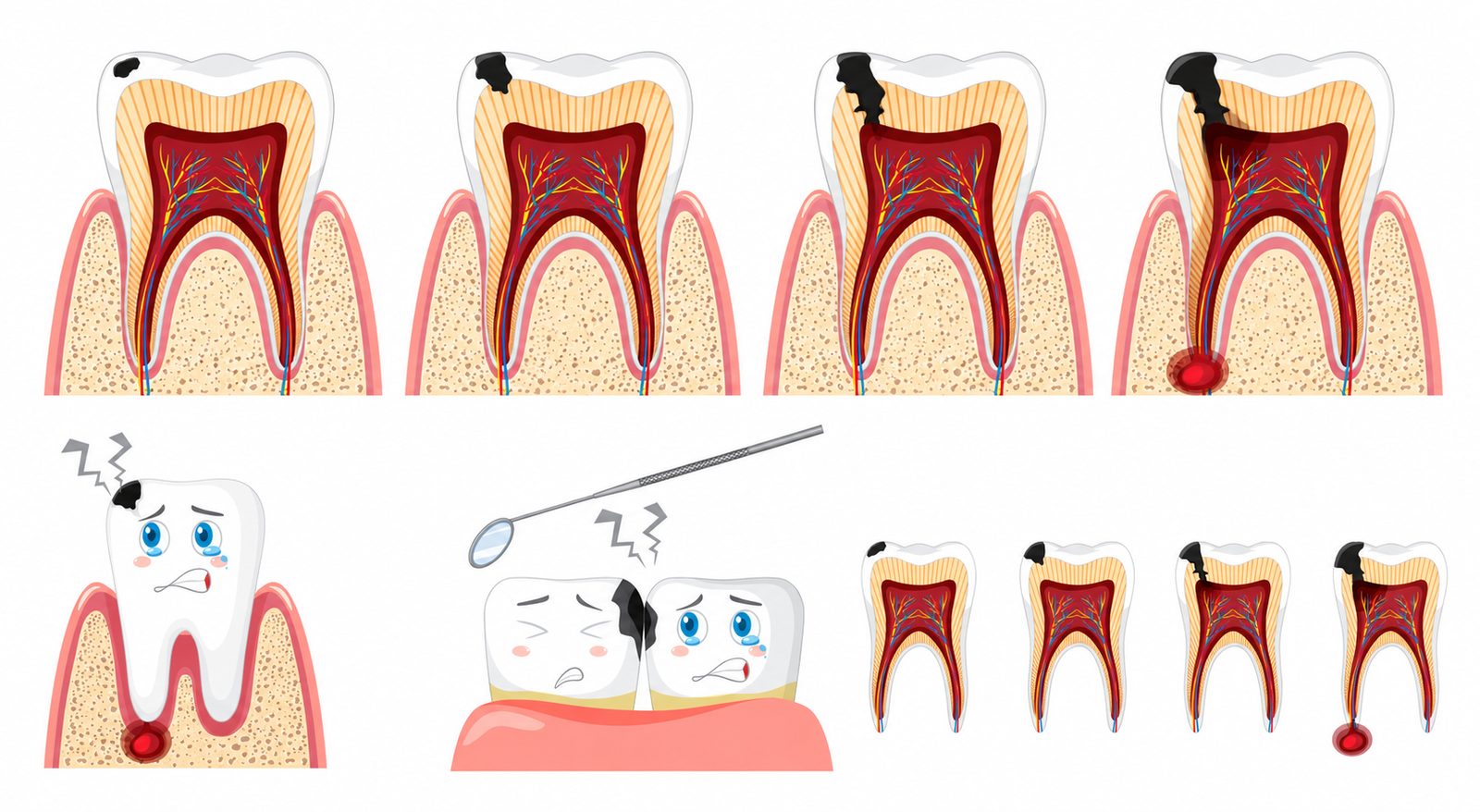
Dental caries, commonly known as tooth decay or cavities, is one of the most common oral health problems affecting people of all ages. It develops when bacteria in the mouth produce acids that damage the tooth’s protective layers. Understanding the dental caries stages can help identify problems early and prevent serious damage.
The dental caries process usually begins with small mineral losses in the enamel and can progress into deeper layers of the tooth if left untreated. Early detection, proper hygiene, and professional dental care can slow or stop the progression of decay.
Understanding the 5 Stages of Tooth Decay
The 5 stages of tooth decay describe how a cavity develops from minor enamel damage to severe tooth destruction. Each stage affects different parts of the tooth and requires different levels of care.
Stage 1: Enamel Demineralization (Early Tooth Decay)
The first stage begins when acids produced by bacteria attack the enamel. At this point, the tooth surface may lose minerals or vitamins and develop white spots or slight discoloration. Many people do not experience pain during this phase because the damage is limited to the outer layer.
A common question is: what happens in the first stage of tooth decay? During this stage, the enamel starts weakening due to acid exposure, but the tooth structure can often be repaired through fluoride treatments and improved oral care.
Tooth decay early stages can usually be reversed if proper steps are taken. Regular brushing, flossing, and reducing sugary foods can support enamel recovery.
Stage 2: Enamel Breakdown and Visible Cavities
When enamel continues to weaken, small holes or cavities may begin forming on the tooth surface. The damage becomes permanent because enamel cannot naturally grow back once destroyed.
Some people may notice early stage brown tooth decay, where brown or dark marks appear on the tooth. These changes may indicate mineral loss or developing cavities that require dental evaluation.
The beginning stages of rotting teeth often involve minor surface damage, but without treatment, bacteria can continue moving deeper into the tooth.
Stage 3: Dentin Decay
Beneath the enamel lies a softer tooth layer known as dentin. Once decay reaches this area, bacteria can spread faster because dentin is less resistant than enamel.
At this point, you may experience tooth sensitivity, pain from hot or cold foods, and noticeable cavities or holes in the tooth. Side tooth decay can also occur when bacteria accumulate between teeth or along difficult-to-clean areas.
Treatment at this point usually involves removing damaged tooth material and restoring the tooth with a filling.
Stage 4: Advanced Cavity Reaching the Pulp
A stage 4 cavity occurs when decay reaches the inner pulp area containing nerves and blood vessels. This stage can cause severe tooth pain, swelling, and increased sensitivity.
The tooth decay process becomes more serious when bacteria infect the pulp. Dentists may recommend procedures such as root canal treatment to remove infection and save the tooth.
Ignoring symptoms during this phase can increase the risk of abscess formation and tooth loss.
Stage 5: Severe Tooth Damage and Tooth Loss Risk
The final stage involves extensive destruction of the tooth structure. The infection may spread beyond the tooth and affect surrounding tissues.
At this stage, treatment options depend on the remaining tooth structure. In some cases, dentists may perform advanced restorative procedures, while severely damaged teeth may require removal.
The process of dental decay can be prevented from reaching this point through regular dental checkups and early treatment.
Signs and Symptoms of Dental Caries
The symptoms of tooth decay depend on how advanced the condition is. Common signs include:
- White spots or discoloration on teeth
- Brown or dark marks
- Tooth care sensitivity
- Pain while chewing
- Visible holes in teeth
- Bad breath
- Gum swelling near affected teeth
The difference between tooth decay before after treatment can be significant. Early intervention can preserve natural tooth structure, while delayed care may require more complex procedures.
Causes Behind the Dental Decay Process
The dental decay process is mainly caused by harmful bacteria that feed on sugars and release acids. Several factors can increase the likelihood of developing cavities, including:
- Poor brushing and flossing habits
- Frequent consumption of sugary foods and drinks
- Dry mouth conditions
- Lack of fluoride exposure
- Irregular dental visits
- Plaque buildup
Understanding the process of removing decay is known as cavity preparation or dental caries removal. During this procedure, dentists clean out infected tooth material before placing a restoration.
Diagnosis and Treatment for Tooth Decay
Dentists diagnose cavities through visual examinations, dental X-rays, and other assessments. A diagram of tooth decay is often used in dental education to explain how decay moves through enamel, dentin, and pulp layers.
The type of treatment depends on the severity of the cavity:
- Fluoride treatment for early enamel damage
- Dental fillings for small to moderate cavities
- Root canal therapy for deep infections
- Crowns for weakened teeth
- Extraction for severely damaged teeth
Early stage tooth decay treatment is usually simpler and less invasive compared with treating advanced cavities.
How to Prevent Tooth Decay and Cavities
Preventing tooth decay and cavity formation requires consistent oral care. Helpful habits include:
- Brush twice daily with fluoride toothpaste
- Floss regularly to remove plaque between teeth
- Limit sugary snacks and drinks
- Drink enough water
- Visit a dentist regularly
- Consider professional fluoride treatments if recommended
Recognizing early stages of cavity development can help you seek treatment before the damage becomes severe.
FAQs
1. What are the main stages of dental caries?
Dental caries develops through several stages, starting with enamel mineral loss and progressing to dentin damage, pulp infection, and severe tooth destruction. The earlier the condition is detected, the easier it is to treat.
2. Can early tooth decay be reversed?
Yes, early enamel damage may be improved with fluoride, better oral hygiene, and dietary changes. However, once a cavity forms, professional dental treatment is usually required.
3. How Quickly Can Tooth Decay Progress?
The speed of decay varies depending on oral hygiene, diet, bacteria levels, and individual health factors. Some cavities may take years to develop, while others can worsen much more quickly depending on various factors.
4. What is the best treatment for tooth decay?
The best treatment for tooth decay depends on the severity. Small cavities may need fillings, while deeper infections may require root canal treatment or other restorative procedures.
5. Can cavities be prevented after they start forming?
Early detection can help slow progression. Maintaining good oral hygiene and receiving timely dental care can prevent small cavities from becoming serious problems.
Reference
https://www.healthline.com/health/dental-and-oral-health/tooth-decay-stages

No Comments