
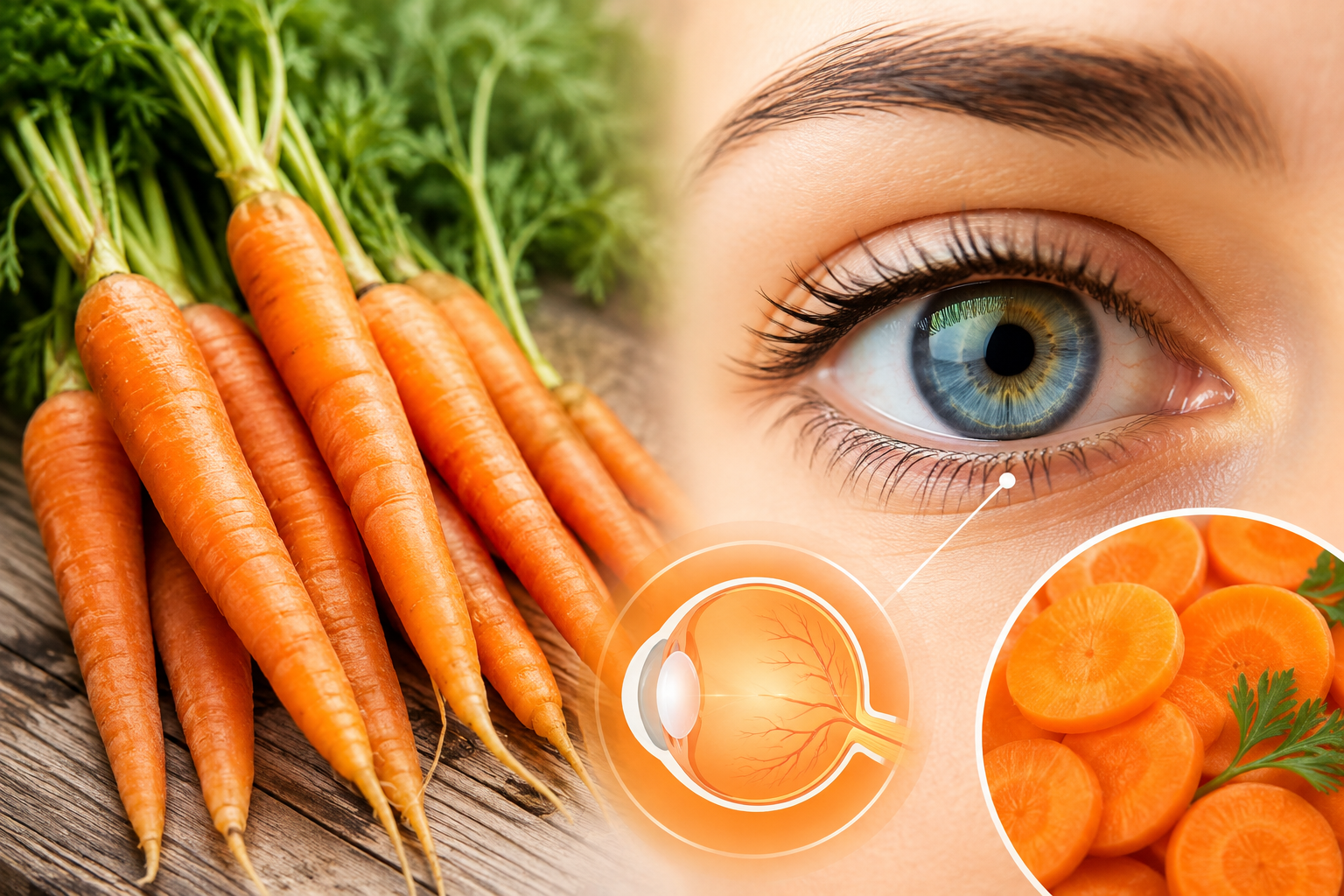
Carrots are one of the most popular foods associated with healthy vision. Their bright orange color comes largely from beta-carotene, a carotenoid that the body can convert into vitamin A. Vitamin A plays an important role in normal vision, particularly because it helps the retina function properly and supports the eyes’ ability to adapt to low-light conditions.
The Connection Between Carrots and Eye Health
Many people ask, carrots good for your eyes, and the short answer is yes. Carrots can be part of a healthy diet that supports normal eye function. They contain beta-carotene, which the body can use to make vitamin A. Vitamin A is essential for maintaining healthy eyes and is involved in the function of rhodopsin, a light-sensitive protein in the retina.
However, eating carrots does not automatically make your vision sharper or eliminate the need for glasses. If blurry vision is caused by a refractive error such as nearsightedness, farsightedness, astigmatism, or presbyopia, changing your diet alone will not correct the underlying problem. These conditions are generally evaluated through an eye examination and may require corrective lenses or other treatment.
Does Eating Carrots Improve Vision?
A common question is, does carrots improve eyesight? Carrots can support normal vision when they contribute vitamin A to the diet, especially when someone is not getting enough vitamin A from food. But they should not be considered a treatment for existing vision problems.
Vitamin A is important for the normal functioning of the retina and for seeing in low-light environments. Carrots mainly contain beta-carotene, which the body can convert into vitamin A, rather than providing significant amounts of ready-to-use vitamin A. The body converts some beta-carotene into vitamin A according to its needs.
How Beta-Carotene Supports Vision
Beta-carotene is a provitamin A carotenoid. After you eat foods containing beta-carotene, your body can convert some of it into vitamin A. Vitamin A contributes to the formation of rhodopsin, which is necessary for the eye to respond to light.
This explains why carrots have become closely associated with eyesight. A diet containing adequate vitamin A supports normal eye function, but more carrots do not necessarily mean better-than-normal vision.
So, does carrot help eyesight? It can help support normal eye function as part of a balanced diet, particularly by providing beta-carotene. The benefit is nutritional rather than a way to enhance vision beyond its normal capacity.
Can Carrots Help With Night Vision?
The relationship between carrots and seeing in low light is based on a real nutritional connection. Vitamin A has an important role in low-light vision, and severe vitamin A deficiency can cause night blindness. The National Eye Institute notes that vitamin A helps keep the eyes healthy and plays a significant role in helping people see in low light.
This does not mean eating carrots immediately improves your ability to see at night. If your diet already provides enough vitamin A, eating extra carrots is not expected to give you unusually strong night vision.
In other words, carrots good for your eyes is a reasonable nutritional statement, but carrots should not be viewed as a special treatment for night blindness or other eye conditions.
Do Carrots Give You Night Vision?
The idea that carrots provide special night vision is largely a myth when interpreted literally. do carrots give you night vision? No. Eating carrots cannot give a person superhuman ability to see in darkness.
What carrots can do is provide beta-carotene, which the body can convert into vitamin A. Adequate vitamin A is necessary for normal vision, including the ability to see in low light.
If someone has persistent difficulty seeing at night, it is better to have the problem evaluated rather than relying on carrots. Night blindness can have different causes, and some may require medical attention. Night blindness can be a form of low vision, so persistent difficulty seeing in dim or dark conditions should be evaluated by an eye-care professional.
Other Nutrients That Support Eye Health
Although carrots receive most of the attention, they are not the only food that can contribute to eye health. A varied diet can provide different nutrients needed by the eyes and the rest of the body.
Leafy green vegetables such as spinach and kale, as well as fish such as salmon and tuna, can also contribute important nutrients. The National Eye Institute specifically notes that these foods can provide vitamins and nutrients that help keep the eyes healthy.
Carrots can therefore be included alongside vegetables, fruits, whole grains, legumes, eggs, fish, and other nutrient-rich foods rather than being treated as a single solution for eye health.
The Truth About Eyesight and Carrots
So, eyesight carrots are connected through nutrition, particularly beta-carotene and vitamin A. But the popular idea that carrots can dramatically improve eyesight is an oversimplification.
If you have normal vitamin A levels, eating more carrots is unlikely to make your vision sharper than normal. Carrots are a nutritious part of a balanced diet and can provide beta-carotene, which the body converts into vitamin A to support normal eye function.
If you experience blurry vision, difficulty seeing at night, eye pain, flashes, sudden floaters, or other changes in vision, do not rely on dietary changes alone. An eye professional can determine whether an underlying condition needs treatment. Refractive errors, for example, can cause blurred vision and are diagnosed through an eye examination.
FAQs
1. Can carrots improve eyesight?
can carrots help you see in the dark? Carrots can support normal low-light vision because their beta-carotene can be converted into vitamin A. However, they do not provide enhanced or superhuman night vision. Vitamin A is important for normal retinal function and low-light vision.
2. Are carrots enough to maintain healthy eyes?
Carrots can contribute to a healthy diet, but they are not enough on their own. Eye health depends on overall nutrition, general health, genetics, age, and other factors. Including a variety of nutrient-rich foods is a better approach than relying on one food.
3. Do carrots help with night blindness?
do carrots help you see in the dark? They may help prevent problems related to inadequate vitamin A intake because beta-carotene can provide vitamin A. However, persistent night-vision problems can have several causes and should be evaluated by an eye-care professional.
4. Can eating carrots correct blurry vision?
No. If blurry vision is caused by a refractive error, carrots will not reshape the eye or correct the way light focuses on the retina. Glasses, contact lenses, or other appropriate treatments may be needed depending on the cause.
5. How many carrots should you eat for eye health?
There is no specific number of carrots that guarantees better eyesight. Carrots can be included as part of a varied, balanced diet. Your vitamin A needs depend on factors such as age and sex, and many foods besides carrots provide vitamin A or provitamin A carotenoids.
Reference
https://pubmed.ncbi.nlm.nih.gov/10484191/
https://www.healthline.com/nutrition/are-carrots-good-for-your-eyes
0 200

No Comments