
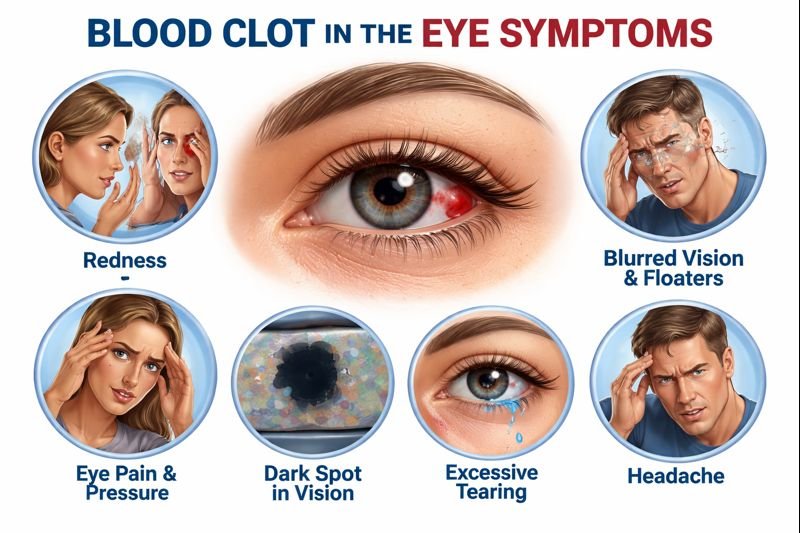
Blood clot in eye symptoms can appear suddenly and may cause blurred vision, dark spots, or partial vision loss in one eye. A blood clot in the eye occurs when normal blood flow to the retina is blocked, affecting the eye’s ability to process visual information.
Recognizing blood clot in eye symptoms early is crucial, as timely medical attention can help prevent permanent vision damage and serious complications.
What Is a Blood Clot in the Eye?
A blood clot in the eye develops when a vein or artery supplying the retina becomes blocked, typically due to a condition known as retinal vein occlusion. This blockage prevents proper blood circulation, causing swelling, bleeding, or damage to retinal tissue.
Retinal vein occlusion is more common and often associated with underlying health conditions such as high blood pressure or diabetes. Retinal artery occlusion is rarer but more severe and is considered an eye emergency.
Common Blood Clot in Eye Symptoms
Symptoms may vary depending on the type and severity of the blockage, but they often appear suddenly and worsen over time. Common symptoms include:
-
Sudden blurry or distorted vision in one eye
-
Partial or complete vision loss, which may develop gradually or instantly
-
Dark spots, floaters, or shadows in the visual field
-
Reduced sharpness or clarity of vision
-
Painless vision changes, which can delay medical attention
In severe cases, particularly with retinal artery occlusion, vision loss may be sudden and profound. Any unexplained vision change should be evaluated immediately by an eye specialist.
Types of Blood Clots in the Eye
-
Central Retinal Vein Occlusion (CRVO):
Occurs when the main retinal vein is blocked, often leading to widespread vision impairment. -
Branch Retinal Vein Occlusion (BRVO):
Affects smaller retinal veins and may cause partial vision loss or blind spots. -
Central Retinal Artery Occlusion (CRAO):
A medical emergency caused by a blocked blood supply to the retina, often resulting in sudden and severe vision loss. -
Branch Retinal Artery Occlusion (BRAO):
Impacts smaller arteries and leads to localized vision changes.
Causes and Risk Factors
Several underlying conditions increase the risk of developing a blood clot in the eye:
-
High blood pressure
-
Diabetes
-
High cholesterol
-
Cardiovascular disease
-
Smoking
-
Obesity
-
Glaucoma
-
Blood clotting disorders
-
Aging (most common in adults over 50)
In some cases, eye trauma or inflammation may also contribute to clot formation.
How Is a Blood Clot in the Eye Diagnosed?
Diagnosis typically involves a thorough eye examination conducted by an ophthalmologist. Tests may include:
-
Dilated eye exam to examine retinal blood vessels
-
Optical coherence tomography (OCT) to detect retinal swelling
-
Fluorescein angiography to assess blood flow
-
Blood tests to reduce cholesterol, glucose levels, and clotting disorders
Prompt diagnosis improves the chances of preserving vision and preventing complications.
Treatment Options
Treatment depends on the type of clot, severity, and underlying cause. While existing damage cannot always be reversed, treatment aims to prevent further vision loss and manage complications.
Common treatment approaches include:
-
Anti-VEGF injections: Reduce swelling and abnormal blood vessel growth
-
Corticosteroid injections or implants: Help control inflammation
-
Laser therapy: Used to manage retinal swelling or prevent bleeding
-
Management of underlying conditions: Controlling blood pressure, diabetes, and cholesterol
For retinal artery occlusion, immediate emergency treatment is required, although vision recovery is often limited.
Potential Complications
Without proper treatment, a blood clot in the eye can lead to complications such as:
-
Permanent vision loss
-
Macular edema (retinal swelling)
-
Retinal bleeding
-
Neovascular glaucoma
-
Increased risk of future vascular events
Regular follow-ups with an eye specialist are essential to monitor progress and prevent complications.
Prevention and Lifestyle Measures
While not all cases can be prevented, reducing risk factors plays a major role in eye health:
-
Maintain healthy blood pressure and blood sugar levels
-
Follow a heart-healthy diet
-
Exercise regularly
-
Avoid smoking
-
Attend routine eye exams, especially if you have chronic conditions
Early intervention and preventive care significantly reduce the risk of vision-threatening outcomes.
When to See a Doctor
Seek immediate medical attention if you experience sudden vision loss, blurred vision, or dark spots in one eye. Timely treatment can make a crucial difference in preserving vision and identifying underlying health risks such as stroke or cardiovascular disease.
FAQs
1. Can a blood clot in the eye go away on its own?
Some mild cases may improve, but medical evaluation and treatment are essential to prevent permanent damage.
2. Is a blood clot in the eye painful?
Most cases are painless, which is why symptoms should never be ignored.
3. Can stress cause a blood clot in the eye?
Stress alone does not cause clots, but it can worsen underlying risk factors like high blood pressure.
4. Is a blood clot in the eye a sign of stroke?
It can be associated with vascular disease, and retinal artery occlusion is sometimes linked to stroke risk.
5. Can vision return after a blood clot in the eye?
Vision recovery depends on the type, severity, and how quickly treatment begins.
Reference:
https://www.centreforsight.net/blog/blood-clot-in-eye-causes-symptoms-treatments
https://my.clevelandclinic.org/health/diseases/17713-subconjunctival-hemorrhage
https://www.manipalhospitals.com/delhi/blog/causes-and-treatment-of-blood-clot-in-eye/
0 200

No Comments