
Axillary breast tissue refers to breast-like tissue that develops or remains in the armpit area. It is sometimes called accessory breast tissue in the axilla or accessory breast tissue under arm. For some people, it looks like a small fullness or lump near the armpit, while others may notice tenderness or swelling that changes during the menstrual cycle.
If you are searching for how to reduce axillary breast tissue naturally, it is important to first understand what the tissue actually is. Not every underarm bulge is breast tissue. It can also be normal fat, a swollen lymph node, a cyst, or another type of tissue.
What Is Accessory Breast Tissue in the Axilla?
During fetal development, breast tissue forms along a line extending from the chest toward the armpit. In some people, additional breast tissue remains along this pathway. This condition is commonly referred to as accessory breast tissue or ectopic breast tissue.
Accessory breast tissue in the axilla can contain glandular tissue similar to tissue found in the breast. It may become more noticeable during puberty, pregnancy, breastfeeding, or other periods of hormonal change.
Changes in hormones can influence breast tissue growth and may make existing accessory tissue feel fuller or more tender. The same general process explains why some people experience temporary changes in breast size or sensitivity at different stages of life.
Can You Reduce Axillary Breast Tissue Naturally?
The answer depends on what is causing the fullness.
If the area contains a significant amount of body fat in addition to breast tissue, gradual overall weight loss may reduce some of the surrounding fat. However, spot reduction isn’t possible, meaning you cannot control which specific areas of your body lose fat first. Exercise and a balanced diet can support healthy weight management, but they cannot specifically “burn” breast tissue in the armpit.
This is important when considering how to reduce axillary breast tissue naturally. There is no proven diet, massage technique, cream, or exercise that selectively removes accessory breast tissue.
Strength exercises for the chest, shoulders and upper back can improve muscle tone and posture, which may change the appearance of the area. However, these exercises do not directly remove glandular breast tissue.
Be cautious with supplements or herbal products promoted as ways to shrink breast tissue. “Natural” does not automatically mean safe, and many supplement claims lack strong evidence.
What Causes Growth of Breast Tissue?
Hormonal fluctuations play a significant role in growth of breast tissue and development. Puberty, pregnancy, and breastfeeding can all cause breast tissue to become more prominent.
Some people may notice accessory tissue becoming more obvious during pregnancy because breast tissue responds to hormonal stimulation. Similarly, cyclical hormonal changes can make the area feel temporarily swollen or tender.
Any new or rapidly changing tissue should be evaluated by a healthcare professional rather than automatically attributed to accessory breast tissue. A clinician may perform an examination and, when appropriate, recommend imaging such as ultrasound or mammography.
Axillary Breast Tissue Photo: What Does It Look Like?
An axillary breast tissue photo can be useful for understanding the general appearance, but photographs cannot confirm whether a particular lump is accessory breast tissue.
It may appear as a soft fullness near the armpit, sometimes blending into the side of the breast. In other cases, the tissue may feel more defined. Appearance can vary considerably between individuals.
If you notice a new lump, persistent swelling, skin changes, nipple changes, or unexplained pain, it is better to have the area assessed rather than relying on photographs found online.
Understanding Breast Density
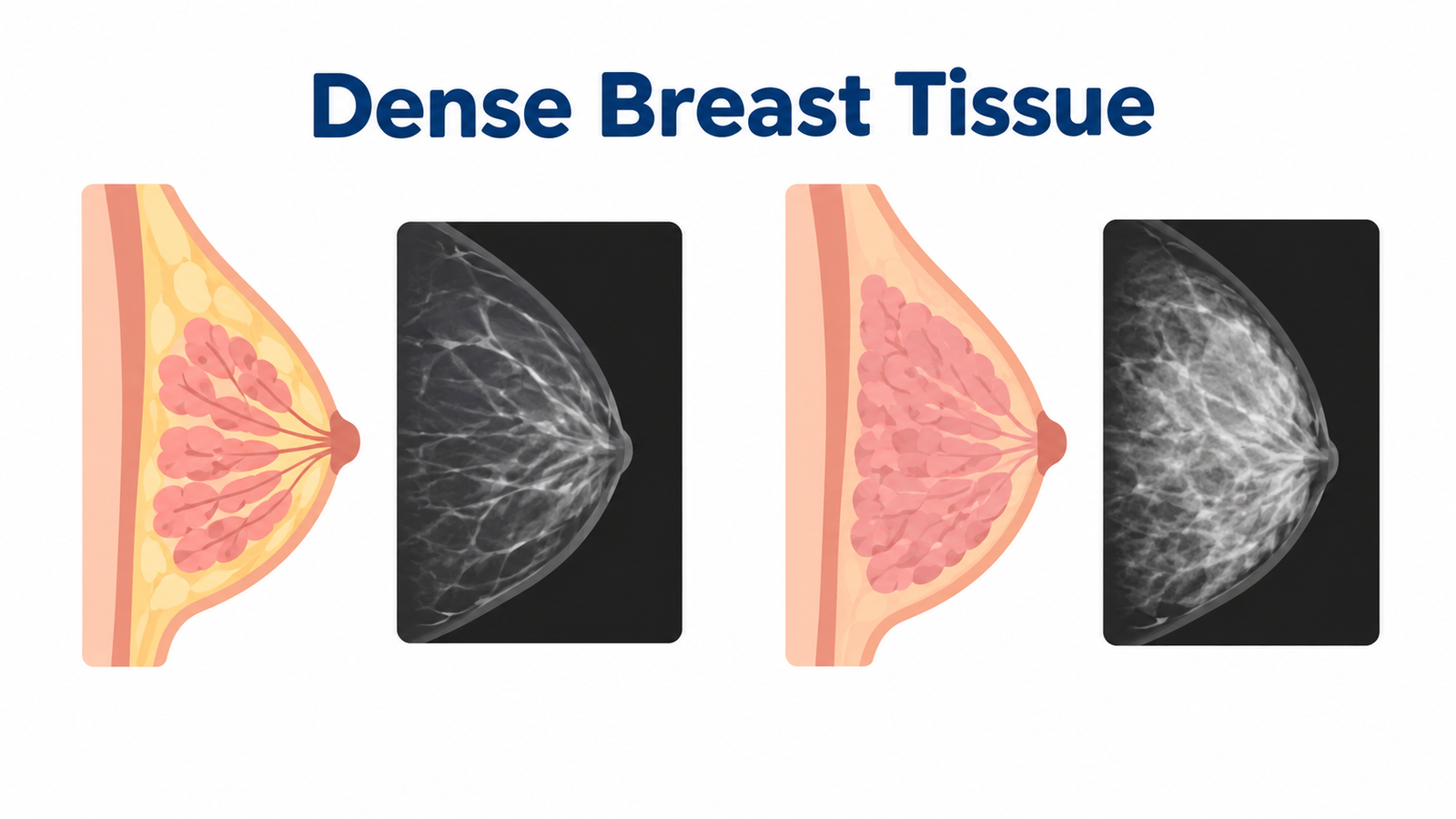
Another term that sometimes confuses is breast density. Breast density classification is based on the appearance of breast tissue on a mammogram. It is not the same thing as having accessory breast tissue in the armpit.
Radiologists generally classify breast density into four categories, ranging from mostly fatty tissue to extremely dense tissue.
Scattered Fibroglandular Density
Scattered fibroglandular density means there are scattered areas of dense fibrous and glandular tissue, while a larger proportion of the breast is fatty tissue.
This is different from having a lump or extra breast tissue under the arm.
Heterogeneously Dense Breast
A heterogeneously dense breast contains more areas of fibroglandular tissue. Dense tissue appears white on a mammogram, and some abnormalities can also appear white, which can make certain findings more difficult to detect.
Dense Breast Tissue Meaning
The dense breast tissue meaning is therefore related to the proportion of fibrous and glandular tissue seen on mammography. Breast density is not something that can be reliably determined simply by how the breasts feel or look.
Having dense breasts does not mean that someone has cancer. However, density can affect mammogram interpretation, so healthcare providers may consider an individual’s overall breast-cancer risk when discussing screening options.
When Should You See a Doctor?
You should arrange a medical evaluation if an underarm lump is new, growing, painful, hard, persistent, or associated with changes in the breast or skin.
Do not assume that every armpit lump is accessory breast tissue. Lymph nodes and other benign conditions can also cause underarm lumps. Some breast conditions can also extend toward the armpit.
If a doctor believes the tissue is accessory breast tissue and it is not causing problems, monitoring may be all that is needed. If it causes significant discomfort or cosmetic concerns, medical or surgical options may be discussed. Body-contouring procedures can remove excess fat, while surgical procedures can remove selected tissue when medically appropriate.
FAQs
1. Can exercise reduce axillary breast tissue?
Exercise may reduce surrounding fat but cannot remove glandular tissue.
2. Can weight loss reduce underarm breast tissue?
It may reduce nearby fat, but breast tissue may remain.
3. Is accessory breast tissue dangerous?
Usually not, but new or changing lumps should be checked by a doctor.
4. What causes axillary breast tissue growth?
Hormonal changes, including puberty and pregnancy, can make it more noticeable.
5. Can axillary breast tissue be removed?
If necessary, a doctor may discuss surgical removal or other treatment options.
Reference
https://www.mayoclinic.org/tests-procedures/mammogram/in-depth/dense-breast-tissue/art-20123968
https://my.clevelandclinic.org/health/articles/21169-dense-breast-tissue
0 200

No Comments