
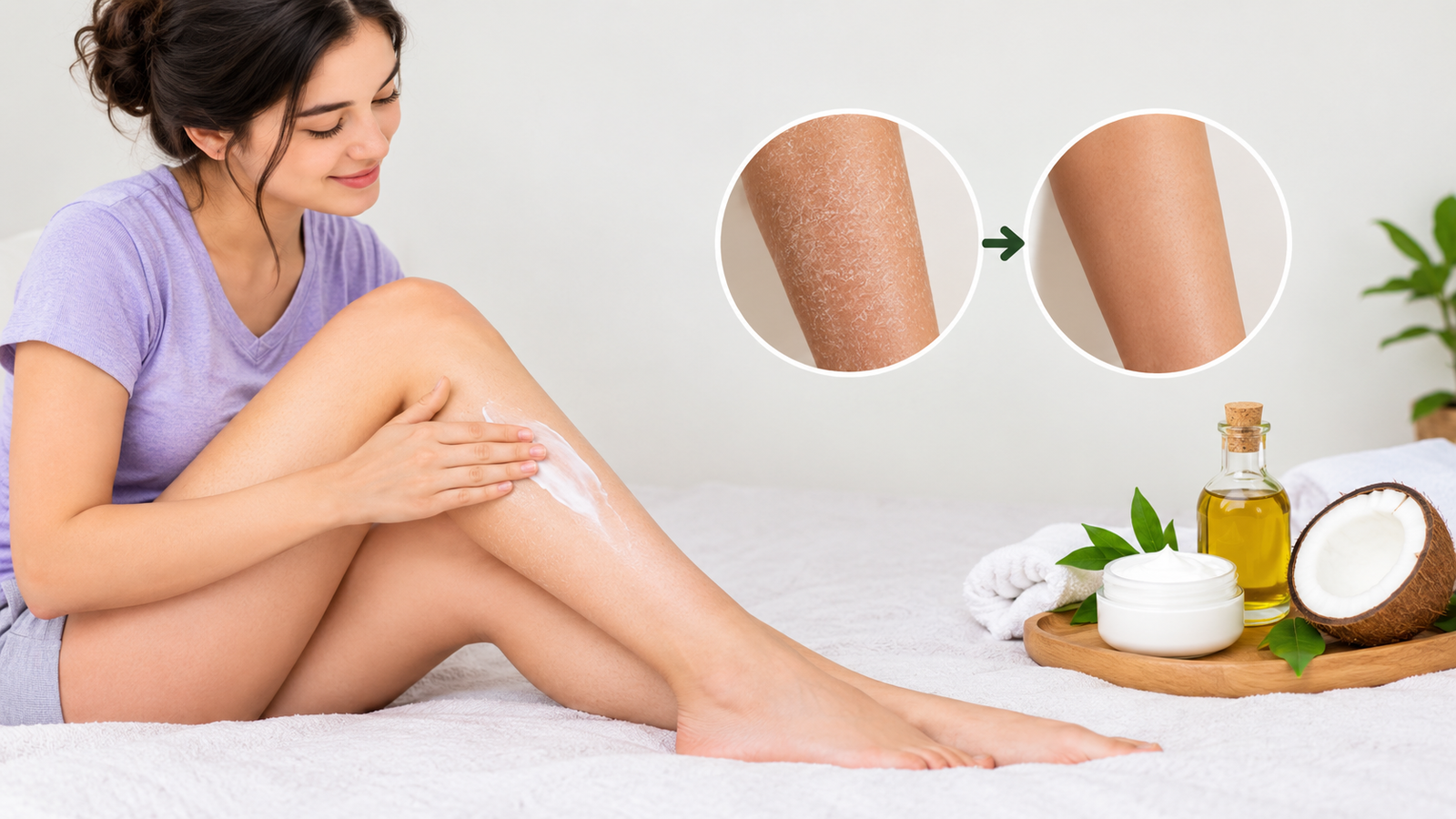
How to cure dry skin on legs is common, especially when temperatures drop and the air becomes less humid. If your legs feel rough, tight, scaly, or uncomfortable, changing your daily skincare routine can often make a noticeable difference.
Winter can be particularly challenging because cold outdoor air and dry indoor heating can reduce moisture around the skin. Understanding why skin becomes dry in winter and making a few simple changes can help restore smoother, healthier-looking skin.
What Causes Dry Skin in Winter?
If you have ever wondered, why is my skin so dry in winter, the answer is often related to moisture loss. Cold air generally contains less moisture, while indoor heating can further reduce humidity. This combination can cause water to escape from the outer layer of your skin more quickly.
So, why does winter make your skin dry and Flaky? Hot showers, harsh soaps, frequent washing, and rough scrubbing can make the problem worse by removing some of the skin’s natural oils. Legs can become especially dry because they may receive less frequent moisturizing than areas such as the hands and face.
7 Tips to Cure Dry Skin on Legs
1. Moisturize Immediately After Showering
A simple way to treat dry skin is to apply moisturizer while your skin is still slightly damp.
For very dry legs, consider a thick cream or ointment rather than a lightweight lotion. Ingredients commonly used in moisturizers include glycerin, ceramides, shea butter, and petrolatum.
Apply moisturizer generously to your legs after bathing and again whenever your skin feels dry.
2. Avoid Very Hot Showers
A long, hot shower may feel relaxing during cold weather, but it can worsen dryness. Hot water can remove natural oils from the skin.
Instead, use warm water and keep showers relatively short. Dermatologists commonly recommend limiting showers or baths to around 5–10 minutes when dealing with dry skin. Afterward, gently pat your skin dry rather than rubbing it vigorously.
3. Choose a Gentle, Fragrance-Free Cleanser
Harsh soaps and fragranced body washes can irritate already-dry skin. Choose a gentle, fragrance-free cleanser and avoid excessive scrubbing.
You do not need to aggressively lather or scrub your legs to make them clean. Gentle cleansing followed by moisturizing is generally a better approach for dry skin.
4. Avoid Over-Exfoliating
When you notice flakes on your legs, it can be tempting to use a rough scrub or exfoliating tool. However, excessive exfoliation may further irritate dry skin.
Instead of trying to remove every visible flake, focus on restoring moisture. Once your skincare routine becomes healthier and less irritated, you can discuss an appropriate exfoliation routine with a dermatologist if needed.
5. Use a Humidifier
If you’re wondering how to prevent dry skin in winter, consider adding moisture to your indoor environment. Heating systems can make indoor air dry, which may contribute to skin dryness.
Using a clean humidifier in your bedroom can add moisture to the air and help prevent your skin from becoming overly dry. Be sure to clean the humidifier regularly as recommended by the manufacturer.
6. Protect Your Skin From Cold Air
Another useful approach for how to avoid dry skin in winter is protecting exposed skin. Cold and windy weather can strip moisture from your skin, leaving it feeling dry, tight, and irritated.
Wear comfortable clothing that covers your legs when you’re outside. If your skin is particularly sensitive, choose soft fabrics that do not cause rubbing or irritation. Fragrance-free laundry products may also be helpful for sensitive skin.
7. Make Moisturizing a Daily Habit
Consistency is important when managing skin dryness during winter. Instead of waiting until your legs become extremely flaky or itchy, moisturize every day.
If your skin is very dry, a cream or ointment may provide more moisture than a thin lotion. Apply it after bathing and whenever your skin feels dry. Regular moisturizing can help support the skin barrier and reduce water loss.
How to Prevent Dry Skin in Winter
If you want to know how to prevent dry skin in winter, start your routine before your skin becomes severely dry. Use warm rather than hot water, keep showers short, choose gentle fragrance-free products, and moisturize immediately after bathing.
These simple habits can help you avoid skin dryness in winter and keep your skin soft, smooth, and moisturized. Protect exposed skin from cold and windy conditions and consider using a humidifier when indoor air is particularly dry.
The same approach can help if you experience dry face in the winter. Use a gentle facial cleanser and apply a suitable fragrance-free moisturizer while the skin is slightly damp. Avoid aggressive scrubbing and excessive exfoliation.
Dry Skin and Cold Weather: When to Get Medical Help
Most cases of dry skin cold weather can improve with simple skincare changes. However, persistent or severe dryness may sometimes be related to an underlying skin condition such as eczema or psoriasis.
Speak with a healthcare professional if your skin remains severely dry despite regular self-care, becomes painful or inflamed, develops deep cracks or bleeding, or shows signs of infection.
FAQs
1. Why in winter skin get dry?
Winter air often has lower humidity, which can increase moisture loss from the skin. Indoor heating can make the air even drier, while hot showers and harsh cleansers may worsen the problem.
2. How to avoid skin dryness in winter?
Use a thick moisturizer regularly, take short warm showers instead of hot ones, choose gentle fragrance-free cleansers, avoid excessive scrubbing, and consider using a humidifier indoors.
3. Why is my skin so dry in winter even when I use lotion?
Your lotion may not be rich enough for your level of dryness, or other habits such as hot showers, harsh cleansers, and dry indoor air may be contributing.
4. What is the best moisturizer for very dry legs?
For very dry skin, dermatologists generally recommend thicker creams or ointments rather than lightweight lotions. Moisturizing ingredients such as petrolatum, glycerin, and ceramides can help lock in moisture and keep dry skin soft and hydrated.
5. Can winter dryness cause itchy or flaky legs?
Yes. Dry skin may feel tight, rough, itchy, flaky, or scaly. Severe dryness can sometimes cause cracks or bleeding. If symptoms persist or become painful, consult a healthcare professional.
Reference
https://www.healthline.com/health/dry-skin-on-legs
https://www.mayoclinic.org/diseases-conditions/dry-skin/diagnosis-treatment/drc-20353891
0 200

No Comments