

Leafy greens are some of the best natural sources of vitamin K. This fat-soluble vitamin is essential for healthy blood clotting and plays an important role in maintaining strong bones. For adults, the recommended daily amount is 120 mcg for men and 90 mcg for women.
If you want to increase your vitamin K intake, adding a variety of leafy greens vitamin K sources to your meals can be an easy approach. Spinach, kale, collard greens, and broccoli are particularly notable sources.
Why Is Vitamin K Important?
Vitamin K is widely recognized for its essential role in normal blood clotting and also supports strong, healthy bones. Most vitamin K in green vegetables is vitamin K1, also called phylloquinone.
Eating vitamin K-rich vegetables does not automatically mean that they are harmful or that they will cause abnormal blood clotting in healthy people. Leafy vegetables can be a healthy and nutritious part of a balanced diet.
Vitamin K may also play a role in supporting cardiovascular health. However, researchers are still studying whether vitamin K status or supplementation can prevent heart disease, so it is better not to describe vitamin K-rich foods as a treatment for heart conditions.
10 Leafy Greens High in Vitamin K
Wondering what food is highest in vitamin K? Here are some vitamin K-rich foods you can include in a balanced diet:
- Collard greens – Cooked collard greens are especially rich in vitamin K. NIH data list about 530 mcg in ½ cup of frozen, boiled collards.
- Turnip greens – Another concentrated source, with about 426 mcg per ½ cup when frozen and boiled.
- Spinach – One cup of raw spinach provides about 145 mcg of vitamin K.
- Kale – One cup of raw kale contains approximately 113 mcg of vitamin K.
- Broccoli – Half a cup of chopped, boiled broccoli provides around 110 mcg.
- Lettuce – One cup of raw iceberg lettuce contains about 14 mcg of vitamin K.
- Swiss chard – Chard is another leafy vegetable that can contribute vitamin K to your diet.
- Arugula – This peppery salad green can be used in salads, sandwiches, and wraps.
- Mustard greens – These flavorful greens can be cooked or added to vegetable dishes.
- Beet greens – The edible leaves of beets can provide vitamin K along with other nutrients.
Chart of Vitamin K Foods
![Chart of Vitamin K Foods]() Is Kale Good for Your Heart?
Is Kale Good for Your Heart?
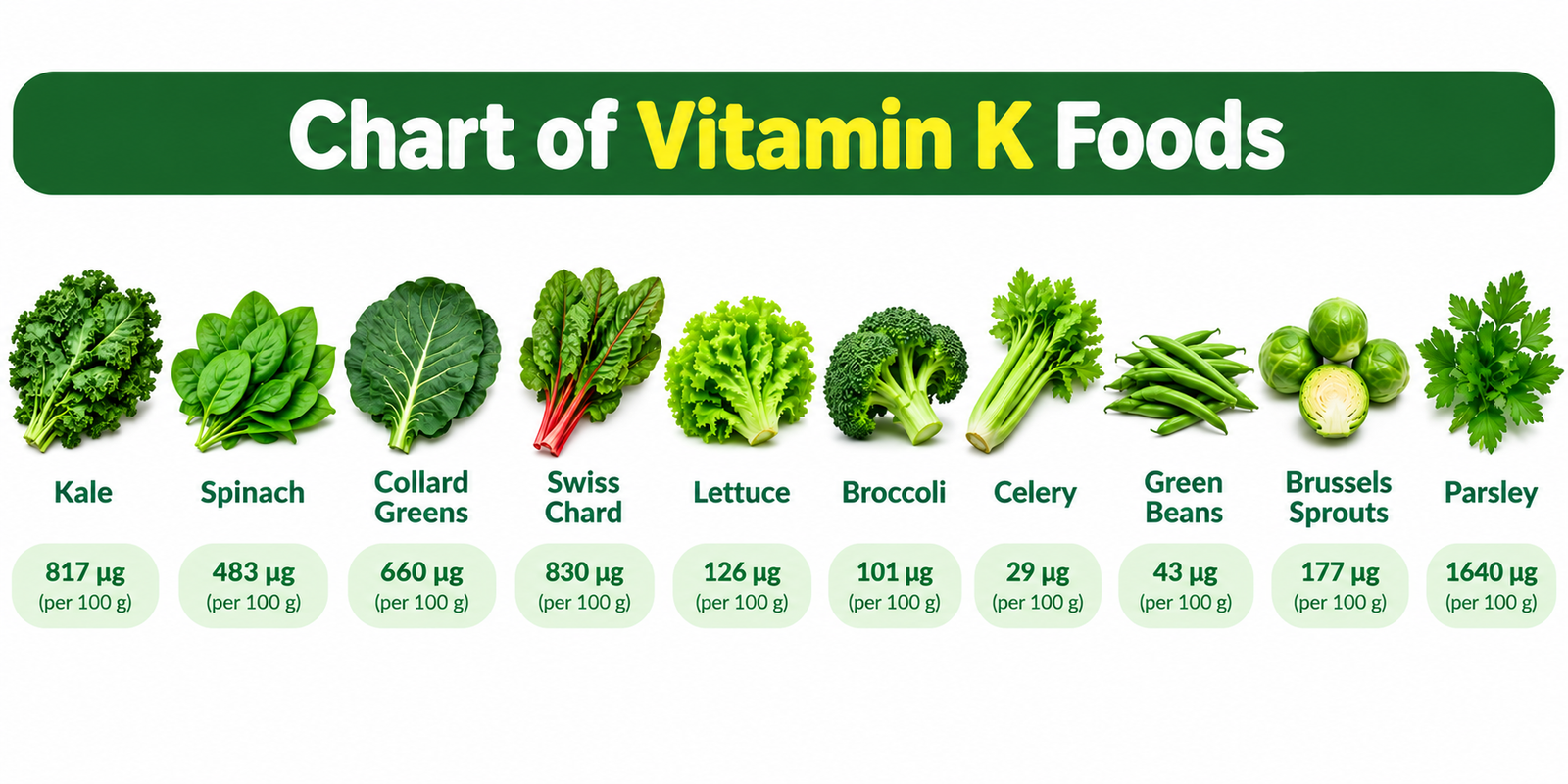
Is kale good for your heart? Kale is a nutrient-dense vegetable and can fit into a heart-healthy diet, particularly when it replaces less nutritious foods. However, research has not established that eating kale itself prevents heart disease.
So, is kale good for the heart? It can be a healthy part of a balanced diet that includes a variety of vegetables, fruits, whole grains, and other nutrient-rich foods. Overall, healthy eating habits are more important than focusing on any one vegetable.
Vitamin K in Lettuce, Collard Greens, Chard and Celery
The amount of vitamin K varies considerably between vegetables.
Vitamin K in lettuce is lower than in many dark leafy greens. For example, one cup of raw iceberg lettuce provides about 14 mcg of vitamin K.
Vitamin K in collard greens is much higher. Half a cup of boiled frozen collards provides about 530 mcg, according to NIH data.
Chard vitamin K content can also be substantial, making Swiss chard another useful leafy green to include in meals.
Vitamin K in celery is present but generally much lower than the amounts found in concentrated leafy greens such as collards, kale, or spinach.
Broccoli and Vitamin K
Broccoli and vitamin K are a useful combination to know if you’re building a vitamin K-rich diet. Half a cup of chopped, boiled broccoli provides approximately 110 mcg of vitamin K.
Broccoli is also versatile: you can steam it, roast it, add it to stir-fries, or mix it into salads and grain bowls.
Does Spinach Thicken Your Blood?
A common question is, does spinach thicken your blood? Vitamin K is involved in normal blood clotting, but eating spinach does not simply make a healthy person’s blood “thick.” The concern is particularly important for people taking the blood thinner warfarin.
If you take warfarin, suddenly increasing or decreasing your vitamin K intake can interfere with how the medication works. The NIH recommends keeping vitamin K intake relatively consistent and discussing significant dietary changes with your healthcare professional.
This is also why the claim that green leafy vegetables thin blood is misleading. Leafy greens contain vitamin K, which supports normal clotting; they should not be considered blood-thinning foods.
FAQs
1. Which leafy green vegetable contains the most vitamin K?
Among the leafy vegetables listed by NIH, boiled collard greens provide a particularly high amount, with about 530 mcg per ½ cup. Turnip greens and spinach are also excellent sources.
2. Is kale high in vitamin K?
Yes. One cup of raw kale contains approximately 113 mcg of vitamin K, according to NIH data.
3. Can I eat leafy greens while taking warfarin?
People taking warfarin should avoid making sudden or significant changes to their vitamin K intake. Keeping vitamin K consumption consistent can help maintain the medication’s intended effect. If you plan to make major dietary changes, talk with your doctor or pharmacist first.
4. Does broccoli contain vitamin K?
Yes. Half a cup of chopped, boiled broccoli provides approximately 110 mcg of vitamin K.
5. Are fruits high in vitamin K?
Some fruits contain vitamin K, including blueberries, grapes, and figs, but most fruits provide considerably less vitamin K than many leafy green vegetables.


No Comments