
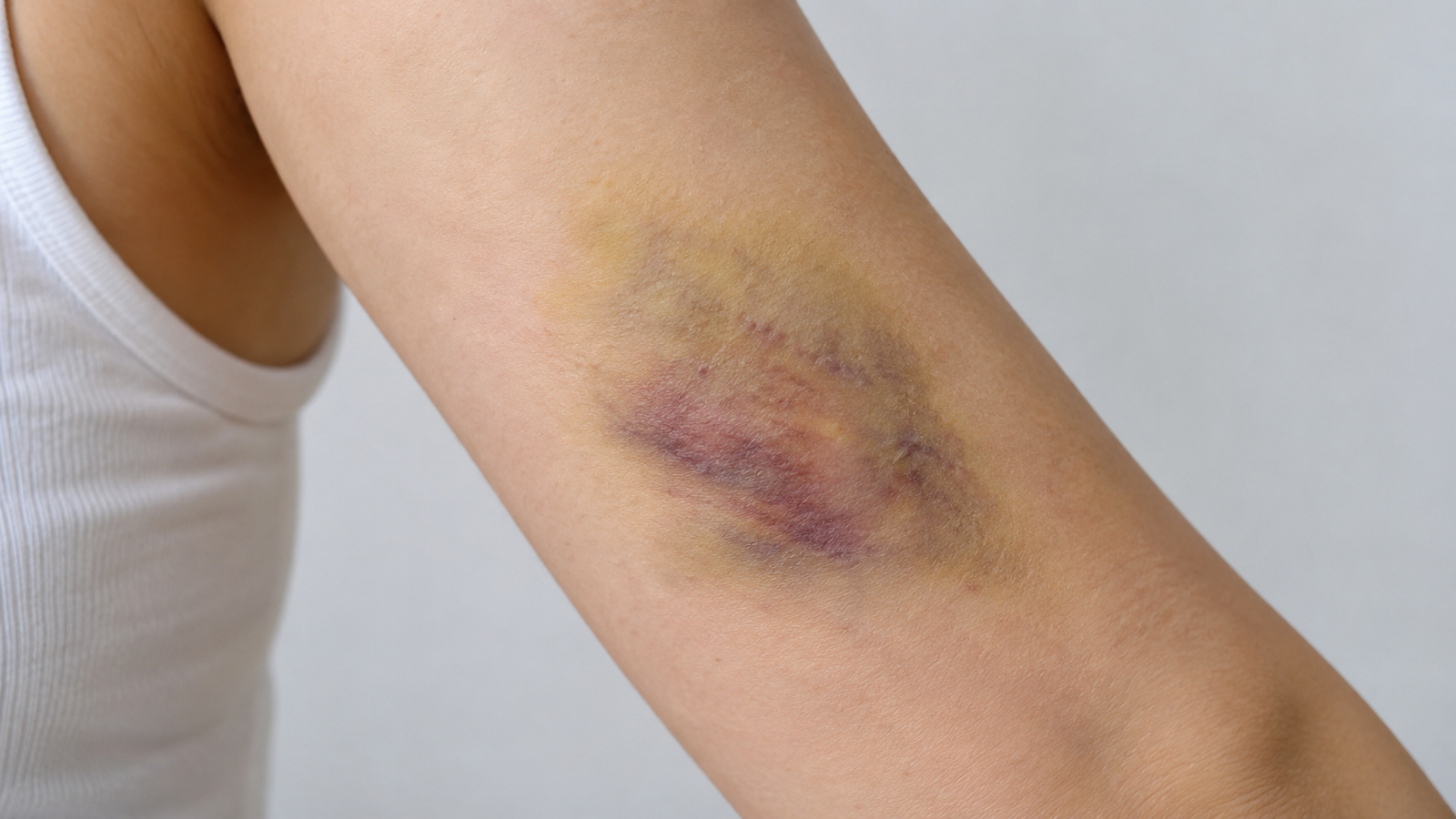
A bruise on body areas can appear after an injury, bump, fall, or pressure on the skin. However, bruises can sometimes develop without an obvious injury, which may leave you wondering what caused them. Most bruises are harmless and gradually fade as the body reabsorbs the blood trapped beneath the skin.
A typical bruise may begin as red or purple and then change to blue, green, yellow, or brown as it heals. While occasional bruising is usually not a concern, unexplained or frequent bruising may sometimes indicate an underlying problem.
What Causes a Bruise on the Body?
A bruise forms when tiny blood vessels under the skin are damaged, causing blood to leak into the surrounding tissue. This can happen from everyday activities, sports, falls, or minor bumps that you may not remember.
Some common causes of bruises on leg include bumping into furniture, best exercise, falls, tight clothing, or minor injuries. Age can also play a role because skin becomes thinner and blood vessels become more fragile over time.
Other frequent bruising causes can include certain medications, nutritional deficiencies, problems affecting blood clotting, or medical conditions that affect blood vessels or platelets.
Why Do Women Get Unexplained Bruises on Their Legs?
Many people wonder why women sometimes develop unexplained bruises on their legs. There is no single explanation. Women may notice bruising more easily because of differences in skin thickness, body composition, hormones, and everyday physical activity.
In addition, medications such as blood thinners and some anti-inflammatory medicines can make bruising more noticeable. Hormonal changes may also affect skin and blood vessels.
If random bruises repeatedly appear without an obvious injury, it is worth discussing the pattern with a healthcare professional.
Why Am I Bruising So Much?
If you are bruising easily all of a sudden, it is important to consider whether anything has changed recently. New medications, supplements, changes in diet, increased physical activity, or an illness can sometimes contribute to increased bruising.
People often ask, “Why do I get bruised easily?” Occasional bruises are generally normal, but unexplained bruising that happens frequently should not be ignored.
The medical term for bruising easily is often described as easy or increased bruising. A doctor may ask about your medical history, medications, diet, family history, and other symptoms to determine whether further evaluation is needed.
Dangerous Types of Bruises
Most bruises are not dangerous. However, certain patterns can deserve medical attention. Dangerous types of bruises may include bruises that appear frequently without an apparent cause, become unusually large, occur alongside significant swelling or pain, or appear with other unexplained symptoms.
Seek medical advice if bruising is accompanied by unusual bleeding, frequent nosebleeds, bleeding gums, blood in urine or stool, extreme tiredness, fever, or unexplained weight changes.
A red bruise that doesn’t hurt may simply be an early-stage bruise, especially if it recently developed. However, redness that spreads, feels warm, becomes increasingly painful, or is associated with swelling should be evaluated because it may not be a simple bruise.
How to Get Rid of a Bruise Fast
If you’re looking for ways to get rid of a bruise fast or get rid of a bruise quickly, a few simple steps may help ease swelling and discomfort.
During the first 24 to 48 hours, applying a cold pack wrapped in a cloth for short periods can help. Avoid placing ice directly against the skin. If possible, elevate the affected area and give it time to rest.
After the initial period, gentle warmth may be more comfortable and can support normal circulation. Avoid aggressively massaging a fresh bruise because this may increase bleeding beneath the skin.
If you’re wondering how to make a bruise go away, patience is usually the most important treatment. Most ordinary bruises gradually disappear within about two weeks, although larger or deeper bruises can take longer.
How to Reduce Bruising
Knowing how to reduce bruising starts with protecting the affected area from additional injury. Wear protective equipment during sports, be careful around sharp furniture, and avoid unnecessary pressure on a healing bruise.
Eating a balanced diet rich in essential vitamins and minerals can support healthy skin and tissues. If you take medications that may increase your risk of bleeding or bruising, consult your healthcare provider before making any changes to your medication.
Bruises That Last a Long Time
Some people experience bruises that last a long time. A large or deep bruise can naturally take several weeks to completely disappear.
If you are wondering, “Why do my bruises last so long?”, possible explanations include the size and depth of the bruise, its location, age, medications, repeated injury, or certain health conditions.
In some cases, people report that bruises never go away completely. A persistent mark may not actually be a bruise and could represent another type of skin discoloration. A healthcare professional can determine what is causing a mark that does not fade.
So, can you have a permanent bruise? A typical bruise usually is not permanent. However, persistent discoloration or changes in the skin can remain after an injury and should be assessed if they do not improve.
When Should You See a Doctor?
Talk to a healthcare professional if you why am I bruising so much is a recurring concern, particularly when bruises appear without injuries. You should also seek medical advice for very large bruises, unexplained bleeding, repeated bruising, or slow healing bruises.
If you frequently ask how to stop bruising so easily, identifying the underlying cause is more useful than simply treating each bruise. A healthcare professional may recommend an examination or blood tests depending on your symptoms.
Remember that bruises last long time for different reasons, and healing can vary from person to person. Persistent, unexplained, or rapidly increasing bruising deserves professional evaluation.
FAQs
1. Why do I bruise easily?
Common causes include minor injuries, aging, medications, and nutritional deficiencies.
2. How long does a bruise last?
Most bruises fade within 1–2 weeks, though larger bruises may take longer.
3. What can I do to help a bruise heal faster?
Use a cold compress during the first 24–48 hours and protect the area from further injury.
4. When is a bruise dangerous?
Seek medical advice if bruises are large, frequent, unexplained, or accompanied by unusual bleeding.
5. Can a bruise be permanent?
A normal bruise usually isn’t permanent. Persistent discoloration should be checked by a healthcare professional.
Reference
https://my.clevelandclinic.org/health/diseases/15235-bruises
https://www.webmd.com/skin-problems-and-treatments/bruises-article
0 200

No Comments