
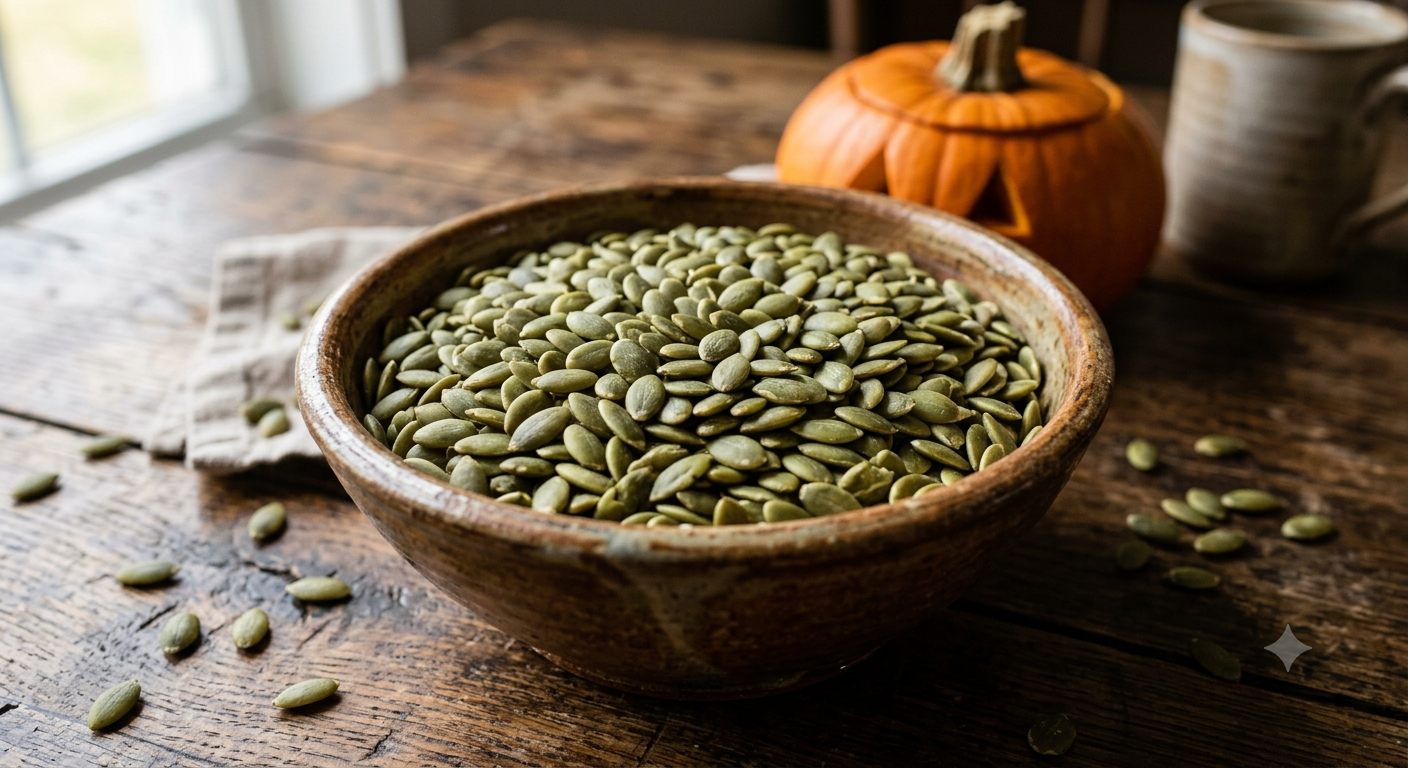
Pumpkin seeds may be small, but they contain protein, healthy fats, magnesium, and zinc. The benefit pumpkin seeds offer can make these crunchy seeds a useful addition to a balanced diet.
From supporting heart health to providing nutrients for muscles and digestion, pumpkin seeds offer several reasons to include them in your meals. But how much should you eat, and are there any downsides? Let’s explore their nutritional value, potential benefits, and easy ways to enjoy them.
Which Nutrients Do Pumpkin Seeds Contain?
A pumpkin seed provides several nutrients that help your body function properly.
These include:
-
Protein: Helps maintain and repair body tissues.
-
Magnesium: Supports normal muscle and nerve function.
-
Zinc: Contributes to immune function.
-
Iron: Helps transport oxygen through the blood.
-
Healthy fats: Provide energy and support normal cell function.
-
Fiber: Helps support digestive regularity.
How Much Protein Do Pumpkin Seeds Provide?
Hulled pumpkin seeds, also called pepitas, generally contain around 30 grams of protein per 100 grams. The exact amount varies by product and preparation.
Along with pumpkin seeds, you can explore vitamin-b12-foods to discover other nutrient-rich foods to include in your daily diet.
The keyword pumpkin seeds protein per 100g is useful when comparing nutrition labels. However, a 100-gram serving is relatively calorie-dense, so a smaller portion may be more practical for everyday snacking.
How Do Pumpkin Seeds Support Everyday Health?
The health benefit of pumpkin seed comes from its combination of nutrients rather than one special ingredient. Adding a moderate portion to a balanced diet may support several areas of health.
-
Heart health: Unsaturated fats and magnesium contribute to normal body functions.
-
Better sleep: Pumpkin seeds contain magnesium and tryptophan, which play roles in processes related to sleep.
-
Digestive health: Fiber in whole seeds helps support regular bowel movements.
-
Immune function: Zinc helps your immune system function properly.
Pumpkin seeds are nutritious, but they work best as part of a balanced diet rather than as a quick fix for health problems.
What Are Pumpkin Seeds Benefits for Female and Male Health?
Pumpkin seeds provide nutrients that adults of all genders need. Their value depends on overall dietary habits and individual nutritional requirements.
Pumpkin Seeds Benefits for Female Health
The pumpkin seeds benefits for female nutrition needs include providing magnesium, iron, zinc, and protein. These nutrients support normal muscle function, oxygen transport, and immune health.
Adding pumpkin seeds to salads, oatmeal, or yogurt can help increase your intake of plant-based nutrients. However, they are not a guaranteed solution for menstrual discomfort or hormonal changes.
Pumpkin Seeds Benefits for Male Health
The pumpkin seeds benefits for male nutrition needs include zinc, magnesium, and healthy fats. Zinc contributes to normal reproductive function, while magnesium supports muscles and nerves.
Pumpkin seeds are also discussed in relation to prostate health, but eating them has not been established as a way to prevent or treat prostate conditions.
Can Pumpkin Seeds Help With Weight Loss?
Pumpkin seeds may fit into a weight-management plan because the protein in pumpkin seeds and their healthy fats and fiber can help make snacks more satisfying.
Drinking enough water is also important when managing your weight, and these detox water for weight loss ideas can add variety to your daily hydration routine.
Try these simple ideas:
-
Sprinkle seeds over oatmeal or yogurt.
-
Add them to salads for extra crunch.
-
Mix a small portion with fresh fruit.
-
Choose unsalted varieties to limit sodium.
Pumpkin seeds do not directly burn body fat. Portion sizes, overall food choices, and physical activity all influence weight management.
How Should You Eat Pumpkin Seeds?
Knowing how to eat pumpkin seeds can help you enjoy them without making your meals complicated.
-
Raw pumpkin seeds: Add shelled seeds to yogurt or eat them as a snack.
-
Roasted seeds: Enjoy lightly roasted seeds for a crunchy texture.
-
Breakfast bowls: Sprinkle them over cereal, oatmeal, or smoothies.
-
Salads and soups: Add pumpkin seeds for a crunchy finish.
-
Trail mix: Combine them with a small amount of nuts and dried fruit.
Choose unsalted or lightly salted varieties when possible.
How Much Pumpkin Seed Is Enough per Day?
A small handful of around 28–30 grams is a practical serving for many adults. You can enjoy raw pumpkin seed as a snack or add it to yogurt, oatmeal, or salads. Your ideal portion depends on your nutritional needs and the other foods you eat.
You do not need a large serving to add useful nutrients to your diet. Start with a smaller amount if you are not accustomed to eating seeds, especially if you experience digestive discomfort.
What Are the Possible Downsides of Pumpkin Seeds?
Although pumpkin seeds are nutritious, eating too many may cause problems for some people. The disadvantages of eating pumpkin seeds include:
-
Bloating or gas: Large portions may cause digestive discomfort.
-
Extra calories: Seeds are energy-dense, so portions can add up quickly.
-
High sodium: Salted varieties may contain considerable sodium.
-
Allergies: Pumpkin seeds may trigger an allergic reaction in people who are sensitive to them.
Keep pumpkin seeds in an airtight container away from heat and moisture to help maintain their freshness. Avoid eating seeds that smell rancid or show signs of spoilage.
Conclusion
Pumpkin seeds offer protein, healthy fats, magnesium, zinc, and other valuable nutrients. Their potential benefits include supporting everyday nutrition, digestion, heart health, and normal body functions. The benefit pumpkin seed provides is best understood as part of a balanced eating pattern, not a quick health fix.
Enjoy them in moderate portions, whether raw, roasted, or sprinkled over your favorite meals. Small dietary choices can help you build healthier eating habits over time.
Frequently Asked Questions
1. Can you eat pumpkin seeds every day?
Yes, most people can enjoy a moderate serving daily as part of a balanced diet.
2. Are raw pumpkin seeds better than roasted seeds?
Both can provide useful nutrients. Dry-roasted seeds offer a crunchier texture, while raw seeds avoid roasting oils.
3. Are pumpkin seeds a good source of protein?
Yes. Hulled pumpkin seeds provide plant-based protein alongside healthy fats and minerals.
4. Can pumpkin seeds help you sleep better?
They contain magnesium and tryptophan, but there is not enough evidence to consider pumpkin seeds a proven sleep treatment.
5. What happens if you eat too many pumpkin seeds?
Large portions may contribute excess calories or cause bloating and digestive discomfort. Moderate portions are a sensible choice for most people.
References:
- https://pmc.ncbi.nlm.nih.gov/articles/PMC9182978/
- https://health.clevelandclinic.org/pumpkin-seeds-7-ways


No Comments