
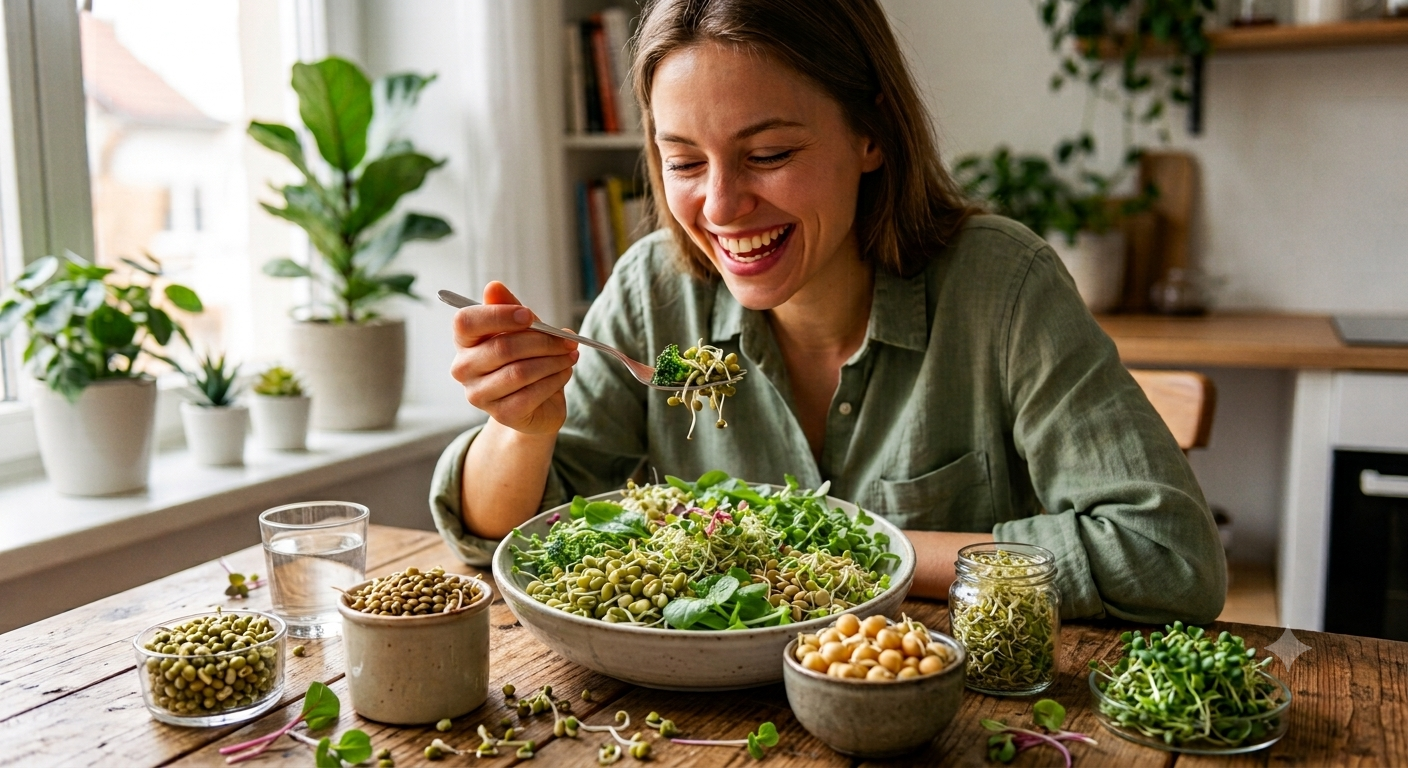
Have you ever wondered what might happen if a small bowl of sprouts became part of your daily routine? Benefits of Eating Sprouts Daily go beyond adding crunch to your meals. Sprouts can provide plant-based protein, fiber, vitamins, and minerals while making simple meals more filling and interesting.
What Changes When You Eat Sprouts Daily?
Adding sprouts to your meals can be an easy way to bring more nutrient-rich plant foods into your diet. Sprouts fit into many kinds of meals. You can combine them with diced vegetables, stir them into cooked dishes, or prepare a small portion when you want something light to eat. For more ways to get vitamin B12 through your diet, explore our guide to vitamin B12 foods.
The effects you notice will depend on your overall diet and the type of sprouts you choose. Still, regularly including them may help you increase your intake of:
- Plant-based protein
- Fiber
- Vitamins and minerals
- Fresh, minimally processed foods
- Filling ingredients without relying on heavy sauces or toppings
Sprouts do not offer every nutrient your body needs, but they can bring extra variety to your meals. For a wider range of nutrients, serve sprouts alongside foods such as whole grains, beans, vegetables, nuts, or seeds.
What Nutrients Are Found in Sprouts?
So, what makes sprouts nutritionally interesting? Their nutrient content varies depending on the seed or legume, but many varieties contain a useful combination of protein, fiber, vitamins, and minerals.
The nutrients you get from sprouts depend on which seeds or legumes are used and how much you eat.
Mung bean sprouts, lentil sprouts, chickpea sprouts, and other varieties do not have exactly the same nutritional profile.
You may find nutrients such as:
- Fiber
- Plant-based protein
- Folate
- Vitamin C
- Vitamin K
- Iron and other minerals
Sprouting also changes the original seed or legume as it begins to grow. From sprouts nutrition to weight management and everyday wellness, these tiny germinated foods have plenty to offer.
How Much Protein and Calories Do Sprouts Have?
If you’re looking for plant-based foods, you may wonder about sprouts and protein. Sprouts can contribute to your daily protein intake, although the amount depends on the variety and serving size.
Mung bean, lentil, and chickpea sprouts can be particularly useful when combined with other protein-rich foods. For example, you could add them to a meal containing beans, lentils, yogurt, eggs, tofu, or nuts.
What about sprouts calories? Plain sprouts can be a relatively light addition to a meal. However, the total calories can rise quickly when they are combined with creamy dressings, fried toppings, or large amounts of oil.
So rather than focusing only on calories, look at the whole meal.
Can Sprouts Support Weight Loss?
Could a handful of crunchy sprouts make your meals more satisfying? They can certainly play a role in a balanced weight-management diet.
Foods containing protein and fiber may help you feel satisfied after eating. Mixing sprouts into your meals adds texture and makes the portion more substantial without needing lots of high-calorie extras.
For example, try adding sprouts to:
- A vegetable salad
- A whole-grain wrap
- A bowl with vegetables and beans
- A light breakfast
- A homemade snack
However, benefits of eating sprouts daily should not be confused with guaranteed weight loss. Eating sprouts alone will not guarantee weight loss. Results depend on your overall food choices, portion sizes, daily movement, and habits over time.
Why Are Moong Sprouts So Popular?
Among all the options, moong sprouts are probably one of the easiest to recognize. They have a mild taste and crunchy texture, making them simple to add to both traditional and modern meals.
Mung beans are also valued for their nutritional profile. Mung sprouts nutrition includes plant protein, fiber, folate, and minerals, although exact amounts depend on preparation and serving size.
You can enjoy them in several ways:
- Toss them into a fresh salad
- Add them to chaat
- Mix them with vegetables
- Include them in wraps
- Cook them lightly with spices
The nutritional value of the original mung bean also makes dishes prepared with whole moong or dal a useful part of a varied diet. The moong dal benefits include protein and fiber, making it another practical option for everyday meals.
Are Sprouts Beneficial for Women and Men?
Sprouts aren’t just useful for one group. Their nutrients can contribute to a varied diet for both women and men.
When people search for sprouts benefits for female health, they may be interested in nutrients such as folate, iron, protein, and fiber. These nutrients are important parts of a balanced eating pattern, but sprouts should not be viewed as a special solution for female health concerns.
Similarly, sprouts benefits for male health are mainly connected to their overall nutritional contribution. Adding different plant foods to meals can help create a more varied diet.
The key is variety. For a more varied eating pattern, serve sprouts with colorful vegetables, seasonal fruits, whole grains, beans, nuts, and seeds.
Can Sprouts Support Healthy Skin?
Could what you eat influence the way your skin looks and feels?
The sprouts benefits for skin are linked more to their nutrients than to any direct skin-changing effect. Sprouts can contribute vitamins, minerals, protein, and other nutrients to your diet, while a varied eating pattern provides a wider range of nutrients.
Vitamin C plays a role in the body’s production of collagen, a protein that helps maintain the structure of the skin. Instead of expecting one food to transform your skin, think of sprouts as one small part of a nutrient-rich diet.
Before Eating Sprouts Daily, Know These Possible Risks
While sprouts can be nutritious, more is not always better. The Disadvantages of eating sprouts daily may include digestive discomfort for some people, particularly when large portions are eaten suddenly.
Some people may experience:
- Bloating
- Gas
- Stomach discomfort
- Difficulty digesting large portions
Another important consideration is food safety. Raw or undercooked sprouts can sometimes carry harmful bacteria because of the warm, moist conditions used during sprouting. If you are also interested in understanding how low fluid intake can affect the body, learn more about does dehydration cause headaches and the signs to watch for. Proper storage and handling matter, and thorough cooking can reduce this risk.
This is especially worth remembering if you’re regularly eating raw sprouts.
Which Types of Sprouts Can You Eat?
One of the fun things about sprouts is that you’re not limited to one variety. Different sprouts bring different flavors, textures, and nutrients to your plate.
Popular choices include:
- Mung bean sprouts: Mild, crunchy, and easy to add to meals.
- Lentil sprouts: A useful plant-based option with protein and fiber.
- Chickpea sprouts: More substantial and satisfying in salads and bowls.
- Alfalfa sprouts: Delicate and commonly used in sandwiches and salads.
- Broccoli sprouts: Small sprouts with a distinctive flavor.
Rotating different varieties can keep your meals interesting instead of making your daily routine feel repetitive.
Conclusion
So, what can you really expect from adding sprouts to your routine? The benefits of eating sprouts daily mainly come from their ability to add protein, fiber, vitamins, minerals, and variety to everyday meals.
They can work well in salads, bowls, wraps, and snacks, while moong sprouts offer an especially convenient option. At the same time, portion size, food variety, and safe preparation still matter. Think of them as a simple, nutritious ingredient that can make a balanced diet a little more interesting.
Frequently Asked Questions
1. Can I eat sprouts every day?
Yes, sprouts can be part of a varied diet. The amount and preparation matter, and eating different foods alongside them helps maintain dietary variety.
2. Are sprouts high in protein?
Sprouts can add some protein to your meals, although the amount depends on the variety you choose. Pairing them with other protein-rich foods can help create a more substantial meal.
3. Are sprouts good for weight loss?
They can fit into a weight-management diet because they can add protein, fiber, and volume to meals. However, weight loss depends on your overall eating pattern and lifestyle.
4. Are raw sprouts safe to eat?
Raw sprouts can carry foodborne bacteria. Careful handling, proper storage, and thorough cooking can help reduce food-safety risks.
5. Which sprouts are best for daily eating?
Mung, lentil, chickpea, alfalfa, and broccoli sprouts are popular choices. Trying different varieties can give your meals more nutritional and flavor variety.
References:
- https://www.heart.org/en/news/2022/06/07/tiny-sprouts-provide-big-nutrition
- https://pmc.ncbi.nlm.nih.gov/articles/PMC8398379/

No Comments