
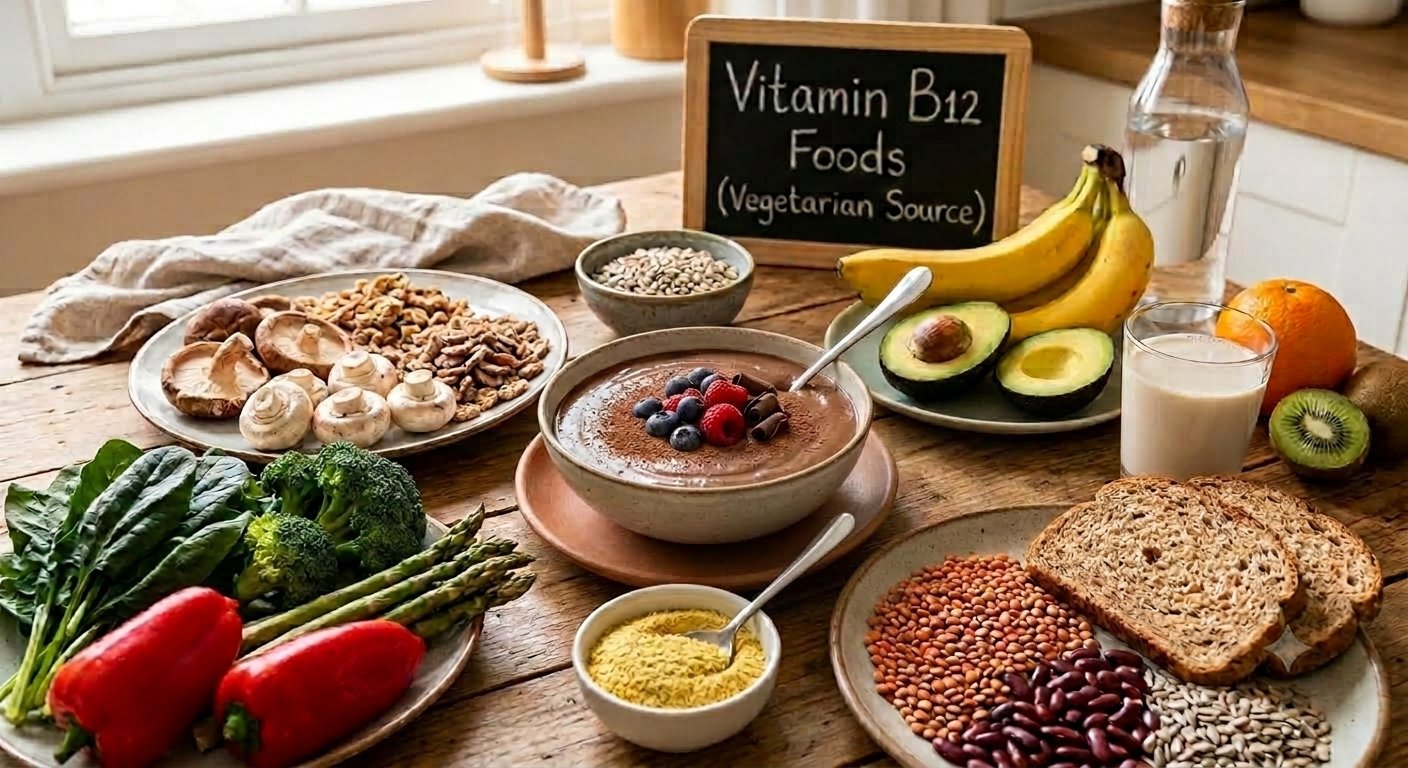
Vitamin B12 supports healthy red blood cells, nerve function, DNA production, and normal energy metabolism. Yet, many people may not get enough, especially if they eat little or no animal-based food. Which foods provide the most B12? Knowing which Vitamin B12 Foods provide reliable amounts can help you make informed food choices.
Why Does Your Body Need Vitamin B12?
Vitamin B12 supports red blood cell formation, helps maintain normal nerve function, and plays a role in DNA synthesis.
Low intake or poor absorption can lead to deficiency. B12 is naturally found in animal-derived foods, while some packaged foods contain the vitamin because manufacturers add it during processing. Including a variety of foods with B12 in your daily meals can help you maintain adequate intake. Possible signs of deficiency include tiredness, weakness, pale skin, numbness, tingling, balance problems, a sore tongue, and memory or concentration changes.
Because the body stores B12, symptoms may take time to appear.
What Food Is Highest in Vitamin B12?
Liver and certain shellfish are among the richest natural sources. Fish, meat, eggs, and dairy also provide useful amounts.
Some of the best B12 foods include:
-
Beef liver: An exceptionally concentrated natural source.
-
Clams and shellfish: Can provide very high amounts.
-
Sardines: Supply B12, protein, and healthy fats.
-
Salmon: Provides B12, protein, and omega-3 fats.
-
Beef: Offers B12, protein, and iron.
-
Eggs: A convenient B12 source for people who eat them. You can also check egg nutrition to understand their other nutritional benefits.
-
Milk, yogurt, and cheese: Everyday sources of B12.
-
Fortified cereals and plant milk: Can provide added B12; check labels.
Can Vegetarians Get Enough B12 From Food?
Yes. Many vegetarians can get B12 from eggs and dairy. Useful Vitamin B12 foods vegetarian choices include:
-
Eggs
-
Milk, yogurt, paneer, and cheese
-
Fortified breakfast cereals
-
Fortified plant-based milk
-
Fortified nutritional yeast
For Vitamin B12 foods vegetarian Indian options, milk, curd, paneer, and eggs may fit familiar meals.
Check serving sizes and labels, because the amount in each food differs. A small serving may contribute less than expected. You can also understand the nutritional value of vitamin B12 vegetables and fruits when planning a varied vegetarian diet. If you rarely eat eggs or dairy, fortified foods may help fill the gap.
Can Vegans Get Enough B12 Without Animal Foods?
Yes, but ordinary plant foods are not dependable natural sources of B12. Vegans need a reliable source from fortified foods or an appropriate supplement.
Possible vitamin B12 foods vegan options include fortified plant milk, breakfast cereals, and nutritional yeast. Compare the amount per serving and how often you consume it. Fortified products can vary, so choosing them consistently is more useful than assuming every plant-based alternative contains the vitamin. Check labels because not every plant-based product contains B12. Unfortified seaweed, mushrooms, fermented foods, fruits, and vegetables should not be relied on to meet your needs.
Do Fruits, Vegetables, or Dry Fruits Contain B12?
Most ordinary fruits and vegetables do not contain meaningful amounts of vitamin B12.
Searches for Vitamin B12 vegetables and fruits can create confusion. Almonds, dates, raisins, walnuts, and other dry fruits are not reliable B12 sources.
So, are there Vitamin B12 rich dry fruits? No commonly eaten dry fruit is a dependable source. Choose fortified products instead as part of meals.
Which Foods Provide Both B12 and Iron?
Liver, beef, clams, shellfish, sardines, and some other fish provide both vitamin B12 and iron. These foods can be useful when planning meals around both nutrients, although portion size and individual dietary needs still matter. Eggs also contain B12 and some iron.
Lentils, beans, tofu, spinach, and seeds can contribute iron to vegetarian meals, but generally do not provide reliable B12.
What Are the Signs of Vitamin B12 Deficiency?
Possible vitamin B12 deficiency symptoms include:
-
Ongoing tiredness or weakness
-
Pale skin
-
A pins-and-needles sensation or reduced feeling in the hands and feet.
-
Muscle weakness or balance problems
-
A sore or swollen tongue
-
Memory or concentration changes
-
Shortness of breath related to anemia
These signs are not specific to B12 deficiency. Maintaining overall wellness also involves healthy daily habits, including staying hydrated and understanding the benefits of lemon water. If symptoms persist, a healthcare professional can assess whether testing is appropriate.
Is Vitamin B12 Deficiency a Sign of Cancer?
Vitamin B12 deficiency is not, by itself, a specific sign of cancer. Low levels can result from inadequate intake, absorption problems, pernicious anemia, gastrointestinal conditions, or certain medicines. Some illnesses and cancer treatments can also affect B12 levels.
Rather than depending on one superfood, include reliable B12 sources regularly. Maintaining a healthy daily routine also involves caring for other aspects of your well-being, such as using heel pain home remedies when dealing with occasional heel discomfort. People who eat few or no animal products may need fortified foods or supplements.
How Much Vitamin B12 Do You Need Daily?
Most adults need 2.4 micrograms (mcg) of vitamin B12 daily. This is the recommended intake for adults, not a target that must come from one meal. B12 intake is usually spread across foods eaten throughout the day. The recommended amount is 2.6 mcg during pregnancy and 2.8 mcg while breastfeeding.
Rather than depending on one superfood, include reliable B12 sources regularly. People who eat few or no animal products may need fortified foods or supplements.
Understanding the causes and effects of vitamin B12 deficiency can also help you recognise why maintaining adequate intake matters.
Final Thoughts
The best Vitamin B12 Foods depend on your diet. Liver and shellfish are among the richest natural sources; fish, meat, eggs, and dairy are also reliable options. Vegetarians may get B12 from eggs, dairy, and fortified products, while vegans need fortified foods or an appropriate supplement. Fruits, vegetables, and dry fruits are not dependable B12 sources.
Frequently Asked Questions
1. What food is highest in B12?
Liver and certain shellfish, especially clams, are among the richest natural sources.
2. Which Vitamin B12 foods are suitable for vegetarians?
Common vegetarian sources of B12 include eggs, dairy milk, curd, paneer, and different types of cheese.
3. Can vegans get enough vitamin B12?
Yes. Vegans can use fortified foods and, when needed, an appropriate B12 supplement.
4. Do fruits and vegetables contain vitamin B12?
Most do not naturally contain meaningful amounts.
5. What foods should I avoid if I have B12 deficiency?
There is no universal avoid-list. Focus on reliable B12 sources instead of depending on foods that contain little or no B12.
References
-
https://my.clevelandclinic.org/health/diseases/22831-vitamin-b12-deficiency
-
https://ods.od.nih.gov/factsheets/VitaminB12-HealthProfessional/

No Comments