
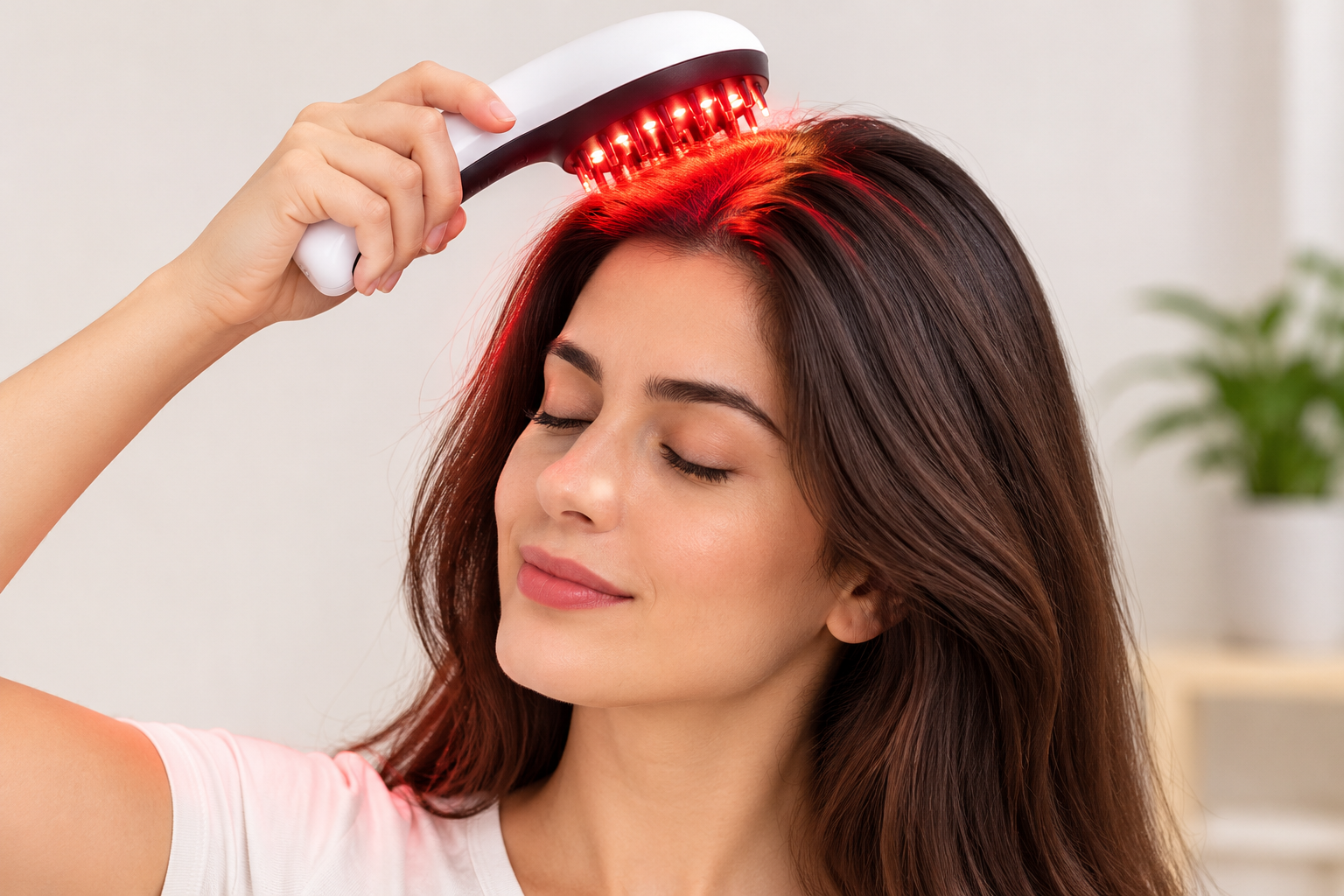
Hair thinning and hair loss can affect confidence and overall appearance. While several treatments are available, red light therapy has gained attention as a non-invasive option that may support healthier hair growth. It works by exposing the scalp to specific red and near-infrared light wavelengths that may activate scalp cells and promote healthy hair follicle function.
Can red light therapy really reduce hair loss and encourage hair regrowth? How does it work, and what results can you expect? Understanding its benefits, limitations, and proper use can help you decide whether it is worth considering.
Understanding Red Light Therapy for Hair Growth
Red light therapy is a gentle, non-invasive approach that uses low-intensity red or near-infrared light to activate cells and support their natural functions. It is also known as photobiomodulation. In hair care, the light is directed towards the scalp to support hair follicles and potentially encourage hair growth.
Red light therapy is often used to manage androgenetic alopecia, commonly known as pattern hair loss. It may help stimulate hair follicles, support the natural hair growth cycle, and improve hair density in some people.
Unlike surgical hair restoration procedures, this treatment does not involve injections or incisions. Devices may include laser caps, helmets, combs, and LED-based systems.
How Does Red Light Therapy Help Reduce Hair Loss?
Hair grows through different phases, including the anagen (growth), catagen (transition), and telogen (resting) phases. Certain types of hair loss occur when follicles gradually become smaller and spend less time in the growth phase.
Red light therapy involves exposing the scalp to targeted wavelengths of light to stimulate cellular activity. Researchers believe this process may influence cellular energy production and other biological pathways involved in follicle function.
Here’s how red light therapy may help manage hair loss:
-
Supports cellular activity: Red light may influence mitochondrial activity and cellular energy production.
-
Encourages the growth phase: It may help some follicles remain in the active hair growth phase for longer.
-
Supports scalp health: Photobiomodulation may influence local circulation and inflammatory processes.
-
Improves hair density: Some clinical studies have reported improvements in hair density among people with pattern hair loss.
The outcome may differ from person to person based on the underlying cause of hair loss and the type of device used.
Red Light Therapy for Hair Benefits
There are several potential red light therapy benefits for hair, particularly for people experiencing early pattern hair thinning.
1. May Support Hair Regrowth
One of the main reasons people explore this treatment is its potential to encourage new hair growth. Research suggests that red light exposure may stimulate hair follicles and support the growth phase.
This makes red light therapy for hair regrowth a promising non-invasive option for selected individuals.
2. May Improve Hair Thickness
Some studies have found improvements in hair density and thickness following regular low-level light treatments. However, the effectiveness may vary from person to person, and noticeable improvements are not guaranteed.
3. Non-Invasive Treatment
Red light therapy does not require surgery, needles, or downtime. Most devices are designed for home use, making treatment relatively convenient.
4. May Support Scalp Health
Red light may influence circulation and inflammatory activity in the scalp. These effects are being studied for their potential role in maintaining a healthier environment for hair follicles.
5. Can Be Used Alongside Other Treatments
Depending on the cause of hair loss, dermatologists may recommend combining light therapy with established treatments such as minoxidil. A healthcare professional can help determine whether combination treatment is appropriate.
What Does Research Reveal About Red Light Therapy for Hair Loss?
Clinical research suggests that low-level light therapy may improve hair density in some people with androgenetic alopecia. However, the evidence is still developing.
It is important to understand the difference between low level laser therapy for hair loss and red LED therapy. Both fall under photobiomodulation, but they may use different light sources, wavelengths, and delivery methods.
Not every device has the same clinical evidence. Some laser-based devices have received regulatory clearance for specific hair loss indications, but this does not mean every red light product is proven to work.
Before trying red light therapy for hair loss, speak with a dermatologist to determine the underlying cause and find the most suitable treatment approach.
How to Use Red Light Therapy for Hair Growth
Knowing how to use red light therapy for hair growth correctly is important for safety and consistency.
Follow these general steps:
-
Choose an appropriate device: Look for a device designed specifically for scalp treatment, with clear wavelength and safety information.
-
Read the instructions: Follow the manufacturer’s recommended treatment duration and frequency.
-
Prepare your scalp: Keep your scalp clean and follow the device instructions regarding hair products and styling products.
-
Position the device correctly: Ensure the light reaches the intended scalp areas.
-
Follow a consistent routine: Use the device regularly as directed. Avoid increasing exposure in the hope of getting faster results.
-
Track your progress: Take photographs under similar lighting conditions to monitor changes over time.
People exploring red light therapy for hair loss at home should avoid unverified devices and follow all eye-safety precautions.
How to Choose the Right Red Light Therapy Device for Hair Growth?
Choosing the Best red light therapy for hair growth depends on the device’s design, safety, and clinical evidence.
Consider these factors before purchasing:
-
Wavelength: Look for clearly disclosed wavelengths supported by research on scalp photobiomodulation.
-
Scalp coverage: Caps and helmets are designed to cover larger areas of the scalp, while handheld devices may require more effort to target different sections.
-
Safety certification: Check the device’s regulatory status and manufacturer information.
-
Ease of use: Choose a device that fits comfortably into your routine.
-
Clinical evidence: Prefer devices supported by published research rather than exaggerated marketing claims.
A Dermatologist recommended red light therapy for hair growth device should be selected based on your hair loss pattern and individual needs, rather than popularity alone.
Red Light Therapy for Hair Before and After: When Can You Expect Results?
When comparing hair growth results through red light therapy before-and-after images. Keep in mind that the results can vary based on individual factors and how long the treatment has been used.
Some people may notice reduced shedding or improvements in hair density after several months of consistent use. Clinical studies commonly assess outcomes over approximately 16 to 26 weeks.
However, visible changes may take longer, and not everyone responds to treatment. Before-and-after photographs can also be affected by lighting, healthy hair, and camera angles.
Patience and realistic expectations are important when evaluating this treatment.
Red Light Therapy for Hair Side Effects
Although generally considered well tolerated when used correctly, there can be some Red light therapy for hair side effects.
Potential side effects include:
-
Mild scalp irritation or redness
-
Temporary discomfort or warmth
-
Headaches in some users
-
Eye discomfort if appropriate protection is not used
Follow the manufacturer’s safety instructions and avoid excessive exposure. People with light sensitivity or those taking photosensitising medication should consult a healthcare professional before starting treatment.
Red Light Therapy for Hair and Face: Can It Be Used for Both?
Red light therapy for hair and Face treatments may use similar light-based technology, but devices designed for the face and scalp are not necessarily interchangeable.
Facial devices are generally designed for healthy skin-related concerns, while hair therapy devices are designed to deliver light across the scalp. Always choose a device intended for the area you want to treat.
FAQs
1. Is red light therapy good for hair growth?
Yes, research suggests that red light therapy may support hair growth in some people, particularly those experiencing androgenetic alopecia. However, results vary, and it is not a guaranteed solution for every type of hair loss.
2. Does red light therapy help with hair loss?
Red light therapy may help improve hair density by influencing follicle activity and the hair growth cycle. It is generally considered a supportive treatment rather than a replacement for established hair loss treatments.
3. Is red light therapy good for hair loss?
It may be beneficial for selected individuals with pattern hair loss. A dermatologist can assess whether it is suitable based on the cause, severity, and pattern of hair thinning.
4. How often should you use red light therapy for hair growth?
The recommended frequency depends on the device and its clinical instructions. Many devices suggest multiple sessions per week. Follow the manufacturer’s guidance rather than increasing treatment frequency independently.
5. Is red light therapy safe for long-term hair growth treatment?
Red light therapy is generally well tolerated when used according to device instructions. However, long-term evidence is still developing. Regular follow-ups with a dermatologist can help monitor progress and identify any unwanted effects.
Reference
https://pmc.ncbi.nlm.nih.gov/articles/PMC4265291/
https://www.goodrx.com/conditions/hair-loss/red-light-therapy-for-hair-loss
0 200

No Comments