
Healthy hair depends on proper nutrition as well as hair care. Vitamin B12 helps maintain healthy blood cells and supports essential functions throughout the body. But can low B12 levels affect your hair? Understanding Vitamin B12 for Hair can help you recognise deficiency signs and choose suitable food sources.
Why Is Vitamin B12 Important for Hair?
Vitamin B12 helps form red blood cells that transport oxygen throughout the body, including the scalp. It also plays a role in DNA formation and cell development, helping maintain healthy tissues.
Including suitable vitamin B12 vegetables and fruits in your diet can support overall nutritional balance, although most ordinary plant foods are not reliable sources of B12.
Some important benefits include:
- Supports healthy red blood cell production.
- Helps maintain normal nerve function.
- Supports DNA production and cell development.
- Helps the body convert food into energy.
Getting enough vitamin B12 supports overall health and provides essential nutritional support for normal hair function.
Can Vitamin B12 Deficiency Cause Hair Loss?
Insufficient B12 may interfere with red blood cell formation and several essential body processes. Although b12 deficiency is sometimes associated with hair changes, it is not an established direct cause of hair loss in everyone.
Including foods with B12 in your daily meals can help maintain adequate vitamin intake.
Other common factors behind hair thinning and excessive shedding include:
- Low iron or protein intake.
- Hormonal changes.
- Thyroid problems.
- Stress and poor sleep.
- Other nutritional deficiencies.
Correcting a nutritional deficiency can support overall health, but taking extra B12 does not guarantee faster hair growth.
What Are the Signs of Low Vitamin B12?
Symptoms of low vitamin B12 can appear slowly and may go unnoticed at first. Hair thinning alone does not confirm low B12 levels.
Common low B12 symptoms include:
- Unusual tiredness or weakness.
- Pale-looking skin.
- A pins-and-needles feeling or reduced sensation in the hands and feet.
- Difficulty concentrating.
- Sore or smooth-looking tongue.
- Balance or memory problems.
These signs of low B12 may interfere with daily activities and overall well-being. Recognising them is important because low B12 can influence several aspects of overall health.
How Does Vitamin B12 Support Overall Health?
Vitamin B12 does more than support normal hair function. It contributes to several essential processes throughout the body.
Important vitamin B12 benefits include:
- Red blood cell formation: Supports the production of oxygen-carrying blood cells.
- Brain and nerve health: Supports normal nervous system function.
- Energy metabolism: Helps the body use nutrients for energy.
- Energy metabolism: Helps the body convert nutrients into usable energy.
- Cell development: Helps maintain normal cell growth.
- Pregnancy health: Supports normal fetal development.
Maintaining adequate B12 intake helps support these important functions beyond hair health.
Which Foods Are Rich in Vitamin B12?
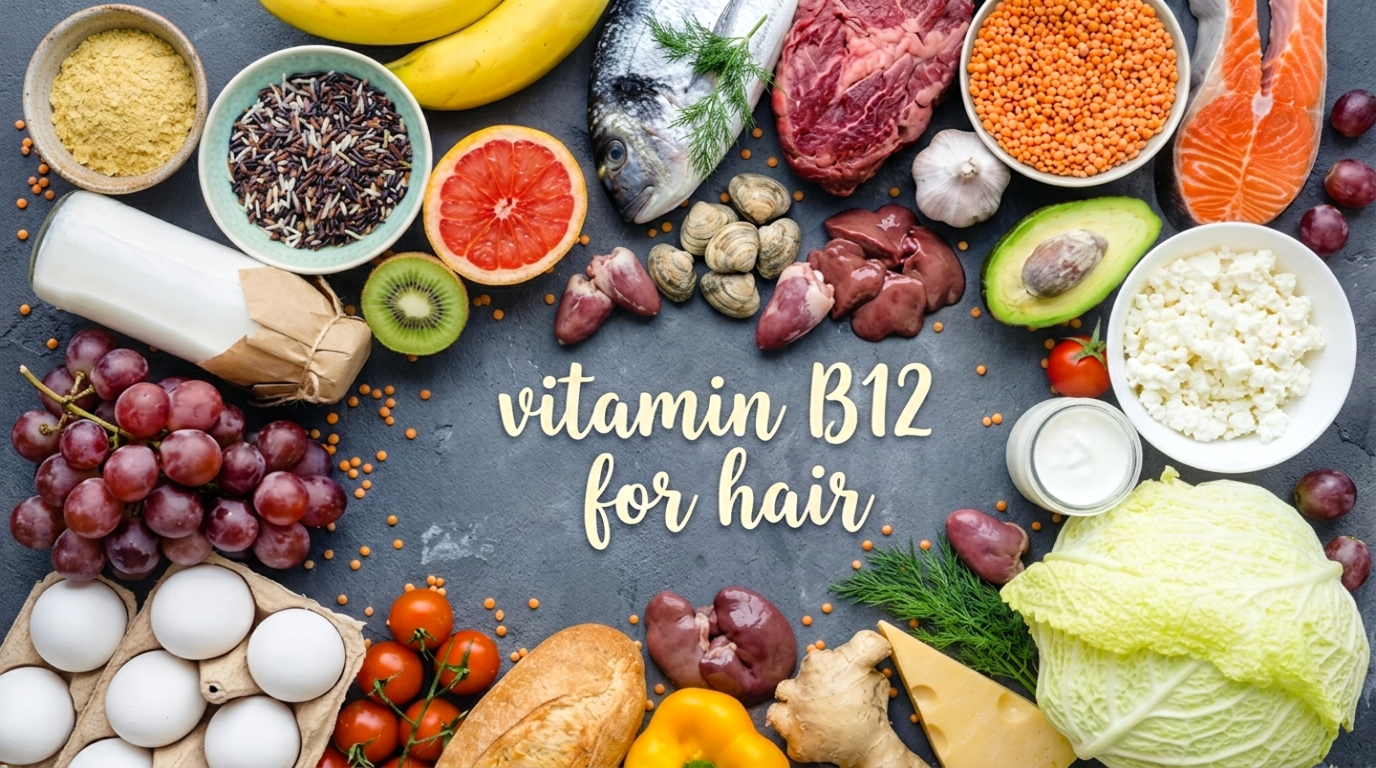
Including a variety of Vitamin B12 Foods in your diet can help fulfil your daily requirements.. Animal-based foods are among the most reliable natural sources.
Some common high-B12 foods include:
- Fish: Sardines, salmon, tuna, and trout.
- Meat: Beef and other meat products.
- Eggs: Provide vitamin B12 along with protein.
- Milk: Supplies B12, calcium, and protein.
- Yogurt: Contains B12 and other essential nutrients.
- Cheese: Provides varying amounts of B12.
These B12-rich food options can add variety to your meals and support sufficient nutrient intake.
Which Vegetarian Foods Provide Vitamin B12?
Getting enough B12 requires extra attention if you follow a vegetarian diet. Milk, paneer, yogurt, cheese, and eggs are useful options.
Popular Vitamin B12 foods vegetarian Indian choices include:
- Milk and curd.
- Paneer and cheese.
- Eggs.
- Fortified breakfast cereals.
These vegetarian B12 options can make it easier to include the nutrient in daily meals.
For people following a vegan diet, fortified plant-based milk, breakfast cereals, and nutritional yeast with added B12 are useful alternatives.
Do Fruits and Dry Fruits Contain Vitamin B12?
Many people search for Vitamin B12 vegetables and fruits, but most ordinary plant foods do not naturally provide meaningful amounts of this nutrient.
Similarly, almonds, walnuts, dates, and raisins are nutritious, but they are not reliable B12 sources. Even Vitamin B12 rich dry fruits are not a dependable way to meet daily requirements.
If you follow a plant-based diet, check food labels for products fortified with vitamin B12.
Can Vitamin B12 Supplements Help Hair Growth?
Vitamin B12 supplements can help increase intake when food sources are insufficient, or the body has difficulty absorbing the nutrient. Understanding the common deficiency of vitamin B12 can also help you recognise why maintaining adequate levels is important.
However, supplements do not automatically make hair thicker or grow faster. Their benefits depend on whether your body actually needs more B12.
Maintaining a balanced diet with enough protein, iron, zinc, and other essential nutrients is also important for healthy hair.
What Is the Recommended Daily Intake of Vitamin B12?
The recommended daily intake of vitamin B12 depends on age and life stage. Along with B12, other nutrients also contribute to healthy hair, as discussed in this guide to vitamins for hair growth.
For most adults, the recommended amount is 2.4 micrograms (mcg) daily.
Other requirements include:
- Pregnant women: 2.6 mcg.
- Breastfeeding women: 2.8 mcg.
Children and infants need different amounts depending on their age.
What Other Foods Support Healthy Hair Growth?
Healthy hair depends on several nutrients, not just vitamin B12. Other nutrients also contribute to normal hair growth and maintenance.
Some useful food for hair growth and thickness include:
- Eggs: Provide protein and biotin. Their nutritional value also makes egg nutrition relevant to a balanced, hair-supporting diet.
- Spinach: Contains iron and folate.
- Nuts and seeds: Supply zinc, vitamin E, and healthy fats.
- Fatty fish: Provides protein and omega-3 fatty acids.
- Lentils: Offer plant-based protein and iron.
- Sweet potatoes: Contain beta-carotene.
These foods are useful additions to a balanced diet. There is no single best fruit for hair growth; a variety of fruits can provide vitamin C and other nutrients that support overall health.
Conclusion
Vitamin B12 supports red blood cell production, nerve function, and healthy cell development. Maintaining adequate levels helps support overall health and normal hair function. Include Vitamin B12 for Hair in a balanced diet by choosing suitable food sources and meeting your daily nutritional needs.
Frequently Asked Questions
1. Does vitamin B12 help hair grow?
Vitamin B12 supports normal cell function and red blood cell production. Correcting a deficiency may support overall hair health, but extra B12 does not guarantee faster growth.
2. Can low B12 cause hair thinning?
Low B12 may occur alongside nutritional problems, but hair thinning is not a specific sign of deficiency.
3. Which foods contain the most vitamin B12?
Fish, meat, eggs, milk, yogurt, and fortified foods are useful sources of vitamin B12.
4. Can vitamin B12 supplements improve hair thickness?
Supplements can help when B12 levels are low, but there is limited evidence that extra B12 improves hair thickness when levels are already sufficient.
References:
- https://ods.od.nih.gov/factsheets/VitaminB12-HealthProfessional/
- https://medlineplus.gov/ency/article/002403.htm
0 200

No Comments