
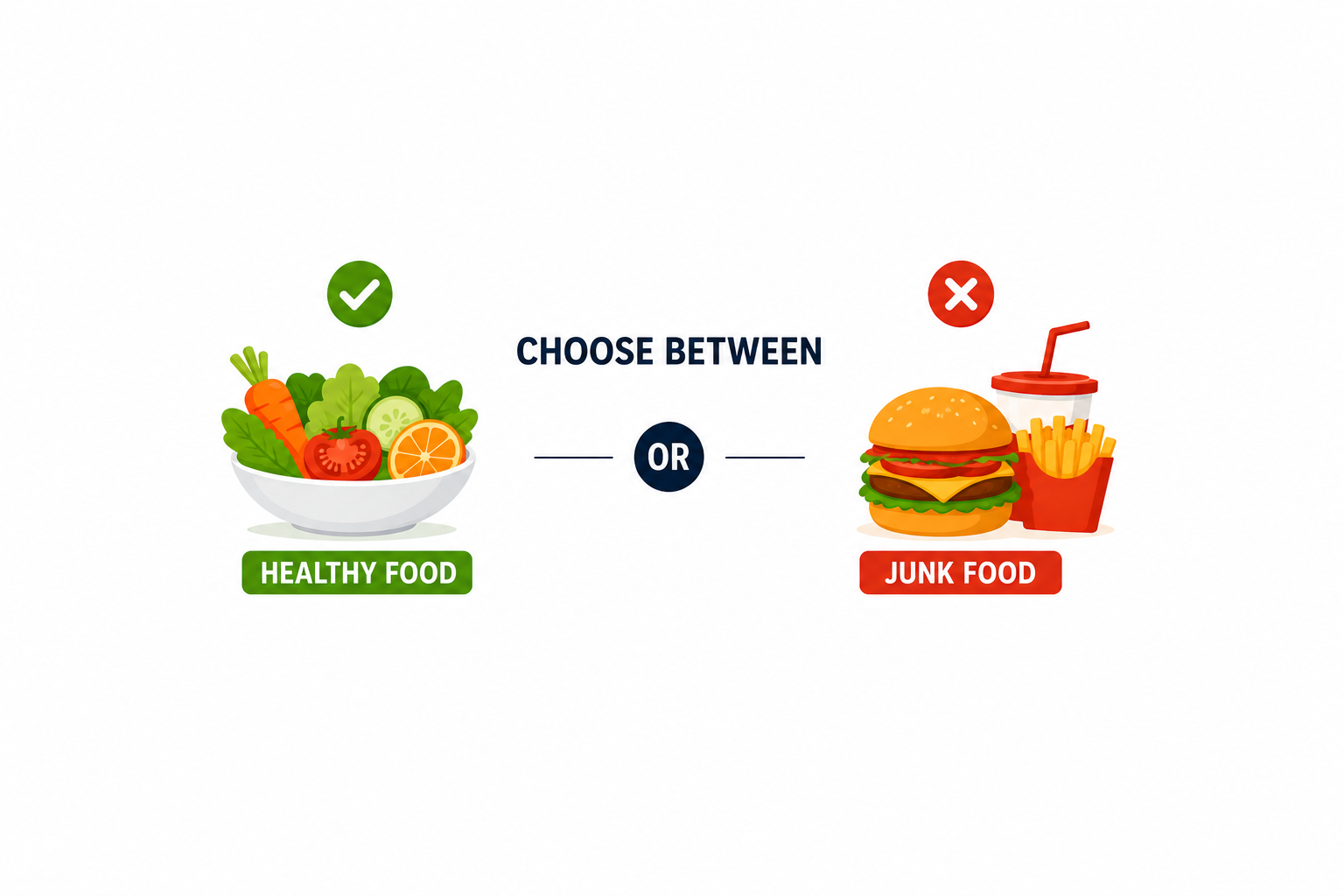
Food is a vital part of our daily life, as it provides the body with essential nutrients, supports energy levels, improves overall health, and contributes to a better quality of life. The choices we make every day can affect our body, mind, and long-term wellness. The debate between healthy food vs junk food is common because both types of food are widely available and have different effects on the body. While healthy foods provide essential nutrients, junk foods are often high in calories, sugar, salt, and unhealthy fats.
Understanding the difference between nutritious meals and processed foods can help people make better decisions about their diet. This guide explains healthy foods versus unhealthy foods, their benefits, risks, and how they influence overall health.
What Is Healthy Food?
Healthy food refers to foods that provide important nutrients such as vitamins and minerals, fiber, protein, and healthy fats. These foods support body functions, improve immunity, and help maintain a healthy weight.
Examples of healthy foods include fruits, vegetables, whole grains, lean proteins, nuts, seeds, legumes, and low-fat dairy products. These foods provide steady energy and help reduce the risk of various health problems.
A diet rich in healthy foods can improve digestion, strengthen the immune system, support heart health, and promote better mental and physical performance. Choosing fresh and natural foods is an important part of eating healthy vs eating unhealthy habits.
What Is Junk Food?
Junk food refers to processed foods that usually contain high amounts of calories, sugar, unhealthy fats, and sodium but offer limited nutritional value. Common examples include chips, sugary drinks, candy, burgers, fries, and other fast-food items.
Although junk food can be convenient and enjoyable, frequent consumption may contribute to weight gain, high cholesterol, diabetes, and other health concerns. TThis is why recognizing the relationship between junk food and healthy food is essential for making smart and balanced dietary decisions.
An unhealthy food paragraph often highlights that processed foods may taste good but usually lack the essential nutrients needed for proper body function. Eating too many unhealthy foods can negatively affect energy levels and overall wellness.
Healthy Foods vs Junk Food: Nutritional Differences

The main difference between healthy food and junk food is their nutritional value. Healthy foods contain nutrients that support growth, repair, and energy production, while junk foods often provide empty calories.
Healthy foods usually contain:
- Vitamins and minerals
- Dietary fiber
- Quality proteins
- Healthy fats
- Natural nutrients
Junk foods often contain:
- Excess sugar
- High sodium
- Artificial ingredients
- Trans fats
- Excess calories
When comparing healthy foods vs fast food, healthy foods are generally better for maintaining a balanced diet, while fast food should be consumed occasionally.
Benefits of Healthy Foods
Healthy foods offer many advantages for the body and mind. Some important benefits include:
1. Better Energy Levels
Nutritious foods provide long-lasting energy compared to processed foods that may cause sudden energy crashes.
2. Improved Digestion
Foods rich in fiber, such as vegetables, fruits, and whole grains, support healthy digestion and prevent constipation.
3. Stronger Immunity
A balanced diet provides nutrients that help the immune system fight infections and maintain good health.
4. Weight Management
Healthy eating habits can help maintain a healthy weight by providing proper nutrition without excessive calories.
5. Reduced Health Risks
A nutritious diet may lower the risk of heart disease, obesity, and other chronic conditions.
Benefits and Risks of Junk Food
While junk food is often considered unhealthy, there are some short-term advantages. The benefits of junk food include convenience, affordability, quick availability, and enjoyable taste. It can also provide quick energy because many junk foods contain carbohydrates and calories.
However, the negative effects are usually greater when junk food is consumed frequently. The pros and cons junk food discussion shows that occasional consumption may not be harmful, but regular intake can create health problems.
Some possible risks include:
- Weight gain
- Increased risk of diabetes
- High blood pressure
- Poor digestion
- Low energy levels
- Nutrient deficiencies
The junk food pros and cons depend on how often and how much a person consumes. Moderation is important when including these foods in a diet.
Fast Food vs Healthy Food
The comparison between fast food and healthy food highlights the difference between quick convenience and the nutritional value needed for maintaining good health. Fast food is easy to access and saves time, but it often contains more calories, unhealthy fats, and sodium.
Healthy food may take more time and effort to prepare, but it offers greater nutritional value and supports better overall health. Making healthier choices instead of fast food on a regular basis can help boost energy levels, support fitness goals, and improve overall well-being.
Many people struggle to decide between fast food and healthy food when they have a busy schedule and limited time for meal preparation. A good approach is preparing simple healthy meals in advance so nutritious options are always available.
Healthy Food vs Junk Food Difference
The junk food and healthy food difference can be understood through their ingredients and effects on the body. Healthy foods support the body’s nutritional needs, while junk foods mainly satisfy hunger or cravings without providing enough essential nutrients.
A balanced lifestyle does not require completely avoiding junk food. Instead, people should focus on eating more healthy foods and limiting processed items.
Making Better Food Choices
Choosing between healthy food vs junk depends on personal habits, lifestyle, and health goals. Small changes, such as adding more vegetables, drinking water instead of sugary beverages, and reducing processed snacks, can make a significant difference.
Checking food labels, managing portion sizes, and preparing meals in advance can also help develop healthier eating habits. A balanced diet allows people to enjoy occasional treats while still maintaining good health.
Conclusion of Junk Food
The conclusion of junk food is that it can be enjoyed occasionally but should not replace nutritious meals. Excessive consumption may lead to several health problems, while balanced eating supports long-term wellness.
The conclusion junk food is that moderation is the key. Choosing natural, nutrient-rich foods more often can help improve physical health, energy, and quality of life.
FAQs
1. What is the main difference between healthy food and junk food?
Healthy food provides essential nutrients like vitamins, minerals, and fiber, while junk food usually contains high calories, sugar, salt, and unhealthy fats with fewer nutrients.
2. Is junk food completely harmful?
No, eating junk food occasionally is not necessarily harmful. However, regular consumption can increase the risk of health problems.
3. Why are healthy foods better than fast food?
Healthy foods provide better nutrition, support body functions, and help maintain long-term health compared to most fast-food options.
4. Can junk food provide any benefits?
The benefits of junk foods include convenience, quick energy, and taste satisfaction, but these benefits are limited compared to the potential health risks.
5. How can I choose healthy food over junk food?
You can choose healthier options by planning meals, eating more fruits and vegetables, reducing processed foods, and selecting balanced meals whenever possible.
Reference
https://www.healthline.com/nutrition/15-health-foods-that-taste-better-than-junk-foods
https://www.webmd.com/diet/features/junk-food-facts
0 200

No Comments