
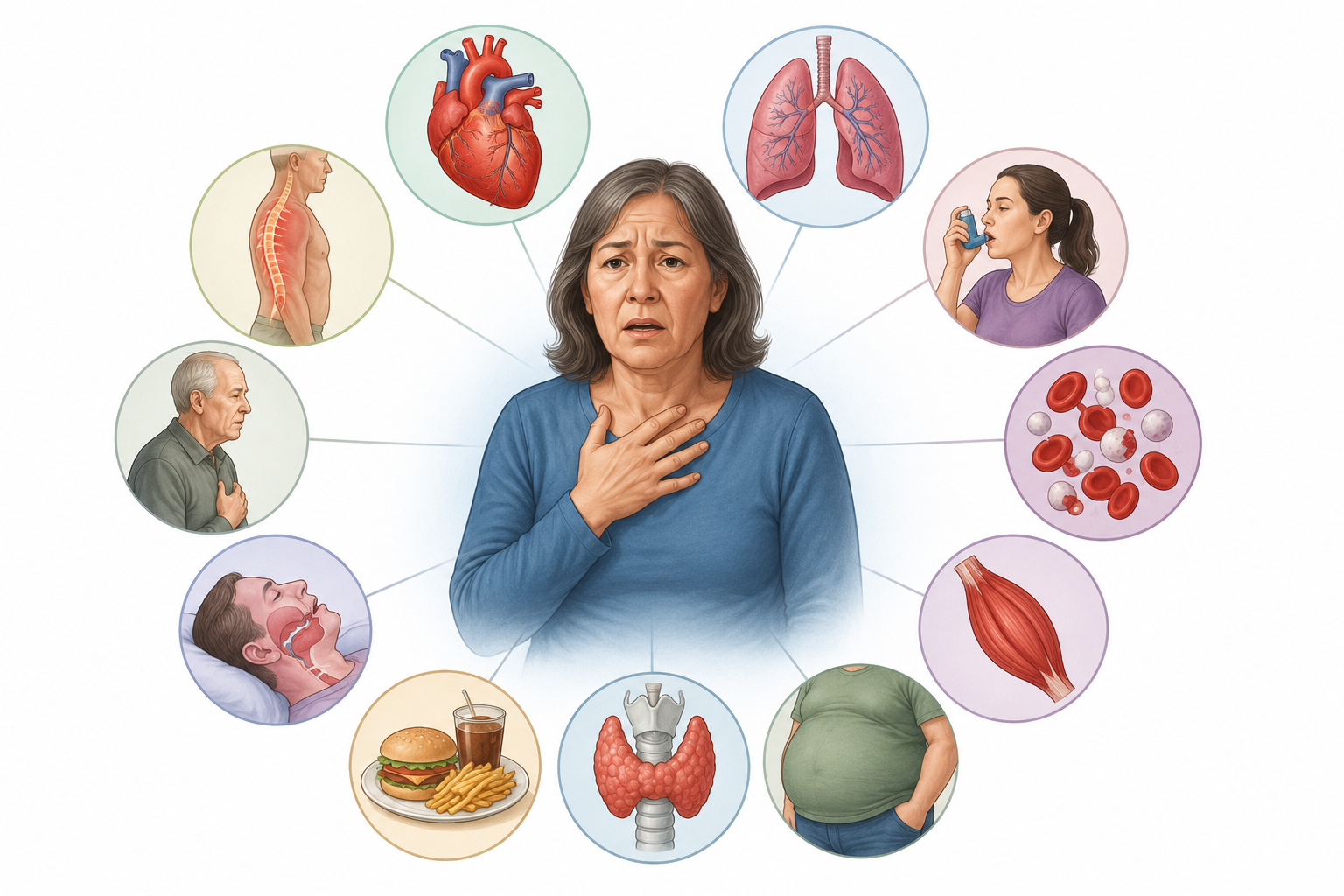
What Is Shortness of Breath?
Shortness of breath, also known as dyspnea, is the sensation of not getting enough air or having difficulty breathing. Some people describe it as feeling tightness in the chest, struggling to take deep breaths, or becoming winded after minimal activity.
The severity can range from mild discomfort to a serious medical emergency. Identifying the causes of shortness of breath is essential because the symptom can be linked to respiratory, cardiovascular, digestive, or psychological conditions.
Common Causes of Shortness of Breath
There are many possible causes of shortness in breath, ranging from temporary issues to chronic diseases.
1. Respiratory Conditions
Lung-related disorders are among the most common causes of breathing difficulties.
- Asthma
- Chronic obstructive pulmonary disease (COPD)
- Pneumonia
- Bronchitis
- Pulmonary embolism
- Lung infections
These conditions may cause inflammation or blockage in the airways, making it harder for oxygen to reach the body.
2. Heart Problems
Heart conditions can also affect breathing. When the heart cannot pump blood efficiently, fluid may accumulate in the lungs.
Examples include:
- Heart failure
- Coronary artery disease
- Arrhythmias
- Heart valve disorders
People with heart-related breathing issues may experience fatigue, chest pain, or swelling in the legs along with shortness of breath.
3. Anxiety and Stress
Many people wonder, can anxiety cause shortness of breath? The answer is yes. Anxiety can trigger rapid breathing, panic attacks, and a sensation of not getting enough air.
During periods of stress, the body activates its “fight or flight” response, which can alter breathing patterns. Although anxiety-related breathlessness is usually not dangerous, it can feel alarming and should be evaluated if symptoms persist.
4. Allergies
Another frequently asked question is, can allergies cause shortness of breath? Yes, allergies can sometimes affect breathing, especially when they trigger airway inflammation or asthma symptoms.
Common allergy triggers include:
- Pollen
- Dust mites
- Pet dander
- Mold
Severe allergic reactions may lead to significant breathing difficulties and require immediate medical attention.
Can Digestive Problems Cause Shortness of Breath?
Many people are surprised to learn that digestive conditions can contribute to breathing difficulties.
Can GERD Cause Shortness of Breath?
Yes, can GERD cause shortness of breath, which is a common concern among patients. Gastroesophageal reflux disease (GERD) is a condition in which stomach acid moves backward into the esophagus.
This acid irritation can:
- Trigger coughing
- Cause throat inflammation
- Lead to chest discomfort
- Affect breathing patterns
In some cases, acid reflux can worsen asthma symptoms and create the sensation of breathlessness.
Can Acid Reflux Cause Shortness of Breath?
Many individuals ask, can acid reflux cause shortness of breath? The answer is yes. Acid reflux may irritate the airways or cause muscle spasms in the throat, making breathing feel more difficult.
Similarly, people often wonder, can acid reflux cause shortness of breath symptoms after eating? Large meals, spicy foods, and lying down shortly after eating may increase the likelihood of reflux-related breathing discomfort.
Can a hiatal hernia lead to shortness of breath?
Another question frequently asked is, Can a hiatal hernia lead to shortness of breath? A hiatal hernia happens when a portion of the stomach moves upward through the diaphragm into the chest area.
Large hiatal hernias may:
- Increase acid reflux symptoms
- Put pressure on nearby structures
- Cause chest discomfort
- Contribute to breathing difficulties
If symptoms are severe or persistent, medical evaluation is recommended.
Signs That May Accompany Shortness of Breath
Shortness of breath may occur alongside other symptoms that help identify the underlying cause.
Common associated symptoms include:
- Wheezing
- Chest pain
- Persistent cough
- Dizziness
- Fatigue
- Rapid heartbeat
- Fever
- Swelling in the legs or ankles
If breathlessness is sudden, severe, or accompanied by chest pain, emergency medical care should be sought immediately.
How Is Shortness of Breath Diagnosed?
Diagnosing the causes of shortness of breath requires a thorough medical evaluation.
Healthcare providers may perform:
Medical History Review
Your doctor will ask about:
- Symptom duration
- Medical history
- Medications
- Lifestyle habits
- Family history
Physical Examination
A physical exam helps identify signs of heart, lung, or other health problems.
Diagnostic Tests
Depending on symptoms, testing may include:
- Chest X-rays
- Blood tests
- Electrocardiogram (ECG)
- Pulmonary function tests
- CT scans
- Echocardiogram
- Oxygen saturation measurement
These tests help determine the exact reason for breathing difficulties and guide treatment decisions.
Treatment Options
Treatment depends on the underlying cause.
Medications
Doctors may prescribe:
- Inhalers for asthma
- Antibiotics for infections
- Heart medications
- Allergy treatments
- Acid reflux medications
Lifestyle Changes
Simple lifestyle modifications can improve breathing and overall health:
- Maintain a healthy weight
- Exercise regularly
- Avoid smoking
- Manage stress effectively
- Eat smaller meals if reflux is a concern
- Stay hydrated
Breathing Techniques
Controlled breathing exercises may help reduce symptoms related to anxiety and improve lung function.
Examples include:
- Pursed-lip breathing
- Diaphragmatic breathing
- Relaxation exercises
When to See a Doctor
Seek medical attention if shortness of breath:
- Occurs suddenly
- Becomes progressively worse
- Interferes with daily activities
- Is accompanied by chest pain
- Causes fainting or severe dizziness
- Appears with swelling in the legs
Early diagnosis can help prevent complications and improve treatment outcomes.
Conclusion
Understanding what causes shortness of breath is essential for maintaining good health. The causes of shortness in breath can range from asthma and heart disease to digestive conditions such as GERD and hiatal hernias. Questions like can GERD cause shortness of breath, can acid reflux cause shortness of breath, can anxiety cause shortness of breath, can a hiatal hernia cause shortness of breath, and can allergies cause shortness of breath highlight the many factors that may contribute to breathing difficulties. If symptoms persist or worsen, consult a healthcare professional for proper evaluation and treatment.
FAQs
1. What causes shortness of breath most commonly?
The most common causes include asthma, COPD, heart disease, anxiety, respiratory infections, allergies, and acid reflux-related conditions.
2. Can anxiety cause shortness of breath even without lung disease?
Yes. Anxiety and panic attacks can alter breathing patterns and create the sensation of breathlessness even when the lungs are healthy.
3. Can GERD cause shortness of breath at night?
Yes. GERD symptoms often worsen when lying down, which may contribute to coughing, throat irritation, and breathing discomfort during sleep.
4. Can allergies cause shortness of breath suddenly?
Yes. Allergies can trigger airway inflammation, asthma symptoms, or severe allergic reactions that may lead to sudden breathing difficulties.
5. Can a hiatal hernia cause shortness of breath after eating?
Yes. A large hiatal hernia may increase pressure in the chest area and worsen acid reflux symptoms, potentially leading to shortness of breath after meals.
Reference
https://my.clevelandclinic.org/health/symptoms/16942-dyspnea
http://mayoclinic.org/symptoms/shortness-of-breath/basics/causes/sym-20050890


No Comments