

Depression is a common mental health condition that can affect a person’s mood, thoughts, energy, sleep, and daily activities. It is more than occasional sadness and may require professional support and treatment. Knowing the different types of depression disorders can help you identify the symptoms and understand when to seek professional help.
Many people wonder what types of depression can affect mental health, and how do they differ? Depression can occur in several forms, each with distinct symptoms, patterns, and treatment needs. Recognizing these differences is an important step toward receiving appropriate care.
Different Levels of Depression
People sometimes use the phrase different levels of depression to describe mild, moderate, and severe symptoms. Clinicians assess symptom intensity, duration, functional impact, and other factors to determine severity.
- Mild depression: Symptoms may cause noticeable distress but allow a person to manage many daily responsibilities.
-
The worst types of depression are not necessarily the same for everyone. Severe depression involving psychotic symptoms or suicidal risk can be life-threatening and needs immediate professional attention.
How many types of depression exist
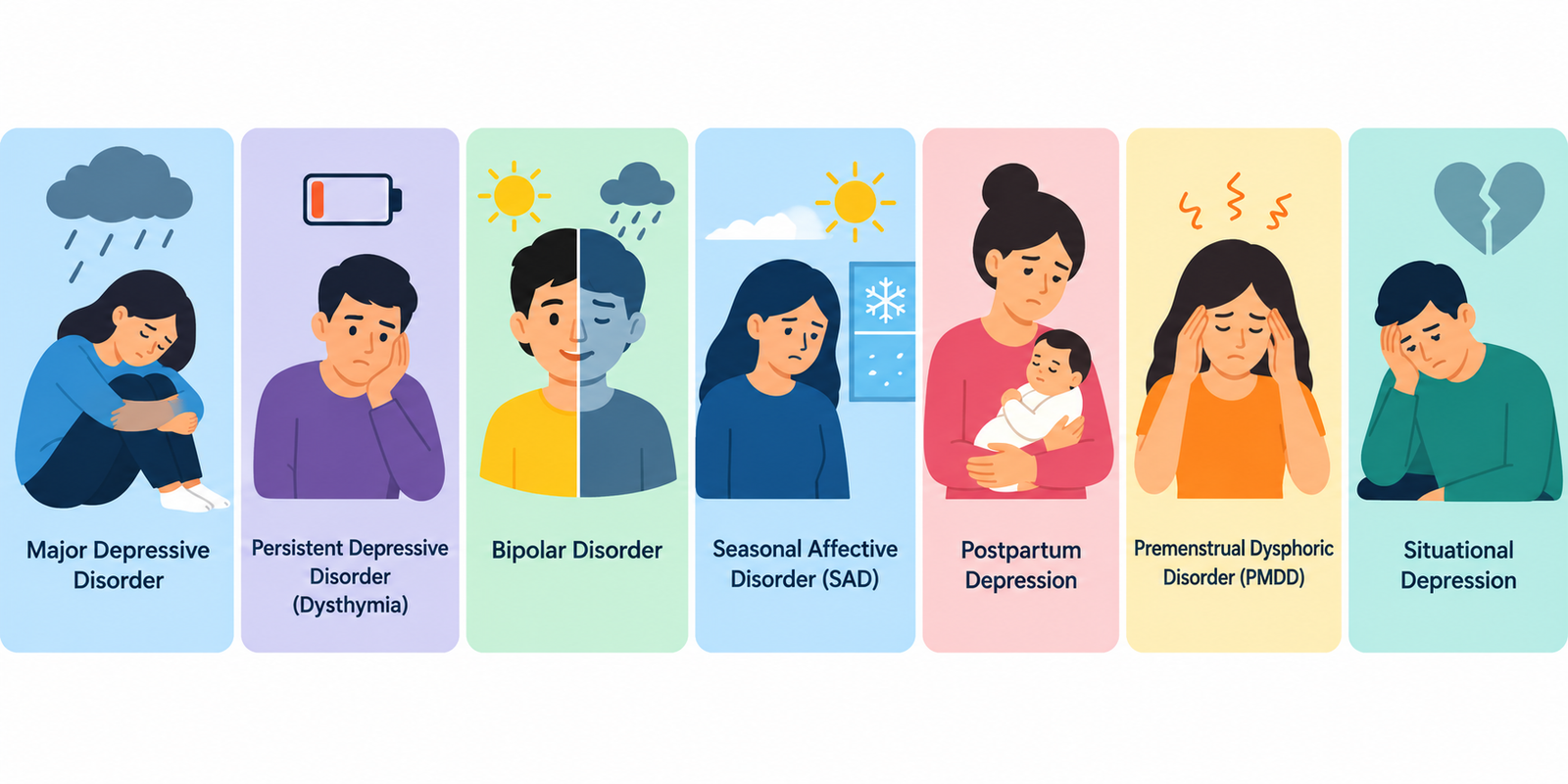
1. Major Depressive Disorder
Major depressive disorder (MDD) is one of the most recognized forms of depression. It can cause persistent sadness, loss of interest in activities, fatigue, difficulty concentrating, and changes in sleep or appetite. Symptoms typically last at least two weeks and significantly affect everyday life.
2. Persistent Depressive Disorder
Persistent depressive disorder, also called dysthymia, involves long-lasting depressive symptoms. Adults generally experience a depressed mood for at least two years. Although symptoms may be less intense than those of a major depressive episode, their prolonged nature can affect relationships, work, and overall well-being.
3. Seasonal Affective Disorder
Seasonal affective disorder (SAD) is a pattern of depression associated with particular seasons, commonly during months with less daylight. Symptoms may include low energy, increased sleep, changes in appetite, and reduced motivation. Treatment may include psychotherapy, medication, or light therapy under professional guidance.
4. Postpartum Depression
Postpartum depression can develop after childbirth and may involve persistent sadness, anxiety, exhaustion, feelings of guilt, or difficulty bonding with a baby. It is more severe and longer-lasting than the temporary mood changes known as the baby blues. Professional support is important for the parent’s and baby’s well-being.
5. Premenstrual Dysphoric Disorder
Premenstrual dysphoric disorder (PMDD) is a condition associated with significant mood symptoms before menstruation. People may experience irritability, sadness, anxiety, mood changes, and difficulty functioning. Symptoms typically improve after menstruation begins. A qualified healthcare provider can evaluate your symptoms and suggest the most suitable treatment.
6. Atypical Depression
Atypical depression is a subtype of major depression characterized by mood that may temporarily improve in response to positive events. Other features can include increased appetite, excessive sleep, a heavy feeling in the arms or legs, and sensitivity to rejection.
7. Depression With Psychotic Features
These examples cover several important forms, but all types of depression cannot be represented by one fixed list. Bipolar disorder can include periods of depression, but it is classified as a separate mental health condition from depressive disorders.
9 Symptoms of Depression to Recognize
Depression can affect people differently. The following 9 symptoms of depression are common warning signs:
- Persistent sadness, emptiness, or hopelessness.
- Loss of interest in hobbies and activities.
- Changes in appetite or body weight.
- Sleeping too much or experiencing insomnia.
- Low energy or ongoing fatigue.
- Difficulty concentrating or making decisions.
- Feelings of guilt, worthlessness, or helplessness.
- Restlessness or noticeably slowed movements and speech.
- Recurrent thoughts of death or suicide.
Not everyone experiences every symptom. If several symptoms persist for two weeks or longer and interfere with daily life, consider speaking with a qualified healthcare professional. Suicidal thoughts require immediate support, particularly when there is an immediate risk of harm.
Types of Depression Diagnosis and Treatment
The types of depression diagnosis depend on a person’s symptoms, medical history, duration of symptoms, and their impact on daily life. A healthcare professional may conduct a clinical interview, use screening questionnaires, review medications, and check for medical conditions that could contribute to depressive symptoms.
Treatment varies according to the diagnosis and individual needs. Treatment may involve therapy, healthy lifestyle changes, medication, or a combination of these options, depending on the person’s needs. Common medicines for depression include antidepressants such as selective serotonin reuptake inhibitors (SSRIs) and serotonin-norepinephrine reuptake inhibitors (SNRIs).
FAQs
1. What are the most common types of depression?
Commonly discussed forms include major depressive disorder, persistent depressive disorder, seasonal affective disorder, postpartum depression, PMDD, atypical depression, and depression with psychotic features. The appropriate classification depends on the symptoms and clinical assessment.
2. How many types of depression exist?
There is no single fixed number. The answer depends on the diagnostic system and whether subtypes, seasonal patterns, and depression related to specific life events are counted separately.
3. What are the most common symptoms of depression?
Common symptoms include persistent sadness, loss of interest, fatigue, sleep disturbances, appetite changes, poor concentration, and feelings of worthlessness. Symptoms and severity vary from person to person.
4. What medicines are used to treat depression?
Doctors may prescribe antidepressants, including SSRIs and SNRIs, depending on the diagnosis and individual circumstances. Psychotherapy and other treatments may also help. A qualified healthcare professional should guide treatment decisions.
5. Can depression be treated successfully?
Yes. Many people improve with appropriate treatment, which may include psychotherapy, medication, or a combination of approaches. Seeking professional help early can support recovery and improve quality of life.
Reference
https://www.webmd.com/depression/depression-types
https://my.clevelandclinic.org/health/diseases/9290-depression
0 200
No Comments