
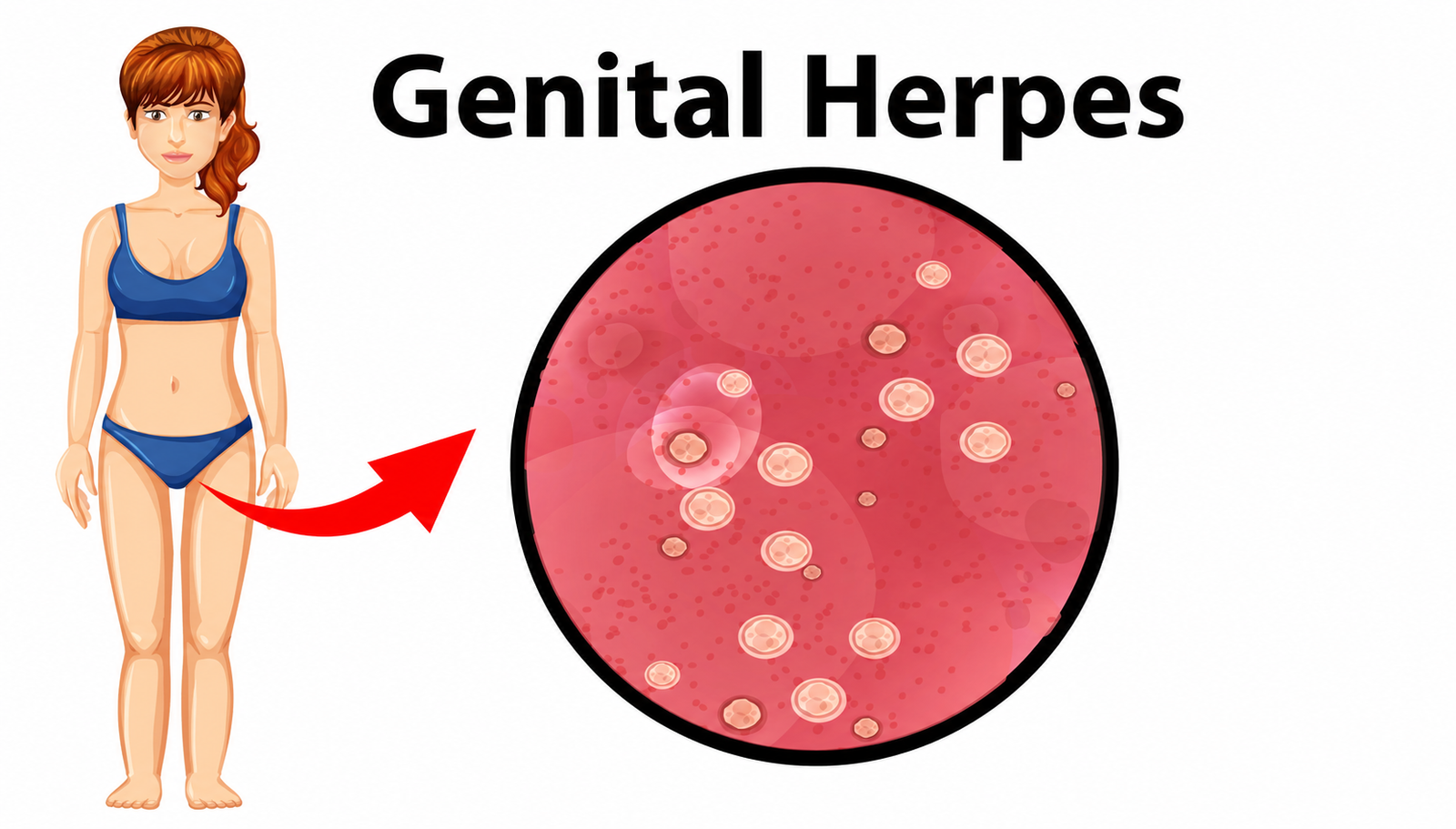
Genital herpes is a widespread viral infection caused by the herpes simplex virus (HSV). It spreads mainly through sexual contact and can affect both males and females. Many people may not show symptoms immediately, which is why understanding early signs and transmission is important for prevention and timely care.
Early Symptoms and Warning Signs
The early symptoms of genital herpes often appear within 2 to 12 days after exposure. However, in some cases, the virus may remain inactive for weeks or months before showing signs. Common symptoms include:
- Tingling or itching sensation in the genital area
- Burning pain during urination
- Small red bumps or blisters around the genitals, anus, or thighs
- Blisters that break and form painful sores
- Flu-like symptoms such as fever and body aches during the first outbreak
These symptoms may come and go, with periods of outbreaks followed by times when the virus remains dormant in the body.
Genital Herpes Causative Agent
The genital herpes causative agent is the herpes simplex virus, mainly HSV-2, although HSV-1 (commonly responsible for oral herpes) can also cause genital infections through oral-genital contact. Once the virus enters the body, it travels to nerve cells and stays there permanently, which is why the infection can reactivate later in life.
How to Treat Genital Herpes
There is currently no permanent cure for herpes, but the condition can be effectively managed. The keyword how to treat genital herpes refers to medical and lifestyle approaches that help control symptoms and reduce outbreaks.
Treatment options include:
- Antiviral medicines like acyclovir, valacyclovir, and famciclovir are commonly used to treat the infection.
- Pain relievers to reduce discomfort during outbreaks
- Keeping the affected area clean and dry
- Wearing loose clothing to avoid irritation
- Avoiding sexual contact during active outbreaks
Early treatment helps reduce the severity and duration of symptoms. Doctors may also prescribe daily suppressive therapy for people with frequent outbreaks to lower transmission risk.
Genital Herpes and Cure
Many people search for genital herpes and cure, hoping for a permanent solution. However, it is important to understand that there is currently no complete cure for genital herpes. The virus remains in the body for life, but antiviral treatment can significantly reduce symptoms and outbreaks.
Research is ongoing to develop vaccines and more advanced treatments, but at present, management rather than cure is the medical approach.
Genital Herpes Versus Genital Warts
Understanding genital herpes versus genital warts is important because both are sexually transmitted infections, but are caused by different viruses.
- Genital herpes is caused by HiV (a virus) and leads to painful blisters or sores.
- Genital warts are caused by the human papillomavirus (HPV) and appear as soft, flesh-colored growths.
Herpes lesions are usually painful and filled with fluid, while genital warts are typically painless but may grow in clusters. Diagnosis by a healthcare provider is essential because both conditions require different treatments.
Genital Herpes Photos Male
Many people search for genital herpes photos male to understand how the infection appears in men. In males, herpes outbreaks commonly occur on:
- The penis
- Scrotum
- Thighs
- Around the anus
Lesions usually start as small red bumps that develop into painful, fluid-filled blisters and eventually break into ulcers. However, visual identification alone is not enough for diagnosis, and medical testing is always recommended.
Genital Herpes Guy
The term genital herpes guy is often used in online searches referring to men experiencing herpes symptoms or seeking information about the infection. It is important to remember that genital herpes affects people of all genders and is not limited to any specific group. Men may experience similar symptoms such as itching, sores, and discomfort during urination, and they can also transmit the virus even without visible symptoms.
Education and awareness are key to reducing stigma and encouraging safe sexual practices.
Prevention Tips
Preventing genital herpes involves reducing exposure to the virus. Key prevention methods include:
- Using condoms during sexual activity
- Avoiding sexual contact during outbreaks
- Regular STI testing
- Limiting multiple sexual partners
- Open communication with partners about sexual health
Living with Genital Herpes
Although Genital Herpes is a lifelong condition, most people manage it successfully with proper care. Outbreaks often become less frequent over time, and many individuals lead normal, healthy lives.
Stress management, a strong immune system, and healthy lifestyle choices can help reduce recurrence.
FAQs
1. What are the first signs of genital herpes?
The first signs include itching, burning, tingling, and small, painful blisters in the genital area, often followed by flu-like symptoms.
2. Can genital herpes be cured permanently?
No, there is currently no permanent cure for genital herpes, but antiviral medications help control symptoms and reduce outbreaks.
3. How is genital herpes transmitted?
It spreads through direct skin-to-skin contact during vaginal, oral, or anal sex with an infected person, even if no symptoms are visible.
4. Is genital herpes dangerous?
It is generally not life-threatening, but it may lead to discomfort, emotional distress, and serious complications in newborns if passed during delivery.
5. How can I reduce the risk of spreading genital herpes?
Using condoms, avoiding sex during outbreaks, taking antiviral medication, and informing partners can significantly reduce transmission risk.
Reference
https://www.mayoclinic.org/diseases-conditions/genital-herpes/symptoms-causes/syc-20356161
https://my.clevelandclinic.org/health/diseases/genital-herpes
0 200
No Comments