
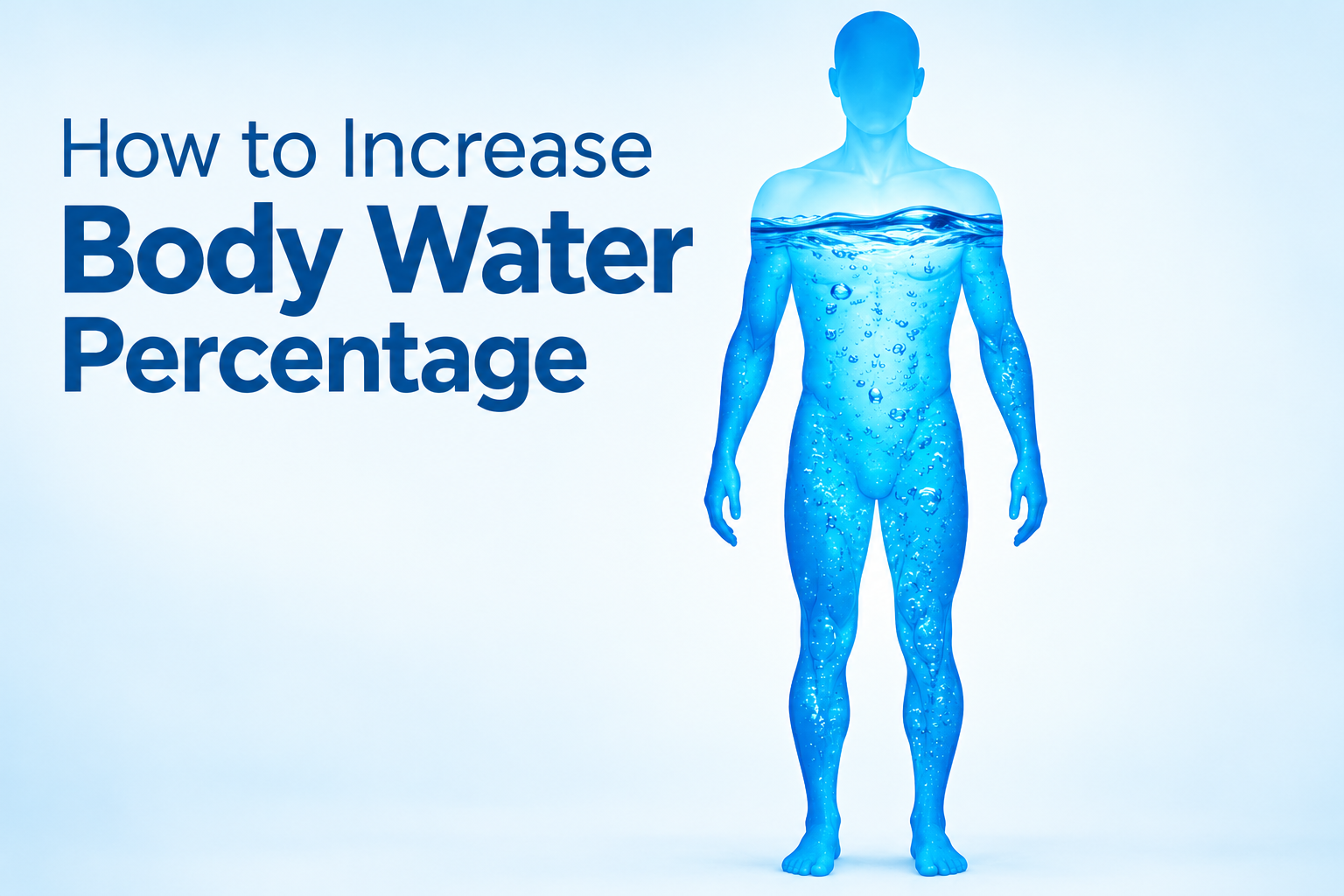
Your body needs water for almost every essential function, including regulating temperature, transporting nutrients, supporting digestion, and removing waste. If your body water percentage is lower than expected, improving your daily hydration habits may help.
But what is a good body water percentage, and how can you increase it naturally? The answer depends on factors such as age, sex, muscle mass, and the method used to measure body composition.
What Is a Good Body Water Percentage?
So, what percent water should I be? For many healthy adults, total body water commonly falls around 45–65% of body weight, although individual values can vary. A higher amount of muscle mass is often linked to a higher body water percentage, as muscle tissue contains a significant amount of water.
If you’re wondering what is ideal body water percentage, there isn’t one number that applies to everyone. Your age, body composition, activity level, and overall health all matter.
Similarly, what is healthy water weight or what is a good water weight percentage depends on your individual body composition. A body composition scale can provide an estimate, but these devices aren’t perfectly accurate and can be influenced by hydration, meals, exercise, and other factors.
If you’re asking, “my body water percentage is 40,” that may be lower than the typical range for many adults. However, don’t assume that the number automatically means you are dehydrated. Consider how the measurement was taken and look at trends over time rather than relying on a single reading.
How to Increase Water in the Body
If you’re wondering how to increase water in body, the most practical approach is to consistently consume enough fluids throughout the day.
Here are a few simple strategies you can try to improve your hydration.
1. Drink Water Regularly
One of the simplest answers to how do I increase my body water percentage is to make drinking water a regular habit instead of waiting until you’re extremely thirsty.
Keep a reusable water bottle nearby and take small drinks throughout the day. This can also help if you’re wondering how to drink more water throughout the day without forcing yourself to drink a large amount at once.
Your fluid needs vary depending on your body size, activity, climate, diet, and health. On hot days or during exercise, you may need more fluids because you lose additional water through sweat.
2. Eat More Water-Rich Foods
Hydration doesn’t only come from beverages. Foods such as watermelon, oranges, strawberries, cucumbers, tomatoes, soups, and other fruits and vegetables can contribute to your daily fluid intake.
Adding water-rich foods to meals and snacks is one of the easiest hydration hacks because you’re getting both fluids and nutrients.
3. Make Water Easier to Drink
If plain water feels boring, try adding lemon, lime, cucumber, mint, or fresh fruit for flavor.
This can be particularly useful if you’re looking for how to get more hydrated but don’t enjoy drinking plain water. The goal isn’t to make water complicated—it’s to make healthy hydration easier to maintain.
4. Drink More Around Exercise
Exercise increases fluid loss through sweat. Drinking water before, during, and after physical activity can help replace fluids.
For longer or particularly intense exercise sessions, especially in hot conditions, electrolytes may also be useful. However, most people don’t need specialized hydration products for ordinary daily activity.
5. Build a Hydration Routine
A routine can make hydration much easier. Drink some water when you wake up, with meals, during work breaks, and after physical activity.
If you’re asking how to increase water intake, linking water to habits you already have is often more effective than simply trying to remember to drink.
Why Is My Body Water Percentage Low?
If you’re wondering why is my body water percentage low, several factors may be involved. Your body composition, age, sex, recent exercise, food intake, sweating, and dehydrated body status can all affect the reading.
Body composition scales also estimate body water using bioelectrical impedance. The result can change depending on when you weigh yourself, whether you’ve recently eaten or exercised, and your current hydration status.
Therefore, don’t panic over one low measurement. Instead, measure under similar conditions and look for longer-term patterns.
How to Be More Hydrated Every Day
If you want to know how to be more hydrated, focus on consistency rather than drinking excessive amounts of water.
Some practical tips for staying hydrated include:
-
Carry a water bottle with you.
-
Drink water with meals.
-
Keep water visible at your desk.
-
Eat fruits and vegetables regularly.
-
Increase your fluid intake when exercising or spending time in hot weather.
-
Set reminders if you frequently forget to drink.
-
Choose water more often instead of sugary beverages.
-
Monitor your urine color as one general indicator of hydration.
These simple habits can help you stay hydrated without making it feel like a daily chore.
How to Hydrate Better
If you’re searching for how to hydrate better, remember that hydration is about your overall fluid balance—not simply drinking as much water as possible.
For most people, water is an excellent choice. If you’re looking for what helps with hydration, regular fluid intake, water-rich foods, adequate electrolytes when appropriate, and replacing fluids lost through sweating can all play a role.
You may also be wondering how to improve the hydrating effects of water. For normal daily hydration, plain water is already effective. During prolonged exercise or heavy sweating, fluids containing electrolytes may help replace sodium and other minerals lost in sweat.
The best way to keep hydrated is therefore to develop habits you can follow consistently.
How Much Body Water Percentage Is Healthy?
So, how much body water percentage is considered healthy? A broad adult range is often around 45–65%, but there is no single ideal number for everyone.
If you’re asking what is healthy water percentage in body or what percentage of body water is good, focus on your individual circumstances and trends rather than comparing your number directly with someone else’s.
If your readings remain unusually low, or you have symptoms such as significant dizziness in adults, confusion, very dark urine, or unusually little urination, seek medical advice rather than trying to correct the number yourself.
FAQs
1. What is a good body water percentage?
For many adults, total body water is roughly 45–65% of body weight, but a healthy range varies based on age, sex, muscle mass, and other factors.
2. My body water percentage is 40. Is that low?
A reading of 40% can be below commonly cited adult ranges, but body composition scales provide estimates rather than exact measurements. Consider your individual circumstances and measurement method.
3. How do I increase my body water percentage?
Drink fluids regularly, eat water-rich foods, stay hydrated during exercise, and replace fluids lost through sweating. Consistent habits are more important than drinking excessive amounts at once.
4. How can I increase water intake during the day?
Carry a water bottle, drink with meals, set reminders, keep water within reach, and make hydration part of your daily routine. These simple habits can make it easier to drink more water throughout the day.
5. What is the best way to improve hydration?
The best approach is consistent fluid intake combined with water-rich foods and replacing fluids lost through exercise or heat. For most everyday situations, plain water is an effective choice.
Reference
https://www.healthline.com/health/body-water-percentage
0 200

No Comments