

Urine color can range from clear and pale yellow to dark brown, and these changes may reveal important clues about your hydration, diet, medications, and overall health. Knowing what different urine colors mean can help you spot when a change is normal—and when it may be time to seek medical advice.
Understanding the types of urine colour can help you recognize what is usually normal and when a change may need medical attention. This guide explains common urine colours, possible causes, and when you should contact a healthcare professional.
Normal Urine Colour
The normal urine colour is usually pale yellow to light straw. This colour comes mainly from a natural pigment called urochrome, which is produced when the body breaks down substances during normal metabolism.
Urine may become almost clear when you drink of water. It can also become darker yellow when you have not had enough fluids. Temporary changes are often harmless, especially when they return to normal after drinking an appropriate amount of water.
However, persistent or unusual colour changes should not be ignored, particularly when they occur with pain, fever, changes in urination, or other symptoms.
Types of Urine Colour and What They May Mean
![Types of urine colour]() 1. Clear Urine
1. Clear Urine
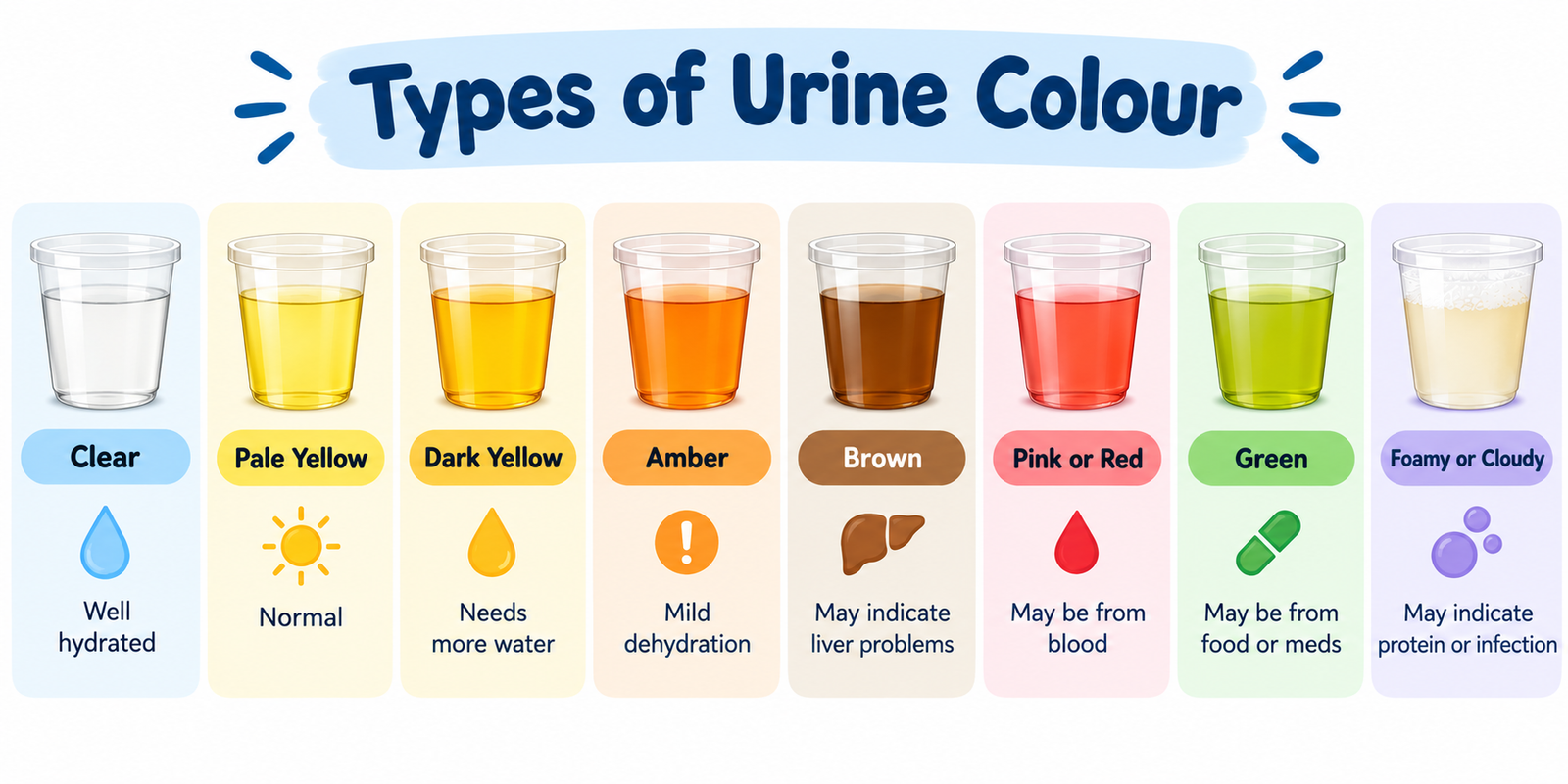
When your urine looks clear, it often suggests that you’re drinking enough fluids and staying properly hydrated. Occasionally, completely clear urine may occur because you are drinking more water than your body needs. Rather than trying to keep urine completely clear, aim for comfortable hydration unless your healthcare provider has given you specific fluid instructions.
2. Pale Yellow Urine
Pale yellow is generally considered a healthy and common urine colour. It usually indicates adequate hydration.
3. Dark Yellow Urine
Dark yellow urine commonly occurs when urine is concentrated because you have not consumed enough fluids. Sweating, exercise, hot weather, vomiting, or diarrhea can also contribute.
But what if you have dark yellow urine even drinking a lot of water? Persistent dark urine despite adequate fluid intake can have other causes, including certain vitamins, medications, or health conditions. If the colour remains unusually dark, speak with a healthcare professional.
4. Orange Urine
Orange urine can sometimes result from dehydration or certain medicines and supplements. In some situations, it may be associated with liver or bile-duct problems, particularly if you also notice yellowing of the skin or eyes.
5. Red or Pink Urine
Urine colour reddish may be caused by foods such as beetroot or certain medications, but red or pink urine can also indicate blood in the urine.
Blood in urine can occur with urinary tract infections, kidney stones, prostate problems, or other urinary-system conditions. Because blood should not automatically be assumed to be harmless, unexplained red or pink urine should be medically evaluated.
6. Brown Urine
Brown or cola-coloured urine may occur with significant dehydration, certain medicines, foods, or liver-related conditions. Muscle injury can also cause very dark urine in some circumstances.
If you experience dark brown urine no pain female, the absence of pain does not necessarily mean the colour is harmless. Persistent brown urine should be discussed with a healthcare professional.
So, is brown urine an emergency? It can be, depending on what’s causing it. Seek prompt medical attention if brown urine is accompanied by severe weakness, muscle pain, yellow skin or eyes, very little urine, confusion, or other concerning symptoms.
7. Blue or Green Urine
Blue or green urine is uncommon. It may result from certain dyes, medications, or food colouring. In some cases, it can occur with particular infections or medical conditions. Persistent blue or green urine without an obvious explanation should be evaluated.
8. Cloudy or Milky Urine
Cloudy urine can occur because of dehydration, crystals, mucus, or other substances. It can also be associated with a urinary tract infection, especially when accompanied by burning during urination, frequent urination, pelvic discomfort, or a strong urine smell.
Understanding the types of urine colour can help you identify normal changes and possible health concerns.
Which Colour of Urine Is Dangerous?
People often ask, Which colour of urine is dangerous? There is no single colour that always means an emergency because the cause matters.
Red, dark brown, cola-coloured, or persistently very dark urine deserves particular attention. Urine accompanied by blood, severe pain, fever, vomiting, jaundice, confusion, or significantly reduced urine output should be assessed promptly.
A urine color chart infection guide can be useful for general awareness, but colour alone cannot diagnose an infection. A healthcare professional may need a urine test to determine whether an infection is present.
Is Yellow Urine Dangerous?
Is yellow urine dangerous? Usually, no. Pale to medium yellow urine is commonly normal. Darker yellow urine often indicates concentrated urine and may improve after appropriate hydration.
However, if urine stays unusually dark despite drinking enough fluids, or if you develop other symptoms, it is worth seeking medical advice.
What Does Dark Urine Mean in a Male?
What does dark urine mean in a male? Common causes include dehydration, dietary factors, vitamins, and medications. However, dark urine may occasionally be related to blood, liver problems, muscle injury, or other medical conditions.
Men who have persistent dark urine, visible blood, painful urination, fever, abdominal or back pain, or other unusual symptoms should consult a healthcare professional. Knowing the types of urine colour can help you understand what different shades may mean for your health.
What About Cattle Urine Composition and Artificial Urine Composition?
Terms such as cattle urine composition and artificial urine composition sometimes appear in searches about urine. These are different from understanding human urine colour.
Cattle urine has a chemical composition influenced by the animal’s diet, hydration, metabolism, and health. Artificial urine, meanwhile, refers to laboratory-prepared mixtures designed to reproduce selected physical or chemical characteristics of urine for testing, research, or educational purposes. Neither should be used to interpret changes in human urine colour.
FAQs
1. What is the normal urine colour?
The normal urine colour is usually pale yellow or straw-coloured. The exact shade can change depending on hydration, food, medications, and other factors.
2. Which colour of urine can indicate a problem?
Red, pink, brown, cola-coloured, or persistently unusual urine can sometimes indicate an underlying problem. Colour alone cannot establish a diagnosis, so persistent changes should be evaluated.
3. Is dark yellow urine dangerous?
Usually, dark yellow urine simply means the urine is concentrated, often because of inadequate fluid intake. If it remains dark despite adequate hydration, consult a healthcare professional.
4. Can urine colour indicate an infection?
Urine colour alone cannot reliably diagnose an infection. Cloudy urine may occur with a urinary tract infection, but symptoms and urine testing are more useful for diagnosis.
5. When is brown urine an emergency?
Brown urine can sometimes require urgent assessment, particularly when accompanied by jaundice, severe weakness, muscle pain, confusion, very little urine, or other serious symptoms. If the cause is unexplained or the colour persists, seek medical advice.
Reference
https://www.healthline.com/health/urine-color-chart
https://health.clevelandclinic.org/what-urine-color-means
0 200

No Comments