
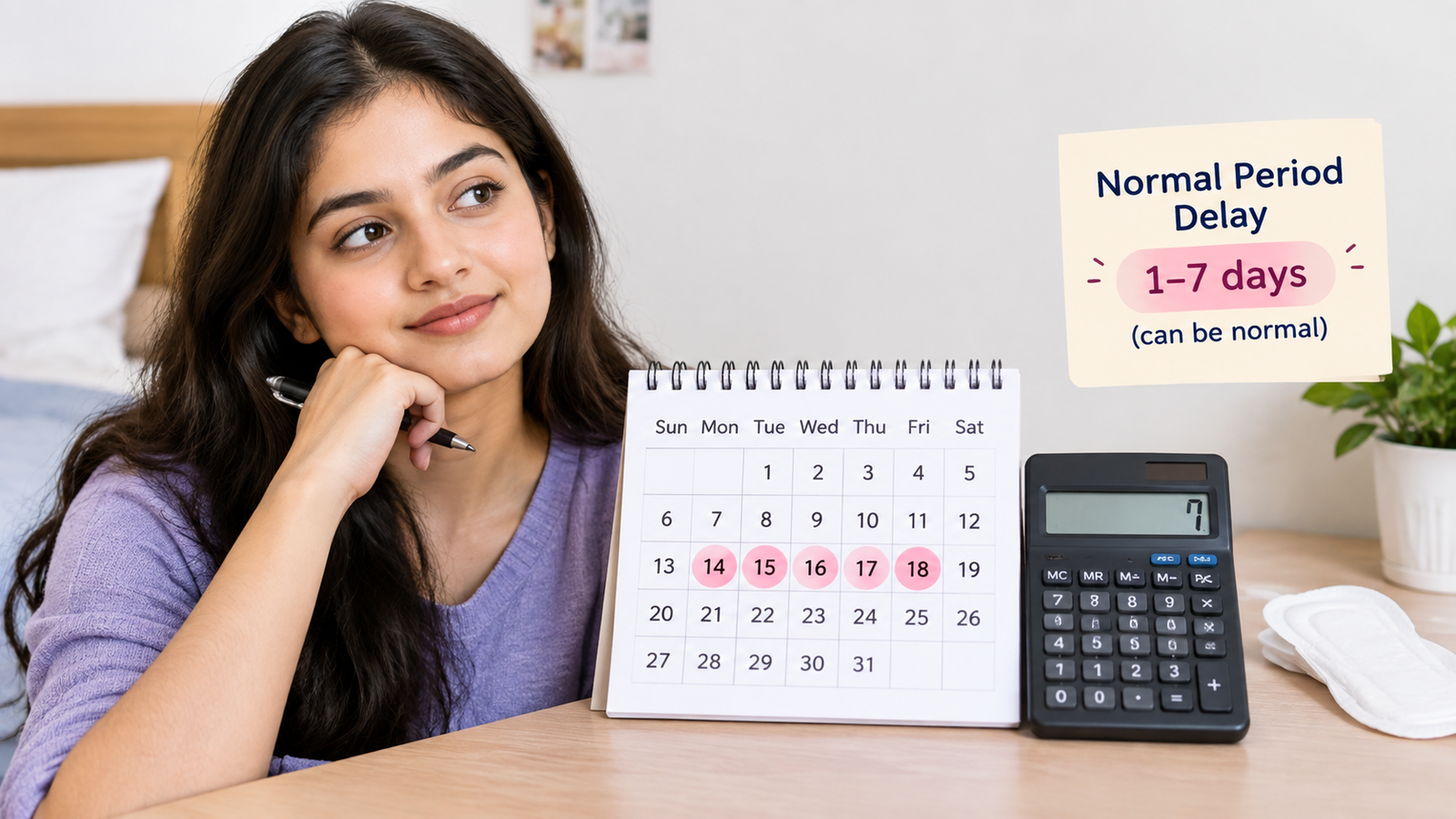
How Long Can a Period Be Delayed and Still Be Normal?
For many people, a menstrual cycle can naturally vary from month to month. A period being several days later than expected can happen occasionally. However, there is no single number of days that is considered normal for everyone.
If your period is delayed and pregnancy is a possibility, a home pregnancy test can help determine whether you may be pregnant. If the test is negative but your period still does not come, consider repeating the test after several days or speaking with a healthcare professional.
Understanding your normal cycle is useful because a delay is easier to identify when you know how long your cycles usually are.
Period Delayed Reason: Common Causes
A late period can happen for several different reasons. Some of the most common include:
- Stress: Emotional or physical stress can interfere with the hormones involved in ovulation. Some people search for stress delayed period symptoms, which may include a late or missed period, changes in sleep, headaches, fatigue, or appetite changes.
- Pregnancy: Pregnancy is an important cause to consider when a period is late, particularly after unprotected sex.
- Weight changes: Major weight loss or gain may disrupt hormonal balance and affect your menstrual cycle.
- Intense exercise: High levels of physical activity may sometimes cause irregular or missed periods.
- Hormonal conditions: Conditions such as polycystic ovary syndrome (PCOS) can cause irregular cycles.
- Thyroid problems: An underactive or overactive thyroid may interfere with your menstrual cycle and cause irregular periods.
- Illness: Certain illnesses or periods of physical stress can temporarily alter the menstrual cycle.
- Medications: Some medicines can influence menstrual patterns.
- Perimenopause: Hormonal changes before menopause can make periods less predictable.
Causes for Delayed Ovulation
Ovulation may occur at different times from one menstrual cycle to another. Causes for delayed ovulation can include stress, illness, major changes in weight, excessive exercise, travel, disrupted sleep, and hormonal changes.
When ovulation happens later than usual, the next period can also arrive later. This is one reason a cycle may occasionally be longer than expected.
Menopause and Delayed Periods
Menopause delayed periods is a commonly searched topic, but menopause itself is defined as having no menstrual period for 12 consecutive months, assuming there is no other medical explanation. Before menopause, during perimenopause, periods may become irregular, shorter, longer, heavier, or lighter.
If you are in the typical age range for perimenopause and notice significant changes in your cycle, discussing them with a healthcare professional can help determine whether hormonal changes are responsible.
Period Delayed but Not Pregnant
If your period is late but you are not pregnant, several other factors could be responsible. Stress, hormonal fluctuations, PCOS, thyroid disorders, changes in body weight, excessive exercise, illness, and delayed ovulation can all contribute.
A negative pregnancy test may be reassuring, but the timing of the test matters. If pregnancy is still possible and your period does not arrive, consider repeating the test according to the test manufacturer’s instructions or consulting a healthcare professional.
My Period Is 21 Days Late: Should I Be Concerned?
If you are thinking, “my period is 21 days late,” the significance depends on your usual cycle length and individual circumstances. A three-week delay is more substantial than being a few days late, particularly if your cycles are normally regular.
How Late Is Concerning for a Period?
There is no universal cutoff that applies to everyone. Consider consulting a healthcare professional if:
- Your periods repeatedly become very irregular.
- You miss several periods without an obvious explanation.
- You have late period 2 months in a row.
- You experience severe pelvic or abdominal pain.
- You have unusually heavy bleeding when your period returns.
- You experience dizziness, fainting, or significant weakness.
- You have other symptoms such as unexpected weight changes, excessive facial hair, or unusual nipple discharge.
If pregnancy is possible and you have severe abdominal pain, fainting, or heavy bleeding, seek urgent medical care.
Why Do I Miss My Period Every Other Month?
If you’re asking, “Why does my period come only every other month?”, frequent irregularity may need medical attention. While occasional changes in your cycle can occur, repeatedly missing periods may be linked to PCOS, thyroid issues, major weight changes, intense exercise, hormonal fluctuations, or other underlying conditions.
Tracking your menstrual cycle can help you notice patterns and changes over time. Record the first day of each period, how long bleeding lasts, and any unusual symptoms. This information can be useful during a medical appointment.
Three Types of Late Periods
There are different ways people may describe a late or missed period:
- Occasionally late: The period arrives later than expected but eventually occurs.
- Repeatedly irregular: Cycle length frequently changes or periods are repeatedly late.
- Absent periods: Menstruation stops for an extended period.
The underlying cause can differ in each situation, so persistent changes should be evaluated rather than relying on a single explanation.
Periods Are Not Coming: What Should You Do?
If your periods are not coming, first consider whether pregnancy is possible. A pregnancy test is usually the simplest first step.
If pregnancy is ruled out and periods continue to be absent, a healthcare professional may review your medical history, menstrual pattern, medications, lifestyle factors, and symptoms. Depending on the situation, they may recommend blood tests or other examinations to identify a hormonal or reproductive cause.
Periods Delay Medicine Name: Is There a Medicine?
People often search for a periods delay medicine name, but there is no single medicine that is appropriate for every late period. Treatment depends on the underlying reason.
For example, a doctor may treat an underlying thyroid disorder, address PCOS-related hormone problems, or recommend appropriate hormonal treatment in selected situations. Do not take hormonal tablets or medicines to induce a period without medical advice, because the correct treatment depends on the cause and pregnancy should be considered first.
FAQs
1. How many days delay in period is normal?
A few days of variation can be normal, but repeated delays should be checked.
2. Can stress delay periods?
Yes, stress can affect ovulation and delay your period.
3. Can a period be late without pregnancy?
Yes. Stress, hormonal changes, PCOS, illness, and weight changes can cause delays.
4. When is a late period concerning?
See a doctor if periods are repeatedly missed or absent for an extended time.
5. What should I do if my period is 21 days late?
Take a pregnancy test if pregnancy is possible and consult a healthcare professional if the delay continues.
Reference
https://www.nhs.uk/symptoms/missed-or-late-periods/
https://www.healthline.com/health/womens-health/why-is-my-period-late
0 200

No Comments