
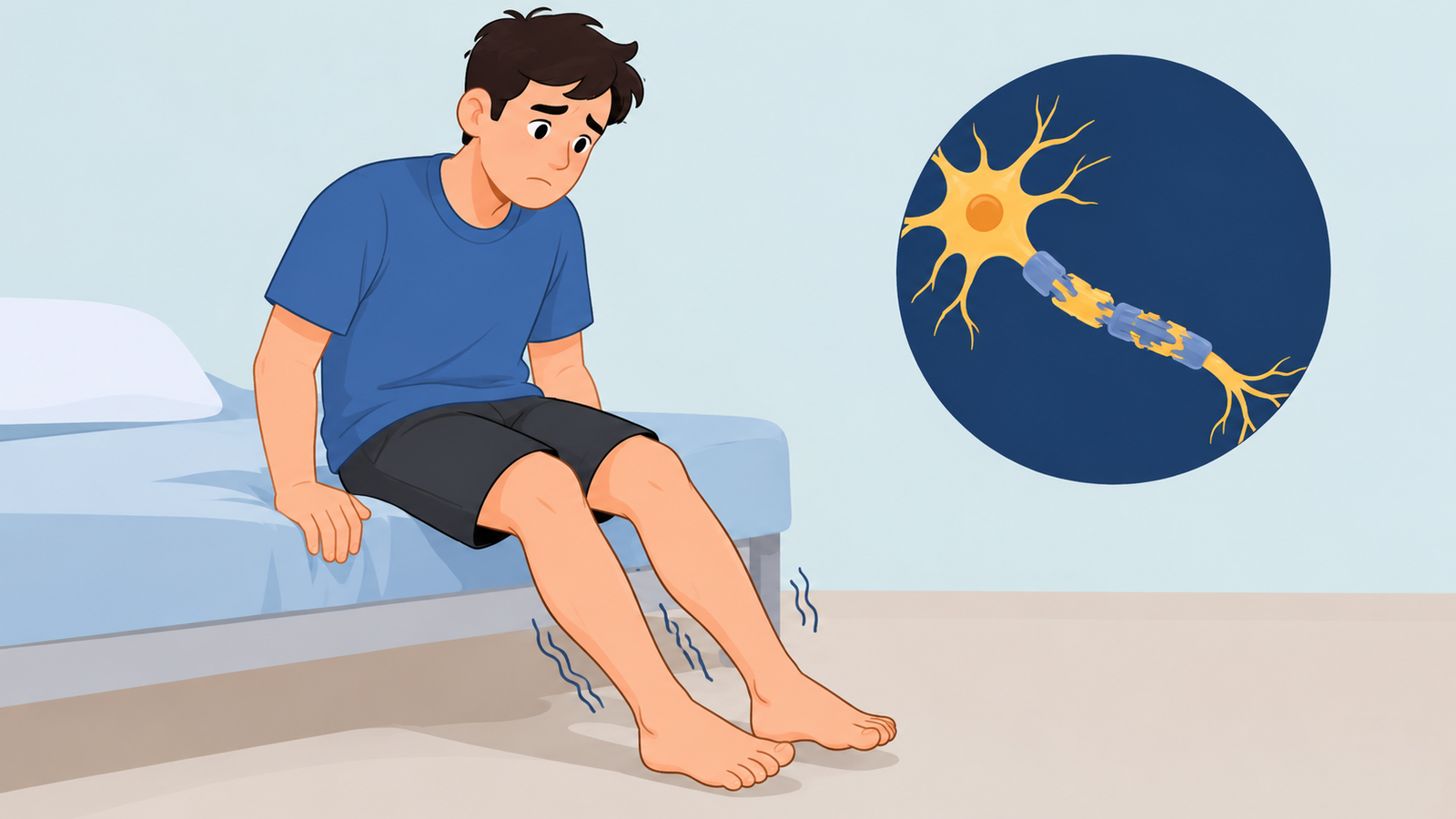
Guillain-Barré syndrome (GBS) is a rare condition that affects the peripheral nerves when the immune system mistakenly attacks them. It can lead to symptoms such as tingling, numbness, muscle weakness, and, in more severe cases, paralysis. Symptoms can progress quickly, so recognizing the early warning signs and seeking medical attention promptly is important.
What Is GBS Syndrome?
If you are wondering what is GBS syndrome, Guillain-Barré syndrome is an autoimmune condition affecting the nerves outside the brain and spinal cord. The immune system damages the nerves or their protective covering, interfering with signals between the brain and muscles.
The condition often begins with tingling or weakness in the feet and legs. These symptoms may gradually or rapidly spread upward to the arms and upper body. In severe cases, GBS can affect the muscles responsible for breathing and swallowing, making it a medical emergency.
What Causes Guillain-Barré Syndrome?
The exact answer to what causes Guillain-Barré syndrome is not fully understood. In many people, GBS develops after an infection. The immune response to the infection may mistakenly attack peripheral nerves.
Common Guillain Barre syndrome causes or triggers include:
- Campylobacter infection, a bacterial infection often associated with contaminated food
- Respiratory infections
- Influenza
- Cytomegalovirus
- Epstein-Barr virus
- Zika virus
- Certain hepatitis infections
- Mycoplasma pneumonia
- COVID-19
Campylobacter is particularly important when discussing Guillain Barre bacteria, because Campylobacter infection is one of the most common infectious triggers associated with GBS. However, GBS is not itself a bacterial infection and is not contagious.
Rarely, GBS has also been reported after surgery or certain vaccinations. The risk of GBS following vaccination is very low, and CDC notes that people are more likely to develop GBS after influenza infection than after a flu vaccination.
Who Is at Risk for Guillain-Barré Syndrome?
So, who is at risk for Guillain-Barré syndrome? Guillain-Barré syndrome can occur in people of all ages. However, it is more common in older adults and is slightly more common in males. In the United States, CDC identifies people older than 50 as having a higher risk.
Important Guillain Barre risk factors and associations include:
- Older age
- Male reproductive
- A recent respiratory or gastrointestinal infection
- Recent Campylobacter infection
- Certain viral infections
Having one of these factors does not mean that a person will develop GBS. However, most people who develop these common infections do not develop Guillain-Barré syndrome.
Diseases That Cause Paralysis
There are several diseases that causes paralysis, although they do not all affect the nervous system in the same way. Examples include stroke, spinal cord injuries, multiple sclerosis, transverse myelitis and certain neurological disorders such as Guillain-Barré syndrome.
GBS can cause temporary or, in some cases, lasting paralysis because damaged nerves may no longer send normal signals to muscles. Severe cases can also affect breathing muscles and require mechanical ventilation.
How to Treat Guillain-Barré Syndrome
If you are wondering how to treat Guillain-Barré syndrome, treatment generally requires hospitalization because symptoms can worsen rapidly.
The two main treatments are:
Plasma exchange: Also called plasmapheresis, this procedure removes plasma from the blood and replaces it to help reduce harmful immune factors.
Intravenous immunoglobulin (IVIG): This treatment involves giving antibodies through a vein to help regulate the immune response and reduce damage to the nerves.
These treatments are considered similarly effective, and using both together is generally not more effective than using either one alone. Supportive care may also include pain management, prevention of blood clots, breathing support and physical rehabilitation.
Recovery varies from person to person. Many people recover significantly, although weakness, numbness, fatigue or other symptoms can sometimes persist for months or longer.
Can Guillain-Barré Syndrome Come Back?
Can Guillain-Barré syndrome come back? Yes, but recurrence is uncommon. A small percentage of people who have had GBS experience another episode, sometimes years after the original illness. New or returning weakness, tingling or numbness should be evaluated by a healthcare professional rather than assumed to be a recurrence.
Can You Die From Guillain-Barré Syndrome?
Can you die from Guillain-Barré syndrome? In rare cases, GBS can be fatal. Serious complications may occur when paralysis affects breathing muscles or when abnormal heart rhythms and blood-pressure changes develop. This is one reason people with suspected GBS often require hospital monitoring.
Most people, however, recover, although the recovery period can range from weeks to several years depending on the severity of the illness.
What About “Williams Barrett Syndrome” or “Barres Disease”?
People sometimes search for terms such as “williams barrett syndrome” or “barres disease” when looking for information about Guillain-Barré syndrome. These are not standard medical names for Guillain-Barré syndrome. The correct medical term is Guillain-Barré syndrome (GBS).
Medical note: This article is for general educational purposes and should not replace evaluation by a qualified healthcare professional. Rapidly progressive weakness, difficulty breathing or trouble swallowing requires emergency medical care.
FAQs
1. What is GBS syndrome?
Guillain-Barré syndrome (GBS) is an uncommon neurological disorder where the immune system mistakenly targets the peripheral nerves. It commonly causes tingling and weakness that may progress to paralysis.
2. What are the early symptoms of Guillain-Barré syndrome?
Early symptoms may include tingling, numbness, and muscle weakness, often starting in the feet or legs before spreading to the arms and upper body.
3. What is a risk factor for Guillain-Barré syndrome?
A recent respiratory or gastrointestinal infection may increase the risk of developing Guillain-Barré syndrome. Older age and being male are also associated with a higher risk. Campylobacter infection is a particularly recognized trigger.
4. How is Guillain-Barré syndrome treated?
The primary treatments for Guillain-Barré syndrome are intravenous immunoglobulin (IVIG) and plasma exchange. Hospital monitoring, breathing support, pain management and rehabilitation may also be needed depending on the severity of the condition.
5. Can Guillain-Barré syndrome cause permanent paralysis?
GBS can cause severe paralysis, but many people recover substantially. Some people may experience lasting weakness, numbness, fatigue, or other nerve-related problems.
Reference
https://www.mayoclinic.org/diseases-conditions/guillain-barre-syndrome/symptoms-causes/syc-20362793
https://my.clevelandclinic.org/health/diseases/15838-guillain-barre-syndrome
0 200
No Comments