
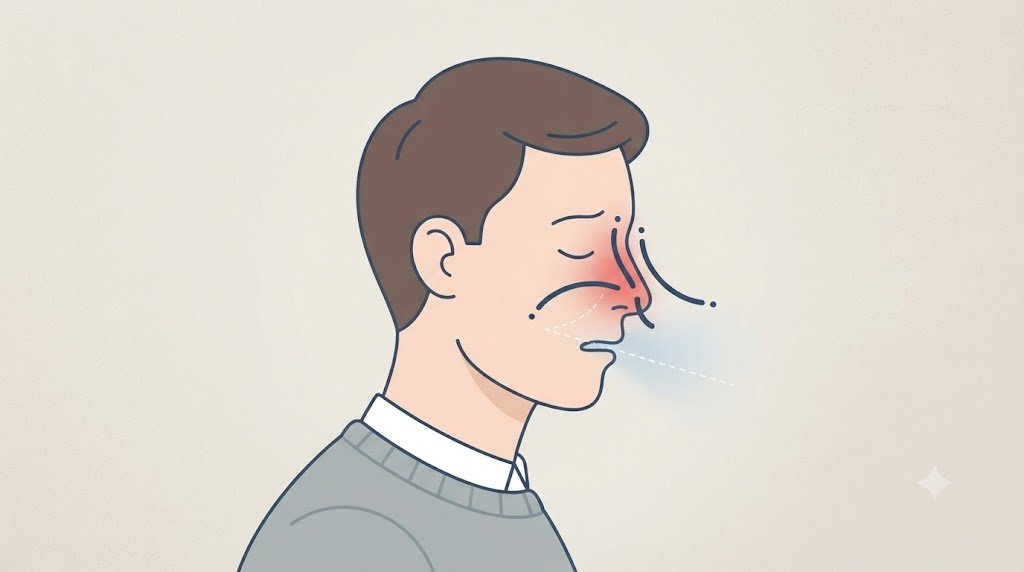
A cure to stuffy nosea at night can make it difficult to breathe comfortably, fall asleep, and enjoy a restful night. Your nose may feel clear during the day but become blocked when you lie down. This problem is common and can happen because of allergies, colds, dry air, or inflammation inside the nasal passages.
Understanding the reason for your congestion can help you choose the right stuffy nose treatment and find lasting relief. In this guide, discover simple home remedies, treatment options, and practical tips to help you breathe easier at night.
Why Does Your Nose Get Stuffy at Night?
Your nose may become blocked when you lie down due to gravity. When you lie flat, blood flow to the tissues inside your nose can increase, causing swelling and narrowing the nasal passages. Mucus may also accumulate, making breathing more difficult.
This explains why your nose is blocked when lying down but may feel clearer when you stand up. Dust mites, pet dander, and mold in your bedroom can also cause nighttime nasal congestion.
Other common causes include sinus inflammation, respiratory infections, dry indoor air, and certain medications. This type of congestion at night can become particularly frustrating when it interrupts your sleep.
7 Quick Tips to Cure a Stuffy Nose at Night
1. Use a Saline Nasal Spray
Saline nasal spray is one of the simplest home remedies for stuffy nose relief. It helps moisturize dry nasal passages and loosen thick mucus, making it easier to clear your nose.
You can use a commercially prepared saline spray according to the product instructions. If you use a nasal rinse, always use distilled, sterile, or previously boiled and cooled water. Clean the rinsing device after every use.
2. Elevate Your Head While Sleeping
If you experience a stuffy nose when lying down, try raising your head with a supportive pillow or an appropriate wedge pillow. Keeping your head elevated may help reduce the sensation of congestion and improve nighttime comfort.
Avoid stacking so many pillows that your neck bends awkwardly. A comfortable sleeping position can make a difference when dealing with nasal congestion.
3. Take a Warm Shower
A warm shower before bedtime may help loosen mucus and provide temporary comfort. Moist air can ease nasal irritation, especially when your bedroom is dry.
Avoid inhaling steam over a pot of boiling water because it can cause serious burns. Taking a warm shower is a safer option.
4. Drink Enough Fluids
Water, warm broth, and caffeine-free tea can help prevent dehydration and may make thick mucus easier to manage. Although drinking fluids will not cure every cause of nasal congestion, it can support your overall comfort while you recover.
5. Reduce Bedroom Allergens
Dust mites, pet dander, and mold can cause nasal inflammation. Wash bedding regularly, keep pets away from your sleeping area if they trigger symptoms, and clean dusty surfaces.
If you suspect allergies, using allergen-resistant mattress and pillow covers may help. These steps can be particularly useful for people experiencing constant stuffy nose causes related to their sleeping environment.
6. Consider Appropriate Medication
The best medication for stuffy nose depends on its underlying cause. Antihistamines may help when allergies are responsible, while certain decongestants can temporarily reduce swelling inside the nose.
However, decongestant nasal sprays should generally not be used for more than three consecutive days unless a healthcare professional advises otherwise, because overuse can worsen congestion. Oral decongestants may not be suitable for people with high blood pressure, heart conditions, or certain other health problems.
Before choosing a stuffy nose medicine, check the label and ask a pharmacist or healthcare professional if you have existing medical conditions or take other medications.
7. Keep Your Bedroom Air Comfortable
Dry air may irritate your nasal passages. If your room is dry, consider using a clean humidifier and maintaining comfortable humidity levels. Clean the device regularly to prevent mold and bacterial growth.
Avoid cigarette smoke, strong fragrances, and other irritants that may worsen nasal inflammation.
What Causes a Constantly Blocked Stuffy Nose?
Understanding how do stuffy noses work starts with the nasal lining. Your nose contains blood vessels and tissues that help warm, filter, and humidify the air you breathe. Your nose may become blocked when lying down due to increased nasal congestion.
Common causes include allergies, the common cold, sinusitis, nasal polyps, and a deviated nasal septum. Nasal congestion, or a stuffy nose, occurs when the nasal passages become swollen or blocked.
If you wonder, “Why is my nose stuffy but nothing comes out?” the answer may be swelling rather than excess mucus. You might also experience a stuffy nose inside the nasal passages even when there is no obvious discharge.
You may wonder why your nose clears up when you stand. Changes in position can affect blood flow and nasal swelling, temporarily improving airflow. Similarly, congestion when lying down may become more noticeable at bedtime.
FAQs
1. Why does my nose get stuffy when I lie down?
Lying flat can increase swelling in the nasal tissues and make mucus drainage less comfortable. Allergies and sinus inflammation can make nighttime congestion worse.
2. What is the fastest way to relieve a stuffy nose at night?
A saline nasal spray, a warm shower, and elevating your head may provide temporary relief. The right treatment depends on the cause of your congestion.
3. What is the best medicine for a stuffy nose?
The best medicine depends on the cause. Antihistamines may help allergy-related symptoms, while decongestants can provide short-term relief for some people. Ask a pharmacist or clinician which option is safe for you.
4. Is a stuffy nose for two weeks normal?
A cold can sometimes cause symptoms that last around two weeks, but persistent or worsening congestion may indicate allergies, sinus inflammation, or another problem. Consult a healthcare professional if symptoms are not improving.
5. When should I seek medical help for a blocked nose?
Seek medical advice if congestion lasts more than 10–14 days without improvement, repeatedly affects your sleep, or comes with persistent fever, significant facial pain, or worsening symptoms. Severe breathing difficulty requires urgent medical attention.
Reference
https://my.clevelandclinic.org/health/diseases/17980-nasal-congestion
https://medlineplus.gov/ency/article/003049.htm
0 200
No Comments