
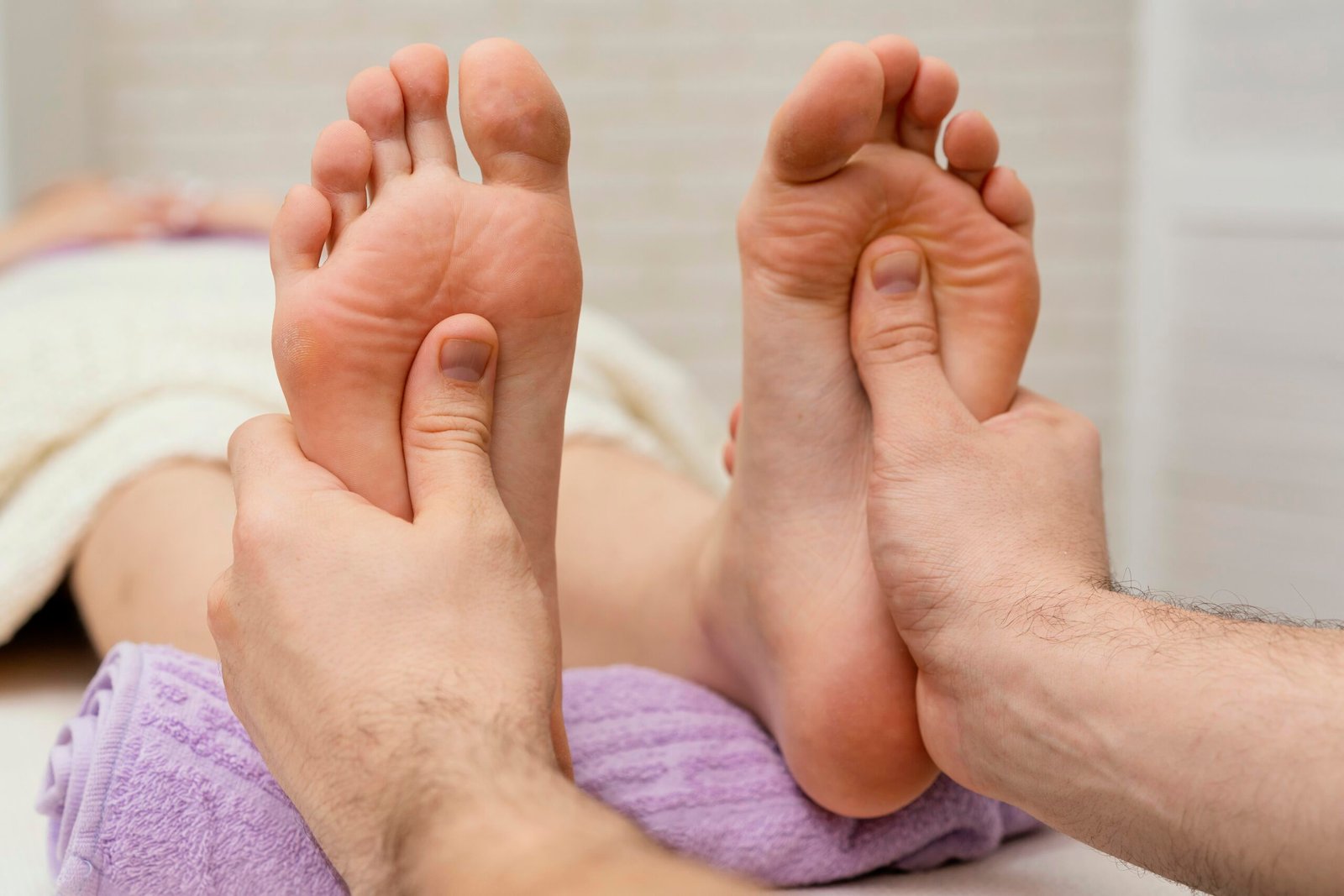
A foot reflexology chart helps you understand the different areas of the feet that reflexology practitioners traditionally associate with specific parts of the body. Foot reflexology is a complementary therapy that involves applying gentle pressure to selected areas of the feet to encourage relaxation and relieve stress. Many people explore reflexology as part of their self-care routine.
A foot reflexology map typically identifies areas associated with the head, spine, digestive system, and other body regions. Reflexology maps follow traditional practices, but science has not confirmed their anatomical connections. Use reflexology alongside appropriate medical care, not as a replacement for it. Reflexology should complement, rather than replace, appropriate medical care.
What Is a Foot Reflexology Chart?
A reflexology chart is a visual guide showing the locations of commonly used reflexology points. A reflexology foot map female generally follows the same traditional mapping principles as charts designed for men. The main purpose is to help users identify areas of the feet for gentle massage and relaxation.
A diagram of foot for reflexology may show the toes, ball of the foot, arch, heel, and outer edges. Reflexology traditions link each region of the foot to a specific body part. These charts can help beginners understand foot massage techniques, although the maps may vary between reflexology practitioners.
Understanding the Foot Pressure Point Chart
A foot pressure point chart divides the foot into several regions that are commonly used during reflexology sessions.
-
Toes: Traditionally associated with the head, brain, and sinus infection areas.
-
Ball of the foot: Often linked to the chest and upper body in reflexology maps.
-
Arch: Commonly associated with the digestive organs, including the stomach and intestines.
-
Heel: Traditionally linked to the pelvic region and lower body.
-
Inner edge: Often mapped to the spine.
-
Outer edge: May be associated with the shoulders, hips and limbs.
A pressure point foot map can help you understand these traditional associations before trying a gentle foot massage. Pressure should remain comfortable, and painful areas should never be pressed forcefully.
Left Foot Reflexology Diagram and Right Foot Reflexology Chart
The left foot reflexology diagram and reflexology chart right foot may look similar, but traditional reflexology maps sometimes assign different associations to each side.
Many reflexology charts link the left foot to the left side of the body and the right foot to the right side. They also place certain organs on different sides of the map. For example, traditional charts associate the stomach and spleen with the left foot and the liver and gallbladder with the right foot.
A foot reflexology map right foot can help you locate the areas traditionally associated with the right side of the body. These associations are not proven diagnostic tools and cannot identify or treat organ disease.
Foot Reflexology Chart: Top, Bottom and Side of the Foot
Different diagrams focus on different surfaces of the foot, making it easier to understand the placement of traditional reflexology points.
Bottom of Foot Reflexology Chart
A bottom of foot reflexology chart focuses on the soles, including the toes, ball, arch and heel. This is the most familiar view in many foot reflexology guides. Gentle circular movements with the thumb can help relax tired feet.
Foot Reflexology Chart Top of Foot
A foot reflexology chart top of foot illustrates the upper surface, including the toes and spaces between the metatarsal bones. Massage in this area should be light because the skin and underlying structures can be sensitive.
Side of Foot Reflexology
A side of foot reflexology diagram highlights the inner and outer edges. Traditional maps often associate the inner edge with the spine and the outer edge with other parts of the musculoskeletal system. Avoid applying pressure directly to painful joints or injured areas.
Foot Trigger Points Chart and Ankle Reflexology Chart
A foot trigger points chart identifies areas where muscles or surrounding soft tissues may feel tender. Trigger points are different from reflexology points, and tenderness does not reliably indicate a problem with a specific organ.
An ankle reflexology chart may show areas around the inner and outer ankles that reflexology traditions associate with the pelvic region and lower body. The ankle contains important tendons, ligaments and nerves, so use gentle pressure and avoid massaging swollen or injured areas without professional advice.
Similarly, a leg reflexology chart may illustrate traditional pressure areas along the lower legs. These charts should not be confused with medical diagrams used to diagnose circulation problems, nerve disorders or muscle injuries.
Foot Massage Chart and Its Potential Benefits
>A foot massage chart helps you identify areas you can massage gently for comfort and relaxation. A foot massage chart for pressure points guides you through a simple massage routine, while a massage chart for feet demonstrates techniques such as circular thumb movements and gentle kneading.
>A foot massage benefits chart commonly highlights potential benefits such as relaxation, temporary relief from foot discomfort, and reduced feelings of stress. Massage may also help some people feel more comfortable after prolonged standing.
However, scientific research has not confirmed that pressing specific foot points improves internal organ function or cures medical conditions. General foot massage may support relaxation, but it is not a substitute for medical treatment.
Foot Health Chart and Constipation Reflexology Foot Chart
A foot health chart can help you understand foot anatomy and identify areas that may need attention. Persistent pain, swelling, numbness, skin changes or wounds should be assessed by a healthcare professional.
A constipation reflexology foot chart traditionally highlights areas of the arch associated with the intestines. Some people use gentle foot massage as a relaxation practice when experiencing constipation, but there is insufficient evidence that pressing these points relieves constipation directly.
For constipation, evidence-based measures include drinking adequate fluids, eating fibre-rich foods, staying physically active and discussing persistent symptoms with a healthcare professional. Severe abdominal pain, vomiting, blood in the stool or inability to pass gas requires prompt medical attention.
FAQs
1. What is a foot reflexology chart used for?
A foot reflexology chart shows traditional pressure areas associated with different body regions. It can guide gentle foot massage but cannot diagnose medical conditions.
2. Is the left foot reflexology diagram different from the right foot chart?
Yes. Traditional charts may associate each foot with the corresponding side of the body and assign different areas to certain organs. These associations are not scientifically validated.
3. Can foot reflexology help with constipation?
There is insufficient scientific evidence that reflexology points relieve constipation. Hydration, dietary fibre, physical activity and appropriate medical advice are more established approaches.
4. What are the benefits of foot massage?
Foot massage may promote relaxation and provide temporary relief from tired or uncomfortable feet. Foot massage cannot treat disorders of the internal organs.
5. Is foot reflexology safe for everyone?
Not always. People with diabetes, poor circulation, reduced sensation, foot injuries or unexplained swelling should consult a healthcare professional before using pressure-point massage.
Reference
https://www.healthline.com/health/foot-reflexology-chart
https://www.verywellhealth.com/foot-pressure-points-7481749
0 200
No Comments