
Many women begin noticing physical and emotional changes years before menopause actually occurs. These early hormonal shifts are commonly referred to as premenopausal symptoms or premenopause symptoms. Understanding these changes can help women manage their health better and prepare for the transition into menopause.
Premenopause is a natural stage in a woman’s life when the body gradually begins to produce less estrogen and progesterone. While the experience varies from woman to woman, recognizing the signs of premenopausal symptoms can make it easier to seek appropriate care and maintain overall well-being.
What Is Premenopausal?
The term premenopausal refers to the stage before menopause when hormonal changes begin to affect the menstrual cycle and overall health. During this period, the ovaries gradually reduce hormone production, leading to noticeable physical and emotional changes.
The premenopausal age and symptoms can differ for each woman. Most women begin experiencing symptoms in their late 30s or early 40s, although some may notice changes earlier or later. For example, premenopausal at 40 are quite common, and many women also report premenopausal at 45 as the transition becomes more noticeable.
What Are the Premenopausal Symptoms?
Many women wonder what are the premenopausal symptoms and how to recognize them. Hormonal fluctuations during this stage can cause several noticeable changes.
List of Premenopausal Symptoms
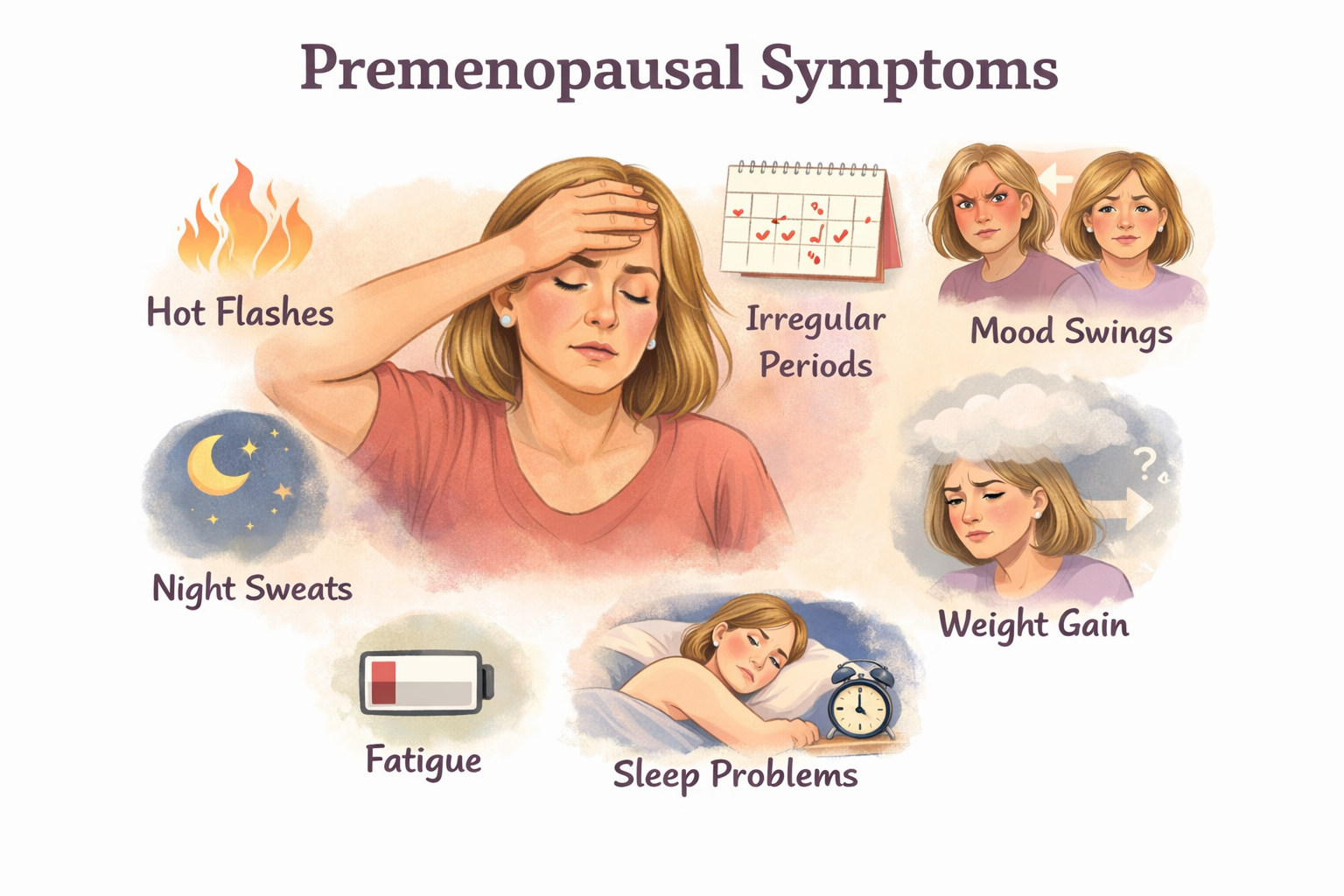
Here is a common list of premenopausal that women may experience:
-
Irregular or missed menstrual periods
-
Hot flashes and night sweats
-
Mood swings and irritability
-
Difficulty sleeping
-
Vaginal dryness
-
Reduced libido
-
Fatigue and low energy
-
Weight gain, especially around the abdomen
-
Headaches or migraines
-
Breast tenderness
-
Anxiety or mild depression
These symptoms of premenopause may appear gradually and vary in intensity. Some women experience only a few mild symptoms, while others may notice several changes that affect daily life.
Premenopausal Symptoms at 40 and 45
Age plays an important role in hormonal transitions. Premenopausal symptoms at 40 are often the first sign that the body is preparing for menopause. Women at this stage may begin experiencing irregular periods, mood changes, and mild hot flashes.
By the mid-40s, the changes may become more noticeable. Premenopausal symptoms at 45 often include more frequent hot flashes, sleep disturbances, and changes in menstrual patterns. This stage is sometimes referred to as perimenopause, when hormone fluctuations become more pronounced.
It is important to remember that every woman’s body is different, and symptoms may vary depending on genetics, lifestyle, and overall health.
Causes of Premenopause Symptoms
The main cause of premenopausal symptoms is the gradual decline in reproductive hormones, particularly estrogen and progesterone. These hormone imbalances affect the menstrual cycle and influence many bodily functions.
When hormone levels begin to fluctuate, women may experience:
-
Changes in body temperature regulation
-
Mood and emotional shifts
-
Sleep disturbances
-
Changes in metabolism and energy levels
Other factors such as stress, poor diet, lack of exercise, and underlying medical conditions can also worsen premenopause symptoms.
Premenopausal Symptoms Treatment
Although this stage is a natural part of aging, many women seek premenopausal symptoms to reduce discomfort and improve quality of life.
Medical Treatment Options
Doctors may recommend several treatments depending on the severity of symptoms. Some common premenopausal symptoms and treatment options include:
-
Hormone therapy to balance estrogen levels
-
Medications to manage mood swings or anxiety
-
Sleep aids for insomnia
-
Vaginal moisturizers or estrogen creams for dryness
It is always best to consult a healthcare professional before starting any treatment.
Natural Treatment for Premenopausal Symptoms
Many women prefer a natural treatment for premenopausal management of hormonal changes without medications. Making lifestyle adjustments can greatly ease symptoms and enhance overall health.
Healthy Diet
Eating a balanced diet rich in fruits, vegetables, whole grains, and lean proteins can help regulate hormones and support energy levels.
Regular Exercise
Physical activity helps maintain a healthy weight, improves mood, and reduces stress. Exercises such as walking, yoga, and swimming offer significant health benefits.
Stress Management
Stress can worsen hormonal symptoms. Practicing meditation, deep breathing, or mindfulness techniques can help maintain emotional balance.
Adequate Sleep
Good sleep habits are essential during the premenopausal stage. Creating a consistent bedtime routine and limiting caffeine can improve sleep quality.
Herbal and Natural Supplements
Some women find relief from natural remedies such as black cohosh, soy isoflavones, or evening primrose oil. Nevertheless, consulting a healthcare professional before taking any supplements is essential.
Managing Premenopausal Health
Understanding what premenopausal symptoms are and how they affect the body can help women prepare for this life transition. Maintaining a healthy lifestyle, staying physically active, and seeking medical advice when necessary can make the process much smoother.
Tracking menstrual changes and symptoms can also help identify patterns and provide useful information for healthcare providers. With the right approach, women can navigate premenopause symptoms while maintaining a healthy and active lifestyle.
FAQs
1. What are the premenopausal symptoms?
Premenopausal symptoms may include irregular periods, hot flashes, mood swings, sleep problems, vaginal dryness, and fatigue caused by hormonal changes before menopause.
2. At what age do premenopausal symptoms usually start?
The premenopausal age and symptoms typically begin in the late 30s or early 40s, although some women may notice premenopausal symptoms at 40 or later.
3. Are premenopausal symptoms at 45 normal?
Yes, premenopausal symptoms at 45 are common as hormonal fluctuations become stronger during the transition toward menopause.
4. What is the best premenopausal symptoms treatment?
Premenopausal symptoms may include hormone therapy, medications, lifestyle changes, or natural remedies, depending on symptom severity and individual health conditions.
5. Is there a natural treatment for premenopausal?
Yes, natural treatment for premenopausal symptoms includes a healthy diet, regular exercise, stress management, proper sleep, and certain herbal supplements under medical guidance.
Reference
https://my.clevelandclinic.org/health/diseases/21608-perimenopause
https://www.mayoclinic.org/diseases-conditions/perimenopause/symptoms-causes/syc-20354666
https://www.franciscanhealth.org/community/blog/first-signs-of-perimenopause
0 200
No Comments