
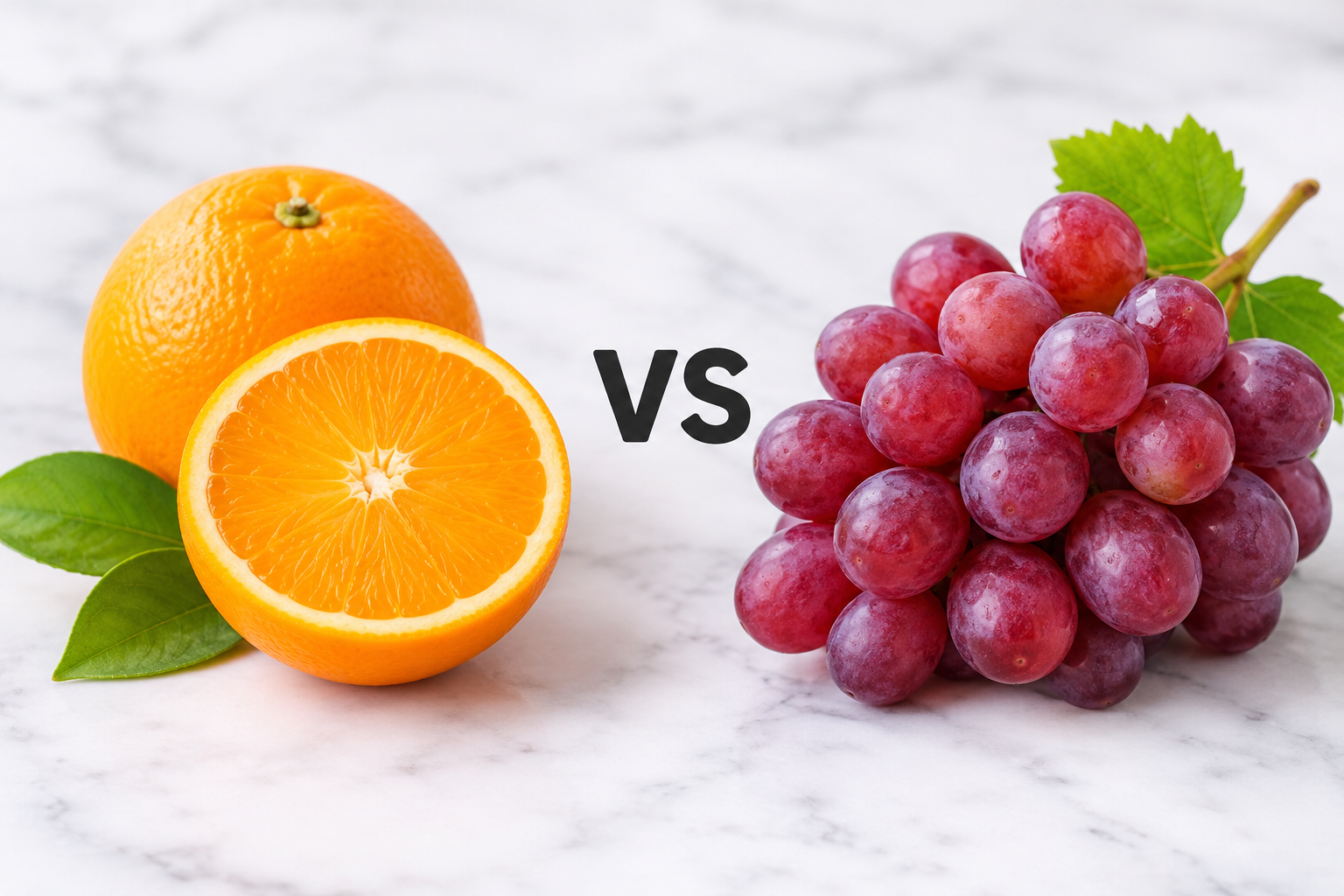
Choosing the right fruits can make managing blood sugar easier, especially for people living with diabetes. Oranges and grapes are popular fruits that provide vitamins, minerals, antioxidants and natural sugars. However, they differ in their carbohydrate content, fibre and how they may affect blood glucose levels.
If you have diabetes, you may wonder whether oranges are better than grapes or whether you can enjoy both without worrying about sudden blood sugar spikes. The good news is that neither fruit needs to be completely avoided. Portion size, the form in which you eat the fruit and your overall diet all matter.
Let’s compare oranges and grapes to understand which may be a better choice for blood sugar control.
Nutritional comparison: Oranges vs. grapes
Both fruits contain natural sugars, but their nutritional profiles are slightly different. A medium orange and a typical serving of grapes can provide different amounts of carbohydrates and fibre.
Oranges: A medium orange contains approximately 15 grams of carbohydrates and 3 grams of dietary fibre. It also provides good amounts of vitamin C, folate, and potassium.
Grapes: One cup of grapes (around 150 grams) contains approximately 27 grams of carbohydrates and about 1.4 grams of fibre. Grapes also contain antioxidants, including polyphenols and resveratrol, particularly in their skins.
Oranges generally provide more fibre per typical serving and fewer carbohydrates than a cup of grapes. This can make a whole orange a convenient option for people monitoring their blood sugar.
How do oranges affect blood sugar levels?
Oranges contain natural fruit sugars, including glucose, fructose and sucrose. However, their fibre and water content help make them a filling snack.
Whole oranges generally have a low glycemic index (GI), meaning they tend to raise blood glucose more gradually than high-GI foods. Their fibre also slows digestion and supports better blood sugar management.
People with diabetes can usually include whole oranges in a balanced diet. Eating the fruit rather than drinking its juice is preferable because juicing removes much of the fibre and makes it easier to consume more sugar in a short period.
How quickly will orange juice raise blood sugar?
Orange juice can raise blood sugar relatively quickly because it contains easily absorbed carbohydrates and very little fibre compared with whole oranges.
The exact response depends on the quantity consumed, whether it is fresh or packaged, and individual Lantus insulin sensitivity. Even unsweetened orange juice can increase blood glucose.
If you have diabetes, choose a whole orange more often than juice. If you drink orange juice, keep the portion small and monitor your blood glucose response.
Do grapes increase blood sugar?
Yes, grapes can increase blood sugar because they contain natural carbohydrates and sugars. However, this does not mean people with diabetes must avoid them.
Grapes have a relatively low-to-moderate glycemic index, depending on the variety and testing method. Their water content and antioxidants make them a nutritious fruit option when eaten in controlled portions.
The main concern is portion size. Grapes are small and easy to eat in large quantities, which can increase your carbohydrate intake without you realising it.
Does red grapes increase blood sugar?
Yes, red grapes can increase blood sugar because they contain natural sugars. However, eating a small portion as part of a balanced meal or snack can fit into many diabetes-friendly diets.
Red grapes contain anthocyanins and other polyphenols that have antioxidant properties. These compounds may support overall health, but they do not cancel out the carbohydrates in grapes.
Does green grapes increase blood sugar?
Green grapes also contain natural sugars and can raise blood glucose levels. Their carbohydrate content is broadly similar to that of red grapes, although exact values vary by variety and serving size.
People with diabetes can enjoy green grapes in moderation. Measuring a serving instead of eating directly from a large bunch can help prevent excessive carbohydrate intake.
Is green grapes good for diabetes?
Green grapes can be included in a diabetes-friendly eating plan. They provide water, vitamin K, vitamin C and plant compounds.
However, no grape variety is a treatment for diabetes. The most important factors are portion size, total carbohydrate intake and your individual blood sugar response.
Red or green grapes for diabetics: Which is better?
Both red and green grapes can fit into a diabetes-friendly diet. Red grapes contain anthocyanins, which give them their colour, while green grapes contain other beneficial plant compounds.
There is no strong evidence that one variety consistently produces better blood sugar control than the other.
Rather than focusing only on colour, pay attention to how many grapes you eat. A small, measured serving is generally a better choice than consuming a large bowl at once.
Oranges vs. grapes: Which is better for people with diabetes?
If you compare a medium orange with one cup of grapes, the orange generally contains fewer carbohydrates and more fibre.
This makes oranges a slightly more convenient everyday option for people who need to manage their carbohydrate intake. However, grapes can also be part of a healthy diet when portions are controlled.
Your choice should depend on your food preferences, blood glucose readings and daily carbohydrate allowance.
Type 2 diabetes fruits to avoid or limit
There is no universal list of fruits that everyone with type 2 diabetes must avoid. However, certain fruit products and large portions may make blood sugar management more difficult.
Some high sugar fruits to avoid or limit in large quantities include:
-
Dates: Concentrated natural sugars and carbohydrates make portion control important.
-
Raisins: Dried grapes contain more concentrated carbohydrates per serving than fresh grapes.
-
Mangoes: Nutritious but relatively carbohydrate-rich, especially in large portions.
-
Chikoo (sapodilla): Contains natural sugars and can contribute a significant amount of carbohydrates.
-
Fruit juices: Often contain little fibre and can raise blood sugar quickly.
-
Canned fruits in syrup: Added sugar can increase their carbohydrate content.
Remember that these are not necessarily forbidden foods. People with diabetes can often enjoy different fruits by choosing suitable portions and counting their carbohydrates.
Fruits low in sugar for diabetes
If you want to manage blood sugar while enjoying fruit, consider options that are relatively low in carbohydrates and provide fibre.
Some suitable choices include:
-
Strawberries
-
Blueberries
-
Guava
-
Kiwi
-
Peaches
-
Apples
-
Pears
-
Oranges
Choose whole fruits instead of juices or sweetened fruit preparations. Pairing fruit with a source of protein or healthy fat, such as plain yoghurt or a few nuts, may also help make your snack more satisfying.
Does grapes increase blood pressure?
Grapes contain potassium and plant antioxidants that can support overall cardiovascular health. However, eating grapes should not be considered a treatment for high blood pressure.
Fresh grapes are naturally low in sodium, making them a reasonable fruit choice for many people following a heart-healthy diet. Their effect on blood pressure depends on the overall eating pattern, lifestyle and individual health conditions.
Tips for eating oranges and grapes with diabetes
You do not need to give up your favourite fruits to manage diabetes. A few simple habits can help:
-
Watch your portions: Measure your grapes instead of eating them straight from the bunch.
-
Choose whole fruits: Whole oranges and fresh grapes are better choices than fruit juices.
-
Combine foods wisely: Pair fruit with nuts, seeds or unsweetened yoghurt.
-
Check blood sugar: Monitor your glucose response to understand how different fruits affect you.
-
Follow your meal plan: Include fruit within your daily carbohydrate allowance.
FAQs
1. Can a diabetic eat grapes every day?
Yes, people with diabetes can eat grapes daily in controlled portions. Monitor blood sugar and avoid overeating.
2. Are oranges better than grapes for diabetes?
Oranges generally contain fewer carbohydrates and more fibre, making them a slightly better choice for blood sugar management.
3. Which grapes are better for diabetics, red or green?
Both red and green grapes are suitable in moderation. Choose either based on your preference and portion size.
4. How Fast Does Orange Juice Increase Blood Sugar Levels?
Orange juice can raise blood sugar quickly because it contains natural sugars and less fibre than whole oranges.
5. What high-sugar fruits should diabetics limit?
Dates, raisins, mangoes and chikoo are relatively high in carbohydrates. Enjoy them in controlled portions.
Reference
https://www.cdc.gov/diabetes/treatment/index.html
https://www.healthline.com/nutrition/14-ways-to-lower-blood-sugar
0 200

No Comments