
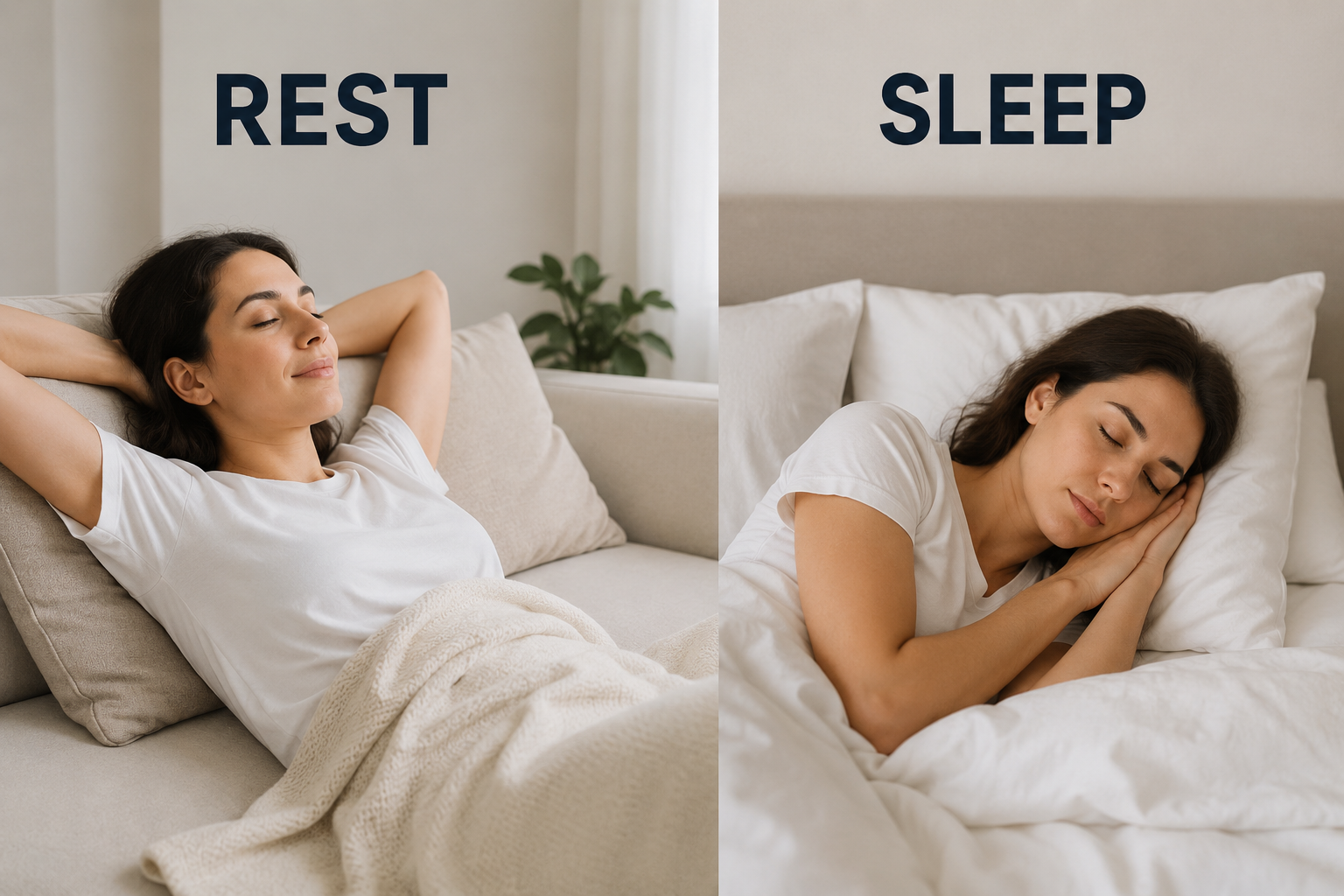
Rest and sleep are often used as if they mean the same thing, but they are actually different. Both are important for physical recovery, mental well-being, and daily energy, yet they serve different purposes. Understanding the difference between resting and sleeping can help you recognize what your body needs at different times of the day.
Rest means relaxing or reducing activity while staying awake, while sleep is a deeper state of unconsciousness that helps your body and mind recover, repair, and recharge.
Difference between sleep and rest
The main difference between sleep and rest is the level of activity taking place in the body and brain. During rest, you are usually awake and aware of your surroundings. Your muscles and mind may become more relaxed, but your brain remains relatively alert. Pain management can promote comfort, rest, and better sleep.
For example, spending 30 minutes lying on the sofa may help you feel calmer after a stressful morning. However, that time does not necessarily provide the same recovery as 30 minutes of actual sleep.
Rest versus sleep: Why both matter
When comparing rest versus sleep, it is useful to think of them as complementary rather than competing needs. Rest gives your body and mind a chance to slow down, while sleep provides a deeper period of recovery. Learn how to manage enough rest and sleep for better health and well-being.
Sleep is equally important because your body continues important biological activities while you are asleep. Good-quality sleep supports concentration, learning, mood, physical recovery, and normal immune function.
This is why getting enough sleep should not be replaced with frequent daytime breaks. At the same time, sleeping well does not mean you should avoid taking breaks during the day.
Is resting and sleeping the same thing?
A common question is, is resting and sleeping the same thing? The simple answer is no.
Rest usually means reducing physical, mental, or emotional activity while remaining awake. Sleep is a specific biological state involving changes in brain activity, breathing exercises, heart rate, muscle activity, and awareness.
Understanding this distinction can help you avoid assuming that lying down for a few minutes is equivalent to getting a full night’s sleep. Comfort, rest, and sleep can help reduce pain and support recovery.
Does rest mean sleep?
Another common question is, does rest mean sleep? Not necessarily. Rest can include sleep, but rest is a broader concept.
Someone may say they are going to rest when they plan to lie down for a while, relax, or take a break from their activities. They may fall asleep during that time, but they do not have to.
For example, reading a book quietly before bed can be considered rest. Taking a peaceful walk at a comfortable pace may also feel restorative. Spending time away from work, screens, or stressful activities can provide another form of rest.
However, if you are consistently sleepy during the day, simply resting may not solve the problem. Persistent daytime sleepiness can sometimes be related to insufficient or poor-quality sleep and may deserve attention.
What is restful sleep?
Restful sleep means sleep that leaves you feeling reasonably refreshed and able to function during the day. The amount of sleep needed varies by age and individual circumstances, but adults generally need around seven or more hours per night.
Quality matters as well as quantity. Frequent awakenings, an inconsistent sleep schedule, an uncomfortable sleeping environment, or other factors can interfere with sleep quality.
Creating a regular bedtime routine, keeping your bedroom comfortable and quiet, limiting stimulating activities before bed, and maintaining consistent sleep and wake times may support better sleep habits.
Sleeping rest and daytime recovery
The phrase sleeping rest is sometimes used to describe sleep as a form of recovery. Sleep certainly provides deep restoration, but daytime rest has its own role.
Imagine someone who has spent several hours working, studying, exercising, or caring for others. Taking a short break can provide immediate relief from continuous activity. Later, sleeping at night allows the body and brain to go through their normal sleep cycles.
This combination of rest and sleep can be more useful than relying entirely on one or the other. Your body needs periods of activity, but it also needs appropriate opportunities to slow down and recover.
How to get enough rest and sleep
A healthy routine should make room for both. Try to notice how your body responds throughout the day. If you feel tired after several hours of work, take a short break rather than pushing yourself continuously.
At night, prioritize a consistent sleep schedule and create an environment that makes it easier to sleep. Avoid treating sleep as something you can always make up for later.
It is also helpful to remember that rest does not always mean doing absolutely nothing. A relaxing activity that reduces stress can be restorative. The key is choosing activities that genuinely help you feel less mentally or physically strained.
If you regularly have trouble sleeping, wake up feeling exhausted despite getting enough time in bed, or experience significant daytime sleepiness, consider discussing the issue with a healthcare professional.
FAQs
1. What is the difference between resting and sleeping?
The difference between resting and sleeping is that rest generally involves being awake while reducing physical or mental activity. Sleep is a biological state in which the brain and body go through specific sleep stages and recovery processes.
2. Is resting as good as sleeping?
Rest can help reduce physical and mental strain, but it does not provide all the functions of sleep. If your body needs sleep, relaxing while awake cannot fully replace getting adequate sleep.
3. Does lying down count as rest?
Yes. Lying down can be a form of rest, particularly if it allows you to relax and reduce physical effort. However, simply lying down does not necessarily mean you are sleeping or receiving the same benefits as sleep.
4. Can you rest without sleeping?
Yes. You can rest while remaining awake. Quiet activities, meditation, relaxing music, gentle breathing exercises, or simply taking a break from demanding tasks can all provide opportunities for rest.
5. Why do I need both rest and sleep?
Rest can help you recover from the demands of daily activities, while sleep supports important physical and mental processes. Maintaining a balance between regular breaks and adequate nighttime sleep can help support overall well-being.
Reference
https://www.theaccesshealthcare.com/blogs/what-is-the-difference-between-rest-and-sleep
https://www.sleepsia.in/blogs/news/sleep-vs-rest
0 200

No Comments