
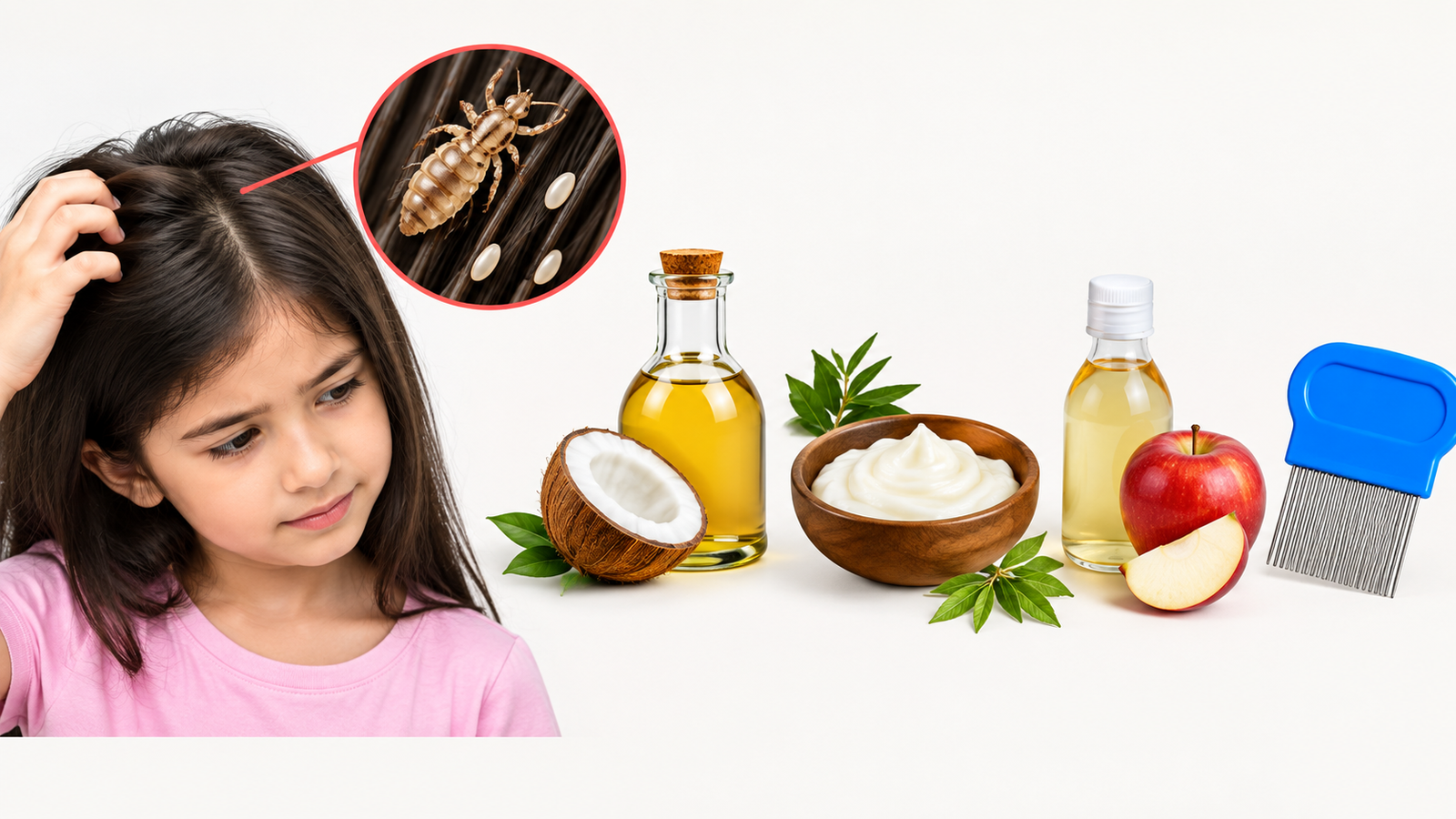
Head lice are tiny insects that live close to the scalp and feed on blood. They can cause itching, irritation, and discomfort, especially when an infestation is left untreated. The good news is that several simple steps can help manage lice and nits at home.
If you’re looking for lice and nits home remedies, this guide explains practical methods for removing lice, dealing with nits, and preventing them from returning.
What Is Lice in Hair?
If you are wondering what is lice in hair, head lice are small, wingless insects that live on the scalp and attach their eggs, called nits, to individual strands of hair. They spread mainly through direct head-to-head contact and are more common among children.
Lice do not jump or fly. They crawl from one person’s hair to another when there is close contact.
What Color Are Lice?
One common question is what color are lice? Adult head lice are usually grayish-white, tan, or brown and can sometimes appear darker after feeding. Their small size makes them difficult to spot.
How Does Lice Look?
If you’re asking how does lice look, adult lice are roughly the size of a sesame seed. Nits are much smaller and look like tiny white, yellowish, or brownish oval dots firmly attached to the hair shaft near the scalp.
Unlike dandruff and itchy scalp, nits usually do not slide off easily when you brush or shake the hair.
10 Lice and Nits Home Remedies
1. Use a Fine-Toothed Lice Comb
Wet-combing is one of the most useful home methods for physically removing lice and nits. Wet the hair, apply plenty of conditioner, and divide the hair into small sections.
Run a fine-toothed lice comb from the scalp toward the ends. Clean the comb after every pass and continue until you have worked through the entire head.
Repeat the process regularly because newly hatched lice can appear after the first treatment.
2. Wash Hair and Bedding
Wash recently used pillowcases, towels, clothing, and bedding in hot water and dry them thoroughly. Items that cannot be washed can be sealed in a bag for a period of time.
Also clean combs and hairbrushes according to their care instructions. This can help reduce the chance of lice spreading back onto treated hair.
3. Try a Vinegar Rinse
Vinegar is sometimes suggested as a home remedy because its acidity may help loosen nits from the hair shaft. However, it should not be considered a reliable method for killing live lice or their eggs.
If you use it, dilute vinegar with water and avoid getting it into the eyes or onto irritated skin. Combing remains more important for physically removing nits.
4. Coconut Oil and Careful Combing
Coconut oil is often included among home remedies for getting rid of nits. Applying oil may make hair slippery, which can make combing easier.
However, there is limited evidence that healthy coconut oil alone eliminates an infestation. Use it as an aid to thorough combing rather than relying on it as the only treatment.
5. Repeat Wet-Combing
One of the best lice treatment at home approaches is consistent wet-combing. Because eggs can survive an initial removal session, repeating the process every few days can help catch newly hatched lice before they mature and reproduce.
Be patient and work through small sections of hair carefully.
6. Check Everyone in the Household
If one person has head lice, check other household members and close contacts. Pay particular attention to the area behind the ears and near the neckline.
Treating only one person while another person has an active infestation can lead to reinfestation.
7. Avoid Sharing Personal Hair Items
Do not share combs, brushes, hats, scarves, hair accessories, or towels during an infestation. Keeping personal items separate is a simple precaution.
8. Clean Combs and Brushes
Soak combs and brushes in hot water if the material allows, or clean them carefully according to the manufacturer’s instructions. This helps remove any lice or hair debris trapped between the teeth.
9. Remove Nits Manually
For home remedies for getting rid of nits, careful manual removal is important. Use a fine-toothed comb and, when necessary, your fingernails to slide stubborn nits from individual hair strands.
Focus especially on nits close to the scalp because viable eggs are generally attached near the scalp.
10. Consider an Evidence-Based Lice Treatment
Home remedies may help remove lice manually, but they may not completely get rid of an infestation on their own. If lice remain after repeated combing, consider an appropriate over-the-counter or prescription treatment and follow the directions carefully.
How to Remove Lice From Hair Permanently at Home
If you’re searching for how to remove lice from hair permanently at home, remember that no single home remedy guarantees permanent removal. The key is to remove live lice, address nits, repeat treatment when necessary, and prevent reinfestation.
Thorough wet-combing combined with an appropriate lice treatment can be more reliable than depending on oils or household ingredients alone.
How to Get Rid of Lice Naturally in One Day
Many people search for how to get rid of lice naturally in one day, but completely eliminating lice and nits in 24 hours can be difficult. Combing can remove many live lice immediately, but eggs may remain attached to the hair.
For this reason, continue checking and combing the hair over the following days. If the infestation is severe or persistent, speak with a healthcare professional or pharmacist about suitable treatment options.
What Home Remedies Will Kill Lice Eggs?
If you’re wondering what home remedies will kill lice eggs, there is no household ingredient that can reliably guarantee that all lice eggs will be killed. Some popular remedies, such as vinegar, coconut oil, mayonnaise, or essential oils, have limited evidence for eliminating nits.
The safest practical approach is to physically remove nits with a fine-toothed comb and use a proven lice treatment when appropriate.
Best Home Remedy for Lice
The best home remedy for lice is careful and repeated wet-combing. It does not depend on harsh chemicals and physically removes live lice and some eggs.
For persistent infestations, combining thorough combing with an evidence-based treatment may be more effective than using home remedies alone.
When Should You See a Doctor?
Seek professional advice if the infestation continues despite proper treatment, the scalp becomes severely irritated or infected, or you’re unsure whether the insects are actually head lice.
Avoid applying harsh chemicals, pesticides, kerosene, or other dangerous substances to the scalp. These can cause burns, poisoning, or serious irritation.
FAQs
1. Can lice go away on their own?
Head lice generally do not disappear quickly on their own. Without treatment or removal, they can continue reproducing. Regular combing and appropriate treatment can help eliminate an infestation.
2. How long can lice live in hair?
Adult head lice typically survive on the human scalp for around a month. They lay eggs during their life cycle, which is why repeated checking and treatment may be necessary.
3. Can vinegar kill lice and nits?
Vinegar is not considered a reliable treatment for killing live lice or nits. It may help loosen some nits from the hair, making them easier to comb out.
4. What is the fastest way to remove lice?
Thorough wet-combing with a fine-toothed lice comb can immediately remove many live lice. For persistent infestations, an appropriate evidence-based lice treatment may provide additional control.
5. Can lice come back after treatment?
Yes. Lice can return if some lice or viable eggs remain or if you are exposed again to someone with an active infestation. Regular follow-up checks and avoiding head-to-head contact can help prevent reinfestation.

No Comments