
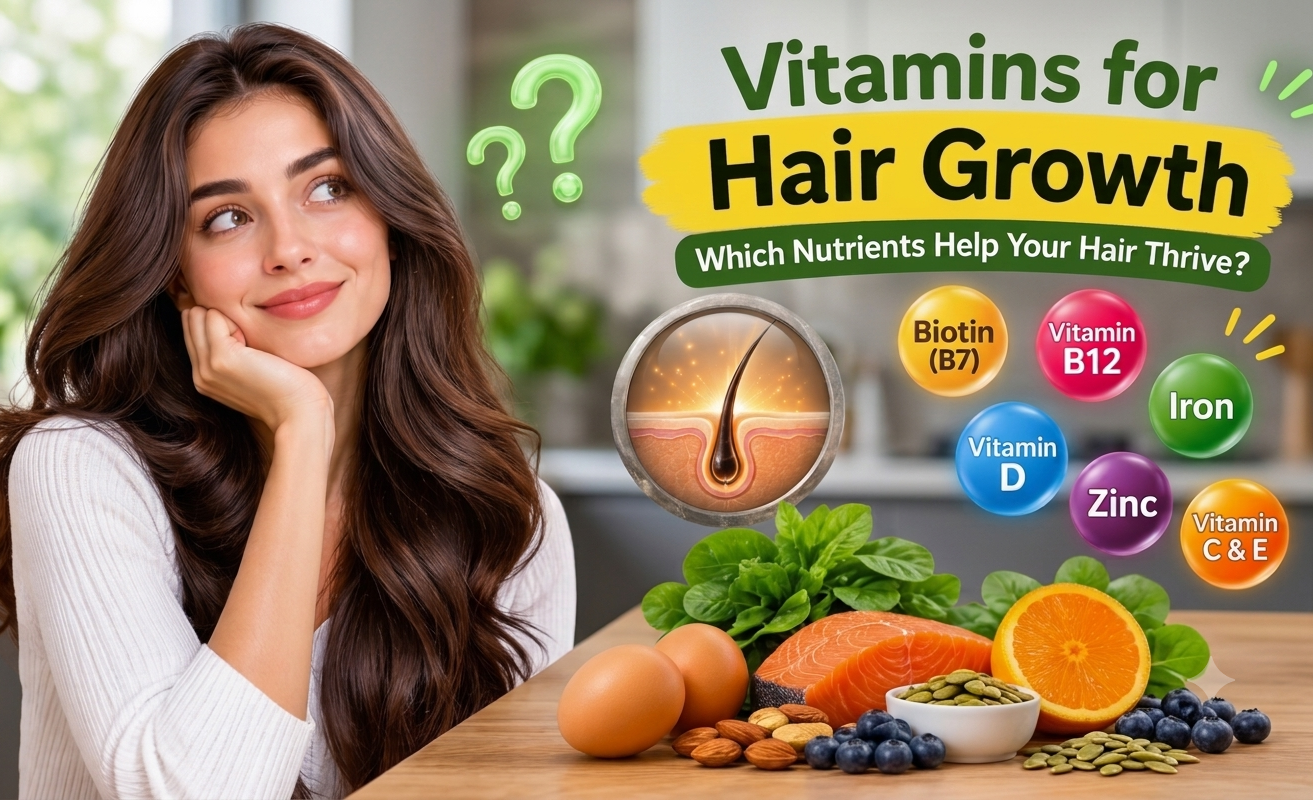
Hair health depends on more than just hair-care products. The right nutrients also play an important role in keeping hair strong and healthy. But which Vitamins for Hair Growth does your body actually need? Let’s look at the nutrients that matter.
Why Are Vitamins Important for Healthy Hair Growth?
Hair follicles need a regular supply of nutrients to function properly. Vitamins and minerals support several processes involved in maintaining healthy hair, including cell growth, oxygen transport, and normal tissue development.
Some nutrients, such as vitamin B12, also support red blood cell production and normal cell function. Including vitamin B12 foods in your diet can help you meet your daily nutritional needs.
Some important roles of nutrients include:
-
Supporting normal hair follicle function.
-
Helping maintain healthy skin and scalp.
-
Supporting the formation of healthy cells.
-
Contributing to normal protein production.
-
Helping protect cells from oxidative stress.
Vitamin K also supports normal blood clotting and bone health. Including vitamin K-rich foods in your meals can add variety to a balanced diet.
A balanced diet provides many of these nutrients while also supporting immunity, energy production, and general well-being.
Which Vitamins and Minerals Support Hair Growth?
Several nutrients contribute to healthy hair. Their importance depends partly on your nutritional needs and whether you have a deficiency.
1. Biotin (Vitamin B7)
Biotin supports energy production by helping the body process nutrients such as fats, carbohydrates, and proteins. It also contributes to normal keratin production, a protein that forms the structure of hair.
Biotin supplements are popular for hair growth and thickness, but there is limited evidence that additional biotin improves hair growth in people who already get enough.
Food sources include:
-
Cooked eggs.
-
Almonds and walnuts.
-
Sweet potatoes.
-
Salmon.
-
Sunflower seeds.
2. Iron
Iron plays an important role in haemoglobin production, helping transport oxygen through the blood to different body tissues.Hair follicles also need oxygen and nutrients to function normally.
Low iron levels may contribute to hair shedding in some people. This makes iron an important nutrient when considering possible nutritional factors behind hair loss.
Rich dietary sources include leafy greens, lentils, beans, pumpkin seeds, tofu, and lean meat.
3. Vitamin D
Vitamin D supports bone health, immune function, and normal cell activity. Hair follicles contain vitamin D receptors, which are involved in their growth cycle.
Low vitamin D levels have been associated with certain types of hair loss, although this does not mean supplements will improve hair growth in everyone.
You can get vitamin D through sunlight exposure, egg yolks, fatty fish, fortified milk, and fortified cereals.
4. Vitamin B12
Vitamin B12 helps produce red blood cells and supports normal nerve function. It also plays a role in DNA production and cell division.
A deficiency can contribute to anaemia, which may affect the oxygen supply to body tissues. People with low B12 levels may also experience changes in hair health.
Food sources include fish, eggs, milk, cheese, and other animal-based foods. You can also include these foods with B12 in your daily meals to support your nutritional needs.
5. Vitamin C
Vitamin C supports collagen production, which helps maintain healthy skin and connective tissues.
Adding vitamin C-rich foods can support overall nutritional health. Good sources include oranges, guava, strawberries, kiwi, and bell peppers. Lemon water is another refreshing citrus drink; see how lemon water for weight loss fits into a balanced daily routine.
6. Vitamin E
Vitamin E works as an antioxidant, helping shield body cells from damage caused by oxidative stress. It also supports immune function and healthy skin.
You can include vitamin E through almonds, sunflower seeds, avocado, and vegetable oils.
7. Zinc
Zinc supports normal cell growth, protein production, and immune function. It also contributes to maintaining healthy skin and tissue repair.
Low zinc levels may be associated with hair loss in some individuals. Good sources include pumpkin seeds, chickpeas, beans, nuts, and whole grains.
Can Nutrient Deficiencies Contribute to Hair Loss?
Yes, certain nutritional deficiencies can contribute to increased hair shedding. However, nutrition is only one possible factor among several hair loss causes.
Some deficiencies associated with hair changes include:
-
Iron deficiency: May contribute to increased hair shedding.
-
Vitamin D deficiency: Has been associated with certain hair-loss conditions.
-
Biotin deficiency: Rare, but can cause hair thinning.
-
Zinc deficiency: May contribute to hair loss and changes in hair quality.
-
Protein deficiency: May disrupt normal hair growth because hair strands are mainly composed of a protein called keratin.
Hair changes can also be influenced by genetics, hormonal changes, stress, illness, and other factors. A deficiency of vitamin B12 is another nutritional concern worth understanding when considering overall health and hair changes.
Which Foods Provide Essential Nutrients for Hair Health?
You do not need an expensive diet to support healthy hair. Including different nutrient-rich foods in everyday meals can help provide the vitamins and minerals your body needs.
-
Eggs: Biotin, protein, and vitamin B12; see their egg nutrition.
-
Spinach: Iron, folate, and vitamin C.
-
Almonds: Vitamin E and magnesium.
-
Salmon: Vitamin D, protein, and omega-3.
-
Lentils: Iron, protein, and folate.
-
Citrus fruits: Vitamin C.
-
Pumpkin seeds: Zinc and iron.
-
Milk: Vitamin B12 and protein.
Try combining these foods with vegetables, fruits, whole grains, and protein sources to create a varied and balanced eating pattern.
What Everyday Habits Can Affect Hair Health?
Your daily routine can influence how healthy your hair looks and feels. Hormonal changes can also affect hair health, so understanding the symptoms of hormonal imbalance may help you recognise other changes in your body.
-
Eat a balanced diet with enough protein.
-
Stay hydrated throughout the day.
-
Limit heat styling.
-
Use gentle hair-care products.
-
Avoid tight hairstyles.
-
Get enough sleep.
-
Manage everyday stress.
These habits can support general well-being and help reduce avoidable hair damage.
When Should You Pay Attention to Hair Loss?
Losing some hair every day is normal because hair naturally goes through growth, resting, and shedding phases. However, sudden or noticeable changes deserve attention.
Pay attention to signs such as:
-
Unusually heavy or persistent shedding.
-
Noticeable thinning around the scalp.
-
Widening hair parting.
-
Bald patches or uneven hair loss.
-
Changes in hair density over time.
Hair shedding can have several causes, so randomly adding supplements may not address the actual reason.
Conclusion
Healthy hair needs proper nutrition and everyday care. Biotin, iron, vitamin D, and zinc are some of the nutrients that support normal hair health. Include nutrient-rich foods in your diet and maintain healthy habits. Remember, Vitamins for Hair Growth work best when they address your body’s nutritional needs.
Frequently Asked Questions
1. Can iron deficiency cause hair loss?
Yes. Low iron levels may contribute to increased hair shedding in some people.
2. Does biotin help hair grow faster?
Biotin supports normal hair health, but extra biotin has limited proven benefits for people without a deficiency.
3. What should I eat to support healthy hair?
Include eggs, lentils, spinach, nuts, seeds, fatty fish, fruits, and other nutrient-rich foods.
4. Can vitamins stop hair fall immediately?
No. Vitamins do not provide an immediate solution. Their benefits depend on nutritional status and the underlying reason for hair shedding.
References:
- https://health.clevelandclinic.org/the-best-vitamins-supplements-and-products-for-healthier-hair
- https://pmc.ncbi.nlm.nih.gov/articles/PMC6380979/
0 200

No Comments