
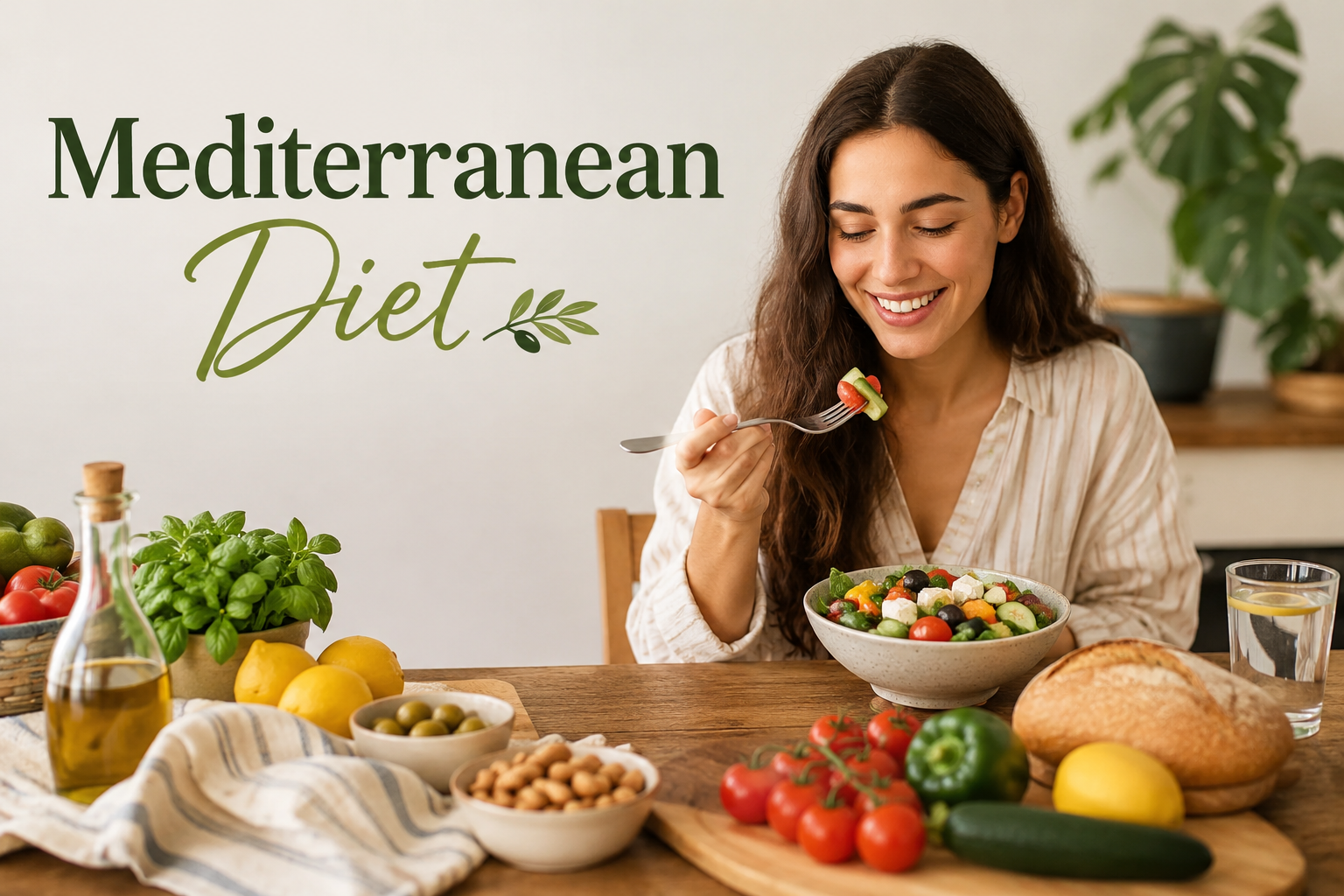
Losing weight does not have to mean following a restrictive diet or eliminating your favorite foods. The Mediterranean diet lose weight is a balanced approach to eating that emphasizes vegetables, fruits, whole grains, legumes, nuts, seeds, olive oil, fish, and other minimally processed foods. Because it focuses on nutritious, satisfying foods rather than strict calorie restriction, it can be a practical choice for people who want to support healthy weight management.
If you are searching for a Mediterranean diet weight-loss approach, understanding how this eating pattern works can help you create sustainable habits. The goal is not simply to eat less but to choose foods that provide fiber, protein, healthy fats, vitamins, and minerals while limiting highly processed foods and added sugars.
What Is a Mediterranean Diet?
What is a mediterranean diet? It is an eating pattern inspired by traditional dietary habits in countries bordering the Mediterranean Sea, including Greece, Italy, Spain, and parts of southern France. Rather than being a strict meal plan, it provides general principles for choosing and preparing food.
The diet traditionally emphasizes plant-based foods, olive oil, seafood, whole grains, beans, vegetables, fruits, nuts, and seeds. Poultry, eggs, yogurt, and cheese can be included in moderate amounts, while red meat, sweets, and highly processed foods are generally eaten less frequently.
The Greek Diet and Mediterranean Eating
The Greek diet is one of the best-known examples of traditional Mediterranean eating. Traditional Greek meals often feature vegetables, beans, lentils, whole grains, olive oil, herbs, yogurt, fish, and seafood.
Foods such as Greek salad, lentil soup, grilled fish, vegetables cooked with olive oil, and yogurt with fruit can fit naturally into a Mediterranean-style eating pattern. However, modern versions of Mediterranean cuisine can vary considerably, so the focus should remain on the overall pattern rather than individual dishes.
Can the Mediterranean Diet Help You Lose Weight?
For people interested in a mediterranean diet lose weight plan, one of its main advantages is that many of its foods are naturally filling. Vegetables, legumes, fruits, and whole grains provide dietary fiber, while fish, beans, yogurt, nuts, and other healthy foods can contribute to satiety.
Weight loss generally occurs when you consistently consume fewer calories than your body uses. The Mediterranean diet does not automatically create a calorie deficit, but its emphasis on nutrient-dense foods may make it easier to build balanced meals and reduce reliance on highly processed, calorie-dense foods.
Portion sizes still matter. Olive oil, nuts, cheese, and other nutritious foods contain calories, so eating them in reasonable amounts is important when weight loss is the goal.
Mediterranean Diet Benefits
There are several potential mediterranean diet benefits beyond weight management. A Mediterranean-style eating pattern is rich in vegetables, fruits, legumes, whole grains, nuts, seeds, and olive oil, providing a broad range of nutrients.
Research has associated Mediterranean-style eating patterns with cardiovascular health and metabolic health benefits. The diet’s combination of fiber-rich foods, unsaturated fats, and plant foods can support an overall healthy eating pattern.
However, individual results vary. The Mediterranean diet should be viewed as one healthy dietary approach rather than a guaranteed solution for weight loss or disease prevention.
Is a Mediterranean Diet Healthy?
Is a mediterranean diet healthy? For many people, yes. It emphasizes nutrient-rich foods and limits many highly processed foods. It can be adapted to different food preferences, cultures, budgets, and calorie needs.
People with specific medical conditions, food allergies, or special nutritional requirements should speak with a qualified healthcare professional or registered dietitian before making major dietary changes.
Is the Mediterranean Diet the Healthiest?
Is the mediterranean diet the healthiest? There is no single diet that is objectively healthiest for every person. A healthy eating pattern should provide adequate nutrition, fit your lifestyle, and be sustainable over time.
The Mediterranean diet is widely recognized as a nutritious dietary pattern, but other approaches can also support good health when they emphasize nutrient-dense foods and appropriate portions.
Does Mediterranean Diet Work?
Does mediterranean diet work for weight loss? It can, particularly when it helps a person maintain an appropriate calorie intake while eating satisfying, nutrient-dense meals. However, results depend on portion sizes, food choices, physical activity, sleep, individual metabolism, and consistency.
For sustainable weight management, focus on gradual changes rather than expecting rapid results. Regular physical activity, adequate sleep, hydration, and mindful eating can complement a healthy Mediterranean-style diet.
FAQs
1. Can you lose weight on the Mediterranean diet?
Yes. A Mediterranean-style eating pattern can support weight loss when it helps you maintain a calorie deficit. Choosing vegetables, legumes, whole grains, lean protein, and moderate portions of healthy fats can make meals nutritious and satisfying.
2. What are the best Mediterranean foods for weight loss?
Vegetables, beans, lentils, fish, whole grains, fruits, and lean protein are useful choices. Healthy fats such as olive oil and nuts can also be included, but portions are important because they are calorie-dense.
3. Can I eat bread and pasta on the Mediterranean diet?
Yes. Bread and pasta can fit into a Mediterranean diet, especially when choosing whole-grain varieties and keeping portions appropriate. Pairing them with vegetables, legumes, fish, or other protein-rich foods can create a more balanced meal.
4. How quickly can I lose weight on the Mediterranean diet?
Weight loss varies from person to person. A steady, gradual approach to weight loss is often easier to maintain over the long term. Your results will depend on your overall calorie intake, activity level, starting weight, and other individual factors.
5. What are the main foods to avoid or limit?
The Mediterranean diet generally limits highly processed foods, sugary drinks, sweets, refined grains, and processed meats. Red meat and foods high in added sugars can be eaten less frequently, while whole and minimally processed foods make up most meals.
Reference
https://www.health.harvard.edu/healthy-aging-and-longevity/guide-to-the-mediterranean-diet
https://my.clevelandclinic.org/health/articles/16037-mediterranean-diet
0 200

No Comments