
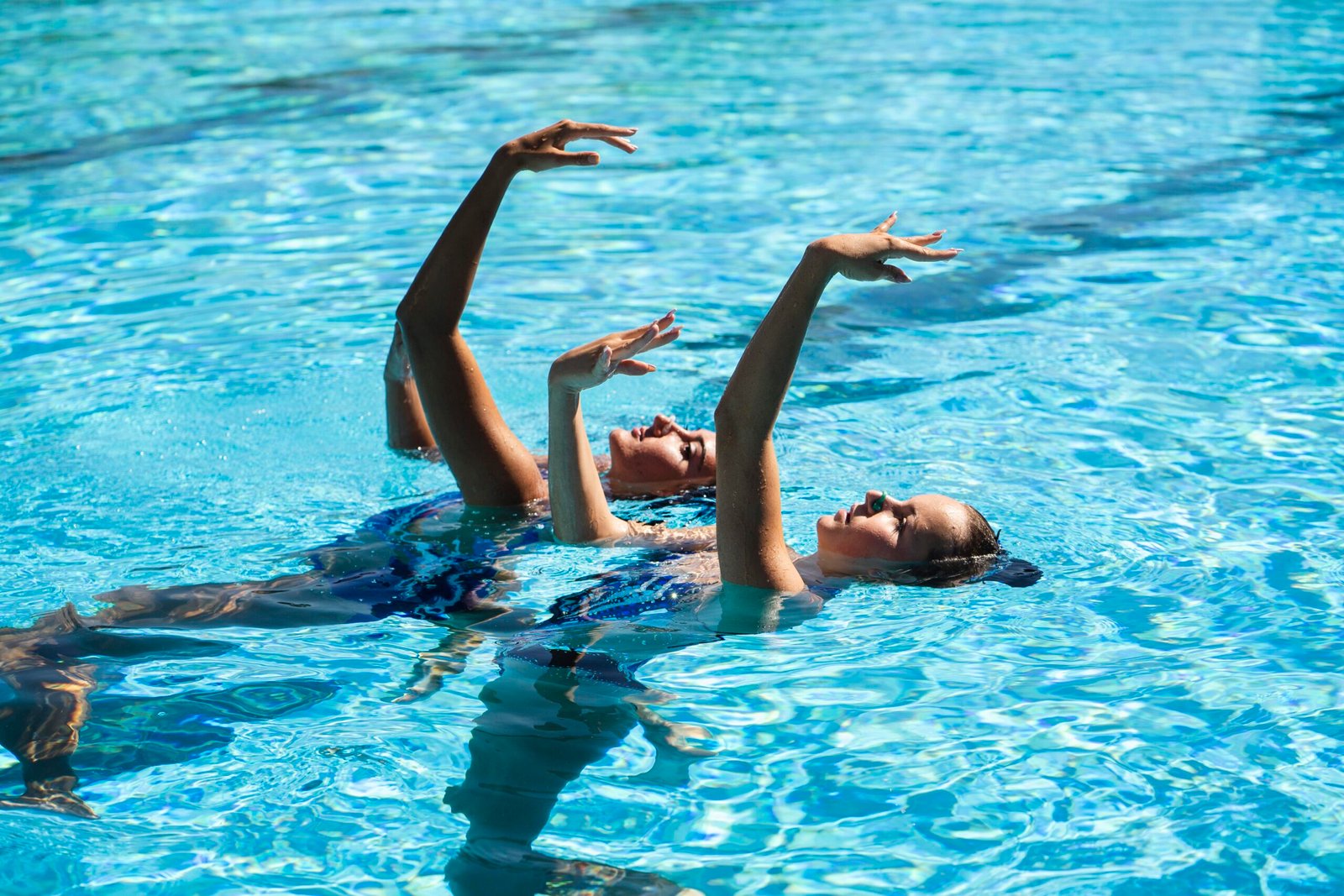
Water aerobics is a great way to stay active while putting less stress on the joints. The water supports your body and provides gentle resistance, helping your muscles work without putting as much strain on your joints. For older adults, aqua aerobics offers an enjoyable way to build strength, improve balance and flexibility, and support overall cardiovascular fitness.
Among the many aqua aerobics exercises, water walking is one of the easiest places to start. However, a well-rounded routine can include walking, leg movements, arm exercises, and simple cardio drills.
What is water walking?
So, what is water walking? It is simply walking through a swimming pool, usually in waist- to chest-deep water. The water creates resistance as you move, making ordinary walking more challenging while reducing the impact on your knees, hips, and ankles.
Pool walking exercise is particularly useful for beginners and older adults who may find traditional walking uncomfortable. You can walk forward, backward, or sideways to work different muscles.
Try swimming pool walking exercises for 10 to 20 minutes at a comfortable pace. Stand tall and let your arms move naturally as you walk. As your fitness improves, you can increase your speed or add arm movements.
Best water aerobic exercises
There are many effective water aerobic exercises, and you don’t need complicated equipment to get started. Here are some simple water aerobic moves to include in your routine.
1. Water walking
Water walking is an excellent full-body activity. Start in waist- or chest-deep water and walk from one side of the pool to the other. Push your hands through the water as you walk to increase resistance.
For a greater challenge, try walking faster or lifting your knees higher. This simple water walking workout can also be used as a warm-up before other exercises.
2. Aqua leg exercises
Aqua leg exercises help strengthen the thighs, hips, and lower legs while the water provides support.
Try alternating knee lifts, leg swings, side leg lifts, and gentle back kicks. Perform each movement slowly and with control rather than rushing through the repetitions.
These movements are useful water fitness moves for Elders who want to build lower-body strength without putting excessive pressure on their joints.
3. Arm exercises in the pool
Don’t forget your upper body. Arm exercises in the pool can strengthen the shoulders, arms, and chest.
Stand in chest-deep water and push your hands forward and backward through the water. You can also make controlled circles with your arms or move your arms from your sides toward the surface.
Because water provides resistance in multiple directions, even simple movements can become effective water resistance exercise.
4. Deep water walking
If you’re comfortable in deeper water, deep water walking can add variety to your workout. With the appropriate flotation support, you can walk or jog while your feet have little or no contact with the pool floor.
This type of aquatic exercise can reduce weight-bearing stress while still challenging your cardiovascular health system and muscles. Beginners should use appropriate supervision and pool equipment when exercising in deep water.
5. Knee lifts
Knee lifts are simple but effective aqua fit exercises for Elders. Stand upright and slowly lift one knee toward your chest, then lower it and switch sides.
You can coordinate the movement with your arms to turn it into a gentle cardio exercise. Begin with 10 reps on each side, then slowly add more as you get comfortable with the movement.
Water aerobics exercise routines
A balanced routine doesn’t have to be long. One example of water aerobics exercise routines could include:
-
5 minutes of easy water walking for a warm-up
-
5 minutes of forward and backward walking
-
10 knee lifts on each leg
-
10 side leg lifts on each side
-
10 arm pushes forward and backward
-
5 minutes of faster walking to lose weight or gentle jogging
-
Walk slowly for 5 minutes to help your body relax after the workout.
These water aerobics workout routines can be adjusted according to your fitness level. If you’re just getting started, keep your workouts short and slowly build up the time as your fitness improves.
Benefits of low-impact water exercises
One of the biggest advantages of low-impact water exercises is that the water supports much of your body weight. This makes these movements easier on your body compared with doing similar exercises on a hard surface.
Water also creates resistance, which means your muscles have to work as you move in different directions. This makes water-based exercise useful for improving muscular endurance while also providing a cardiovascular workout.
Other swimming pool exercises can include gentle jogging, heel lifts, side steps, leg kicks, and controlled arm movements. Together, these aqua workouts can provide variety and help prevent your routine from becoming repetitive.
Creating your own aqua aerobics exercise routines
The best aqua aerobics exercise routines combine several types of movement rather than focusing on one exercise. Try alternating cardio movements such as walking with strength-focused movements such as leg lifts and arm pushes.
For example, you could spend five minutes walking, five minutes doing water exercises, five minutes on upper-body movements, and another five minutes on faster cardio.
Consistency matters more than intensity. Choose exercises that feel manageable and focus on smooth, controlled movements. If you have a medical condition, recent injury, or concerns about starting exercise, speak with your healthcare professional first.
FAQs
1. Is water aerobics good?
Yes. Water aerobics for Elders can provide cardiovascular activity, muscular endurance, and movement practice while reducing the impact associated with many land exercises. The intensity can also be adjusted to suit different fitness levels.
2. What is the best water aerobic exercise for beginners?
Water walking is one of the simplest choices. It is easy to learn, requires little equipment, and can be performed at a comfortable pace. Once you’re comfortable, you can add other water fitness moves such as knee lifts and arm exercises.
3. How often should Elders do water aerobics?
The ideal schedule depends on your current fitness level and overall health. Many people can start with two or three sessions per week and gradually increase activity as they become more comfortable.
4. Can water aerobics help with strength?
Yes. The resistance created by water makes your muscles work as you move. Exercises such as leg lifts, arm pushes, knee lifts, and side steps can all contribute to muscular endurance.
5. Are water aerobics exercises suitable for people who don’t swim?
Many pool exercises can be performed without swimming. You can do pool walking, shallow-water movements, and other supervised exercises while standing in the pool. However, people who are not confident in the water should exercise in a safe, appropriate depth and follow pool safety guidelines.
Reference
https://www.mayoclinic.org/healthy-lifestyle/fitness/in-depth/aquatic-exercise/art-20546802
https://www.everydayhealth.com/workouts-activities/free-water-aerobic-routines/
0 200

No Comments