
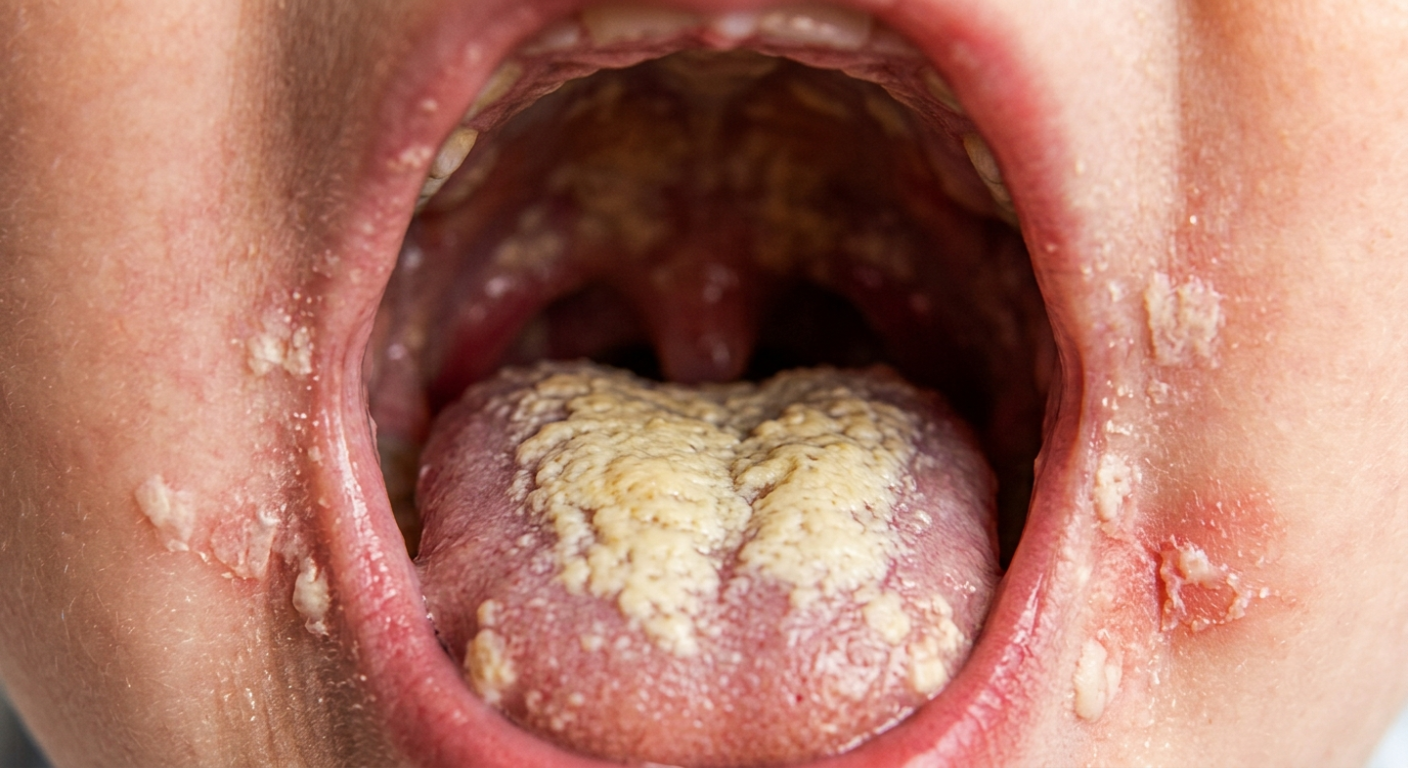
Infant Oral Thrush is a common fungal infection that develops inside a baby’s mouth during the first months of life. It may appear as white patches on the tongue, inner cheeks, gums, or roof of the mouth. Although these patches can resemble leftover milk, understanding the differences can help parents recognise possible signs of an infection. Learning about thrush symptoms, common causes, and safe care practices can help parents support their baby’s comfort and overall well-being.
What Is Infant Oral Thrush?
Oral thrush is a fungal infection caused by an overgrowth of Candida, a type of yeast that can naturally live in the mouth. When this yeast multiplies excessively, it may cause white patches, redness, and irritation.
Also known as oral candidiasis, this infection can affect newborns and older infants. Their developing immune systems may make it easier for yeast to multiply. Although Candida can live harmlessly in the body, an overgrowth may lead to an infection.
Unlike ordinary milk residue, thrush patches may cling to the mouth’s lining and leave red or sensitive areas if disturbed. Parents should avoid scraping these patches because doing so may cause irritation or bleeding.
Dehydration can cause symptoms such as headaches, as explained in this guide on does dehydration cause headaches, although headaches are not a typical symptom of oral thrush in infants.
What Does Oral Thrush Look Like?
Parents may notice white or creamy patches inside their baby’s mouth. These can appear on the tongue, gums, inner cheeks, or roof of the mouth.
Common signs of mouth thrush include:
-
White patches resembling curdled milk.
-
Redness or irritation beneath affected areas.
-
Fussiness during feeding.
-
Discomfort while sucking or swallowing.
-
Cracks at the corners of the mouth in some cases.
Tongue thrush can look similar to a white coating caused by milk. Milk residue usually wipes away easily, while thrush patches tend to stick to the mouth’s lining.
If you are wondering what does thrush look like, remember that not every white tongue indicates an infection.
Why Do Babies Develop Oral Thrush?
The main cause of oral thrush is an overgrowth of Candida yeast. Several factors may encourage its growth in infants.
Possible contributing factors include:
-
An immature immune system: Young babies are still developing their natural defences.
-
Recent antibiotic use: Antibiotics can alter the balance of microorganisms in the mouth.
-
Yeast exposure during birth: Candida may pass from mother to baby during delivery.
-
Breastfeeding-related factors: Yeast may affect a nursing parent’s nipples and a baby’s mouth, although nipple pain can have other causes.
These oral thrush causes do not mean a parent has done anything wrong. The infection can develop even when everyday hygiene and feeding practices are followed carefully.
Nutrition also supports a baby’s growth and development. Parents exploring essential nutrients can learn about vitamin B12 foods and how vitamin B12 supports normal nerve function and red blood cell formation. However, vitamin B12 intake is not an established way to prevent or clear oral thrush.
How Can Oral Thrush Affect Babies?
Some infants with oral thrush symptoms remain comfortable and feed normally. Others may experience mouth soreness that makes feeding difficult.
Possible effects include:
-
Fussiness or crying during feeds.
-
Shorter or interrupted feeding sessions.
-
Reduced interest in sucking.
-
Irritation inside the mouth.
-
Difficulty maintaining usual feeding patterns.
A yeast infection in the mouth differs from thrush skin, which may appear as a red rash in areas such as the nappy region.
How Is Infant Oral Thrush Diagnosed?
Infant oral thrush is often identified by examining the mouth and considering the baby’s symptoms. A healthcare professional may assess whether the patches are consistent with a fungal infection or another condition.
A white tongue in a baby may be caused by milk residue, while oral thrush and other mouth conditions can cause white patches, redness, or soreness.
Parents should not try to confirm an infection by scraping the tongue. If patches persist, spread, or occur alongside feeding difficulties, an appropriate assessment can help clarify the cause.
What Are the Treatment Options?
The appropriate approach depends on the baby’s age, symptoms, and the extent of the infection.
Everyday care practices include:
-
Continue offering feeds as tolerated.
-
Wash feeding equipment thoroughly, following the manufacturer’s cleaning instructions.
-
Wash hands before and after feeding.
-
Follow recommended cleaning and sterilisation instructions for bottles, teats, and breast pump parts.
-
As babies grow and begin eating solid foods at the appropriate age, Egg Nutrition can help parents learn more about the nutrients eggs provide as part of a balanced diet
For infants, oral thrush treatment should be suitable for their age and individual needs.
How Can Parents Prevent Oral Thrush?
It is not always possible to prevent oral thrush, but good hygiene may help reduce avoidable risks. These oral thrush prevention practices are useful for everyday infant care:
-
Wash hands before preparing feeds or handling feeding equipment.
-
Clean bottles, teats, and breast pump parts properly.
-
Avoid sharing items that enter the baby’s mouth.
-
After cleaning, allow feeding equipment to dry completely before storing it between uses.
-
Pay attention to persistent white patches or feeding problems.
Parents who breastfeed and experience nipple pain, redness, or cracking should not automatically assume yeast is responsible.
Can Oral Thrush Affect Breastfeeding?
Oral thrush may make breastfeeding uncomfortable if a baby’s mouth becomes sore. Some nursing parents also experience nipple discomfort or redness, although these symptoms do not always indicate a yeast infection.
Nutrition is also important during the early stages of a baby’s development. Learning about deficiency of vitamin B12 can help parents understand the role this nutrient plays in nerve function and red blood cell formation. However, vitamin B12 deficiency is not a cause of oral thrush.
Breastfeeding can often continue when comfortable, but persistent pain, poor feeding, or concerns about milk intake should not be ignored.
Conclusion
Infant oral thrush can cause white mouth patches, irritation, and feeding discomfort, although some babies experience few symptoms. Understanding its appearance and possible causes helps parents recognise when something may be wrong. Maintain good feeding hygiene, avoid unverified remedies, and seek appropriate help if patches persist or feeding becomes difficult.
Frequently Asked Questions
1. Is Oral Thrush Common in Newborns?
Yes, newborns can commonly develop oral thrush because their immune systems are not yet fully mature.
2. Is Oral Thrush Contagious?
Candida yeast can spread in some circumstances, but exposure does not always cause an infection.
3. Can Oral Thrush Affect Feeding?
Yes, mouth soreness may make sucking uncomfortable and interrupt feeding.
4. Will Oral Thrush Go Away on Its Own?
Some cases may resolve naturally, but persistent patches or feeding difficulties need attention.
5. Can Home Remedies Help Infants?
Avoid unverified remedies such as honey, vinegar, or essential oils inside a baby’s mouth. Use only age-appropriate care.
References:
- https://www.mayoclinic.org/diseases-conditions/oral-thrush/symptoms-causes/syc-20353533
- https://my.clevelandclinic.org/health/diseases/10956-thrush
0 200

No Comments