

An early miscarriage is a pregnancy loss that happens during the first trimester, often before 12 weeks of pregnancy. It can be an emotional and confusing experience, especially when symptoms such as bleeding, cramping, or changes in pregnancy symptoms appear. Understanding the possible signs of early miscarriage, common causes, and when to seek medical attention can help you know what to expect.
An early pregnancy miscarriage is the unexpected loss of a pregnancy before 20 weeks, with most cases happening during the first 12 weeks. Understanding the early miscarriage signs, common causes, and symptoms can help you know what to expect. In many cases, miscarriage occurs because of random chromosomal problems that prevent normal development—and it is usually not caused by anything you did or failed to do.
What Is an Early Miscarriage?
A miscarriage occurs when a pregnancy ends on its own before the fetus can survive outside the uterus. Early pregnancy loss is relatively common, and many miscarriages happen because the developing pregnancy has chromosomal abnormalities that prevent normal development. In most cases, this is not caused by something the pregnant person did.
It is also important to remember that bleeding or cramping during early pregnancy does not always mean a miscarriage. Some people experience light bleeding and continue to have a healthy pregnancy. Because symptoms can overlap with other conditions, medical evaluation may be necessary.
Common Signs and Symptoms
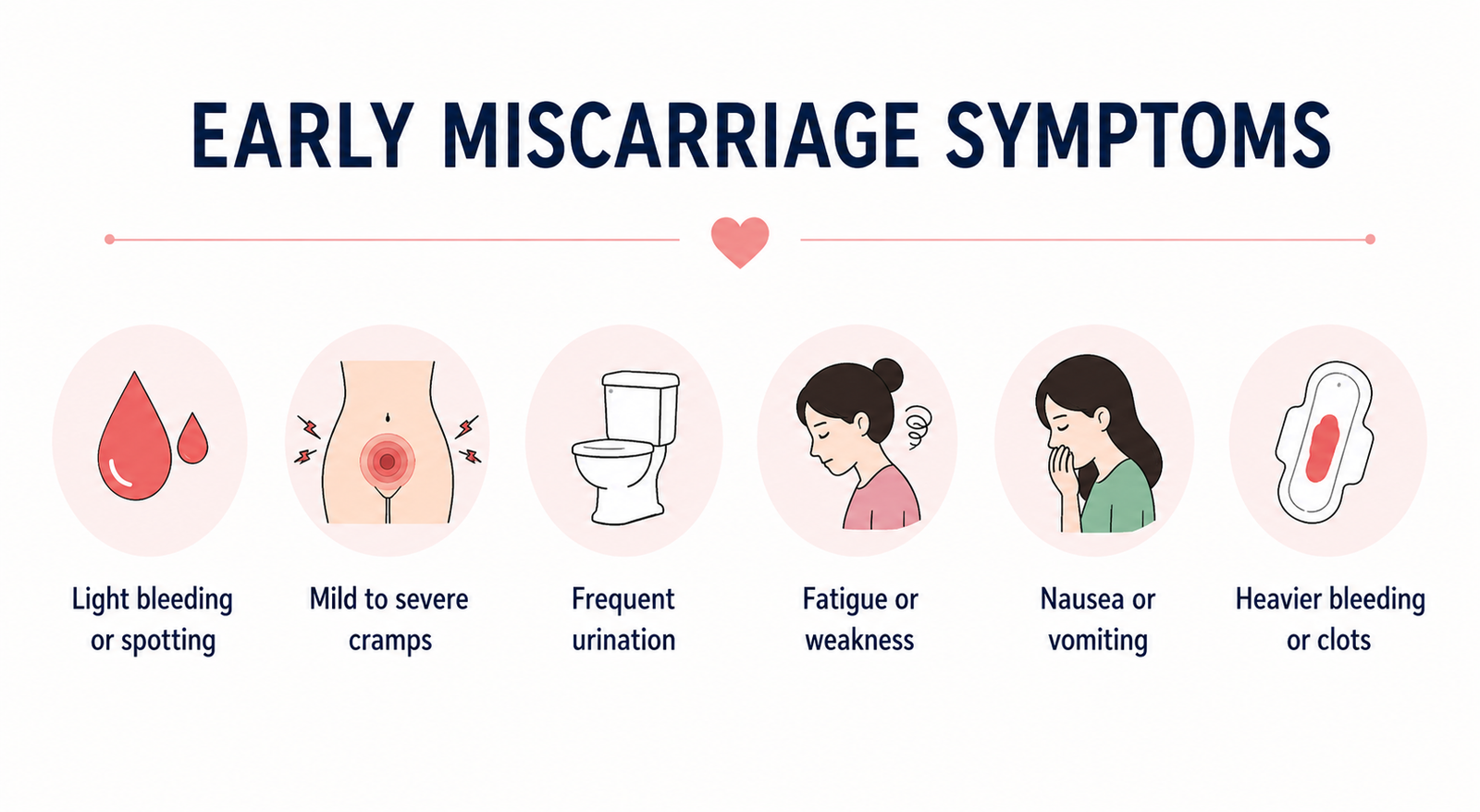
The symptoms of miscarriage can vary depending on how far along the pregnancy is. Common symptoms may include vaginal bleeding, lower abdominal cramps, pelvic pain, back pain, or passing tissue or fluid through the vagina.
People searching for Miscarriage signs at 2 3 weeks should know that pregnancy dating can be confusing at this stage. Pregnancy is normally dated from the first day of the last menstrual period, meaning a person may technically be considered pregnant before conception has occurred.
Similarly, Early miscarriage symptoms 5 weeks can include bleeding and cramping, but these symptoms are not enough to confirm a miscarriage. An ultrasound and, when appropriate, blood tests measuring human chorionic gonadotropin (hCG) may help determine what is happening.
Very early pregnancy can be difficult to assess. Searches for 1 week miscarriage symptoms may actually refer to bleeding around the expected menstrual period, because pregnancy may not yet be detectable at one week of pregnancy by conventional testing.
At approximately three weeks, Early miscarriage symptoms 3 weeks may also be difficult to distinguish from normal menstrual bleeding or implantation-related spotting. A healthcare professional can provide more reliable guidance than symptoms alone.
Understanding Early Miscarriage Bleeding
Early miscarriage bleeding can range from light spotting to heavier bleeding. Some people experience bleeding similar to a heavy menstrual period, while others may have more substantial bleeding accompanied by period cramps or clots.
The question how many days miscarriage bleeding lasts does not have one answer. The duration can vary according to the individual and whether the miscarriage has completely passed. Bleeding may become lighter over time, followed by spotting.
Another common question is miscarriage bleeding last for how many days? Some people may bleed for several days, while light spotting can continue longer. Persistent, worsening, or very heavy bleeding should be evaluated by a medical professional.
Heavy bleeding, severe abdominal or pelvic pain, dizziness, fainting, fever, chills, or feeling extremely unwell can require urgent medical attention. These symptoms may sometimes indicate complications, including significant blood loss or an ectopic pregnancy.
What Is a Missed Miscarriage?
Not every miscarriage causes obvious bleeding or pain. A missed miscarriage occurs when the pregnancy has stopped developing but the body has not yet expelled the pregnancy tissue.
People often ask what are symptoms of missed miscarriage. In some cases, there may be a loss of pregnancy symptoms, such as reduced nausea or breast tenderness, but this is not always present. Some people have no symptoms at all and only discover the pregnancy loss during an ultrasound.
What Causes Early Miscarriage?
A common question is, What habits can cause a miscarriage? Ordinary daily activities such as walking, working, exercising appropriately, or having sex in an uncomplicated pregnancy generally do not cause miscarriage. People should avoid smoking, recreational drugs, and excessive alcohol because they can harm pregnancy.
If you have concerns about a particular medication, supplement, activity, or exposure, discuss it with a healthcare professional rather than assuming it caused a pregnancy loss.
FAQs
1. Does bleeding always mean an early miscarriage?
No. Light spotting or bleeding can occur during early pregnancy for several reasons, and not every episode results in miscarriage. However, bleeding should be discussed with a healthcare professional, especially when it is heavy or accompanied by pain.
2. Can a pregnancy test stay positive after a miscarriage?
Yes. Pregnancy tests detect hCG, and this hormone can remain in the body for a period after pregnancy loss. A healthcare professional may recommend follow-up testing to determine whether hCG levels are declining appropriately.
3. Can cramping happen without a miscarriage?
Yes. Mild cramping can occur during normal early pregnancy. However, severe, persistent, or one-sided abdominal pain requires medical evaluation because it can have causes that need prompt treatment.
4. Is an early miscarriage usually caused by something the mother did?
Usually, no. Many early miscarriages occur because of chromosomal abnormalities that develop randomly. Normal activities such as walking, routine work, or appropriately performed exercise are generally not considered causes of miscarriage.
5. How long can bleeding continue after a miscarriage?
Bleeding varies from person to person. It may initially be heavier and gradually become lighter before stopping. If bleeding is very heavy, continues without improvement, or occurs with severe pain, fever, dizziness, or weakness, seek medical care promptly.
Reference
https://my.clevelandclinic.org/health/diseases/9688-miscarriage

No Comments