
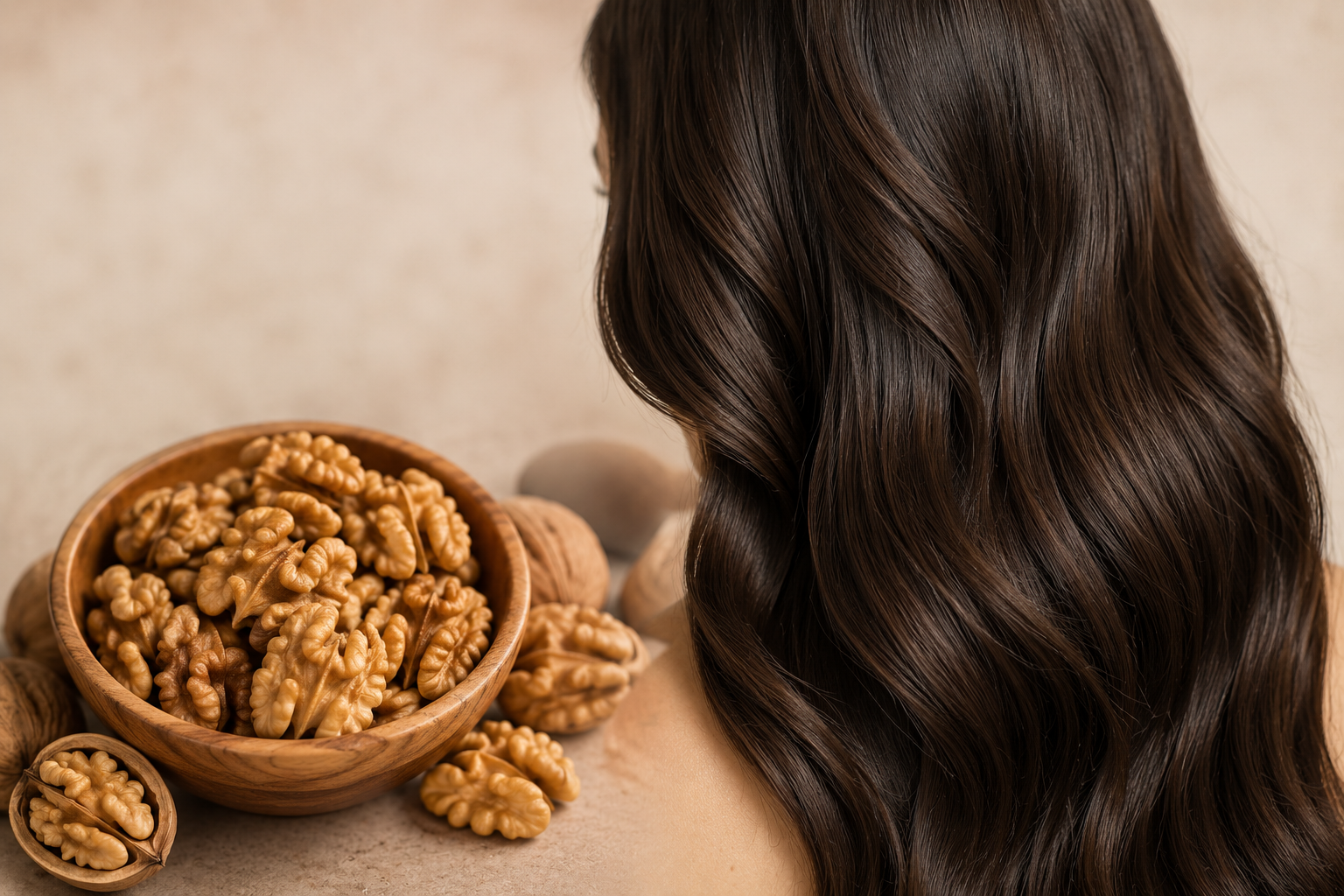
Walnuts are a nutritious tree nut packed with healthy fats, protein, vitamins, minerals, antioxidants, and plant compounds that can support overall health. Because healthy hair depends partly on adequate nutrition, adding walnuts to a balanced diet may help support stronger and healthier-looking hair. While walnuts are not a cure for hair loss, their nutrients can contribute to normal hair and scalp health. Side Effects of Eating Walnuts Every Day may include digestive discomfort, bloating, or excess calorie intake when eaten in large amounts.
7 Amazing Walnut Benefits for Hair
1. May Support Healthy Hair Growth
Walnuts provide nutrients such as omega-3 fatty acids, protein, copper, zinc, and other minerals that play roles in maintaining normal body functions. Adequate nutrition is important for healthy hair follicles. Eating walnuts as part of a varied diet may therefore support the conditions needed for healthy-looking hair growth.
2. Helps Support Stronger Hair
Hair strands are largely made from a protein called keratin. Walnuts contain plant-based protein along with minerals that contribute to normal physiological processes. Including nutrient-rich foods such as walnuts in your diet can help support overall nutritional intake, which may contribute to stronger-looking hair.
3. May Improve Hair Shine
The healthy unsaturated fats found in walnuts can be part of a balanced diet that supports skin health. Although eating walnuts will not instantly make dull hair shiny, consistent healthy nutrition may help your hair maintain a healthier appearance over time.
4. Supports Scalp Health
A healthy scalp provides the foundation for healthy-looking hair. Walnuts contain beneficial fats and antioxidant compounds that can complement an overall nutritious eating pattern. However, scalp problems such as persistent itching, inflammation, or excessive flaking should be evaluated by a healthcare professional rather than treated with food alone.
5. Provides Antioxidants
Walnuts contain antioxidants and plant compounds that help protect cells from oxidative stress. A diet rich in a variety of nuts, fruits, vegetables, whole grains, and other nutrient-dense foods can provide a broad range of protective compounds that support overall wellness.
6. May Help Maintain Hair Strength and Texture
Nutritional deficiencies can sometimes contribute to changes in hair quality. Walnuts provide several nutrients that can complement a balanced diet. They should not replace medical treatment or targeted nutritional advice when hair changes are caused by an underlying condition or deficiency.
7. Supports Overall Nutrition
One of the simplest walnuts benefits for hair is that walnuts provide several nutrients in a convenient food. They contain healthy fats, protein, fiber, and important micronutrients. Eating them alongside other nutritious foods can help create a balanced diet that supports the body, including normal hair maintenance.
Walnut Oil Benefits for Hair
Walnut oil can be a useful addition to a simple hair-care routine. Rich in unsaturated fats and nourishing compounds, it may help moisturize dry hair, improve softness, and make strands easier to manage. Gently massaging a small amount of walnut oil onto the hair and scalp may also help reduce the appearance of dryness and leave hair feeling smoother.
While the Walnut Oil for Hair Side Effects are generally uncommon when used appropriately, some people may experience irritation, redness, itching, or an allergic reaction. It is best to perform a patch test before applying walnut oil to your scalp or hair. Also, avoid using it if you have a known walnut or tree-nut allergy.
Benefits of Walnuts for Skin and Hair
The benefits of walnuts for skin and hair are largely related to their nutritional profile. Their healthy fats, antioxidants, protein, vitamins, and minerals can contribute to an overall balanced diet. For skin, nutritious foods can support normal skin function and help maintain a healthy appearance. For hair, adequate nutrition supports normal follicle and hair-shaft maintenance.
Eating walnuts cannot replace sunscreen, appropriate skin care, or medical treatment for skin and hair conditions. Think of walnuts as one nutritious part of a broader healthy lifestyle. Walnut benefits and side effects depend on portion size, individual tolerance, and whether you have a walnut allergy.
Best Time to Eat Walnuts for Hair
There is no scientifically established “best time” to eat walnuts specifically for hair growth. What matters most is including them consistently in a well-balanced diet. You can enjoy walnuts with breakfast, add them to yogurt or oatmeal, include them in salads, or eat a small portion as a snack.
How to Eat Walnuts: Dry or Soaked?
If you are wondering how to eat walnuts dry or soaked, both options can fit into a healthy diet. Dry walnuts are convenient and retain their nutritional value. Some people prefer soaked walnuts because they find them softer and easier to eat. Soaking is not necessary to obtain the benefits of walnuts, so choose whichever preparation you enjoy and tolerate best. Benefits of Walnuts for Brain include supporting overall brain health with healthy fats, antioxidants, and essential nutrients.
FAQs
1. Can walnuts help hair growth?
Walnuts provide nutrients that support overall nutrition and may contribute to healthy-looking hair, but they are not a proven treatment for hair loss or guaranteed to increase hair growth.
2. How Many Walnuts Should You Eat Each Day?
A small handful is a suitable daily portion for most adults. Individual nutritional needs vary, so portion size should fit your overall diet and calorie requirements.
3. Are soaked walnuts better than dry walnuts for hair?
There is no strong evidence that soaking walnuts makes them better specifically for hair. Both soaked and dry walnuts can be nutritious choices.
4. Can I apply walnut oil directly to my hair?
Walnut oil may be used as a conditioning oil by some people. Patch-test it first and avoid it if you have a known nut allergy or develop irritation.
5. Do walnuts prevent hair loss?
Walnuts cannot be relied upon to prevent hair loss. Hair loss can have many causes, including genetics, hormonal changes, nutritional deficiencies, medications, and medical conditions. Persistent or sudden hair loss should be discussed with a healthcare professional.
Reference
https://www.healthline.com/nutrition/benefits-of-walnuts
0 200
No Comments