
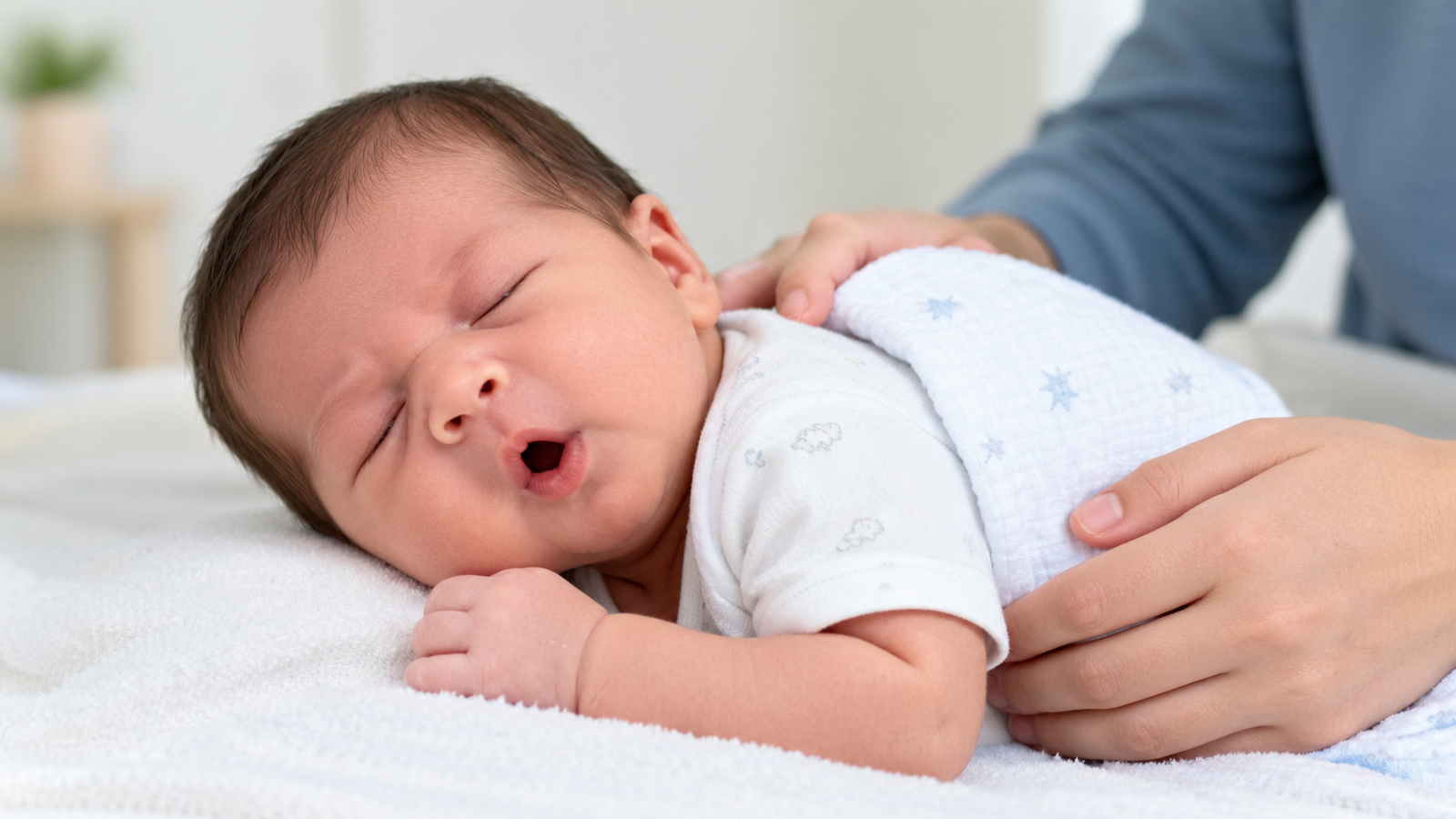
Newborn hiccups are extremely common and can sometimes worry new parents. You may notice your baby suddenly making small, repeated “hic” sounds, especially after nursing or bottle-feeding. In most cases, hiccups are harmless and go away on their own. However, understanding newborn hiccups causes and knowing what you can safely do may help you feel more confident when they happen.
If you are wondering how to stop a newborn hiccups, the good news is that most episodes do not require treatment. Simple feeding and positioning techniques may help reduce hiccups, particularly when they occur frequently after meals.
Why the Newborn Hiccups
Many parents ask why the newborn hiccups so often. Hiccups happen when the diaphragm, the muscle involved in breathing, suddenly contracts. This involuntary contraction causes the vocal cords to close briefly, producing the familiar hiccup sound.
Newborns have developing digestive and nervous systems, which may make hiccups particularly common during the first few months of life. Feeding can also trigger hiccups because a baby’s stomach becomes full or the baby swallows air while nursing or drinking from a bottle.
What Newborn Hiccups Causes?
Common factors that may contribute to hiccups include:
-
Feeding too quickly
-
Taking in air during feeding
-
Overfeeding
-
A full stomach
-
Sudden changes in stomach temperature or fullness
-
Swallowing air while crying
-
Normal development of the baby’s diaphragm and nervous system
These are among the common explanations for what causes newborn hiccups. Occasional hiccups are generally not a sign that something is wrong.
Newborn Hiccups After Nursing
Newborn hiccups after nursing are particularly common. A baby may swallow some air while breastfeeding, especially if the latch is not comfortable or the milk is flowing quickly. A full stomach can also place pressure on the diaphragm and contribute to hiccups.
If your baby frequently develops hiccups after breastfeeding, consider slowing the feeding pace when possible and giving your baby opportunities to burp. Keeping your baby upright for a short period after feeding may also be helpful.
It is important not to interrupt every feeding because of hiccups. If your baby is comfortable, breathing normally, and feeding well, you usually do not need to stop the feeding simply because hiccups begin.
How to Stop Newborn Hiccups After Feeding
Parents often search for how to stop newborn hiccups after feeding. There is no guaranteed method that immediately stops hiccups, but several gentle approaches can help.
First, try holding your baby upright and supporting their head and neck. A calm upright position may help release swallowed air. You can also gently burp your baby.
If hiccups happen during feeding, taking a short break may help. Once your baby is calm, you can resume feeding. For bottle-fed babies, make sure the nipple flow is appropriate for your baby’s age and feeding ability.
Avoid trying adult remedies such as giving water, sugar, honey, or other substances to a newborn. Babies should only receive breast milk or infant formula unless their healthcare professional recommends something else.
What to Do When Newborn Hiccups
Wondering what to do when newborn hiccups start? In most cases, the best approach is simply to remain calm and let the episode pass.
You can:
-
Hold your baby upright.
-
Gently burp your baby.
-
Offer a small amount of milk if your baby appears hungry and is willing to feed.
-
Take a short break during feeding if hiccups begin.
-
Keep your baby comfortable and avoid sudden movements.
Hiccups commonly stop within a few minutes, although some episodes may last longer.
Best Position for Newborn Hiccups
The best position for newborn hiccups is generally an upright, supported position. Hold your baby against your chest with their head and neck properly supported. This position can help keep the baby comfortable and may make it easier for swallowed air to come out through burping.
After feeding, keeping your baby upright for a while may also help reduce discomfort from swallowed air or milk coming back up.
Never place a sleeping baby in an unsafe position to try to stop hiccups. For sleep, babies should be placed on their backs on a firm, flat sleep surface without loose bedding, pillows, or positioning devices.
Hiccups in Infants After Feeding
Hiccups in infants after feeding are usually associated with normal feeding and digestion. They may happen after breastfeeding, bottle-feeding, or when a baby swallows air.
Pay attention to your baby’s overall behavior rather than focusing only on the hiccups. A baby who is feeding normally, gaining weight appropriately, breathing comfortably, and remaining generally content is less likely to have a problem related to ordinary hiccups.
How to Get Rid of Hiccups for Newborns
If you are searching for how to get rid of hiccups for newborns, remember that there is usually no need to force them to stop. Hiccups are a normal reflex, and they often disappear naturally.
Instead of trying potentially unsafe remedies, focus on preventing excessive air swallowing. Make sure your baby has a good breastfeeding latch, take appropriate burping breaks, and avoid feeding beyond your baby’s hunger cues.
Is It Normal for a Newborn to Have Hiccups?
Yes. Is it normal for a newborn to have hiccups? In most cases, frequent hiccups are completely normal. Some babies even have hiccups before birth, and newborns may continue to experience them regularly after birth.
Although hiccups can look uncomfortable, many babies do not seem bothered by them. Parents should generally avoid home remedies designed for adults because newborns have different nutritional and safety needs.
Are Hiccups Bad for Newborns?
Are hiccups bad for newborns? Usually, no. Normal hiccups are not harmful and generally resolve without treatment.
However, contact your baby’s healthcare professional if hiccups are accompanied by concerning symptoms such as difficulty breathing, repeated vomiting, poor feeding, unusual lethargy, significant distress, or problems with weight gain. If you are worried about your baby’s symptoms, professional medical advice is appropriate.
FAQs
1. What causes hiccups in infants?
Common triggers include swallowing air, feeding quickly, having a full stomach, and normal development of the diaphragm and nervous system. Feeding-related hiccups are especially common in young babies.
2. Why does my newborn get hiccups after every feeding?
A baby may swallow air while breastfeeding or bottle-feeding, or the stomach may become full during a meal. Try keeping your baby upright and gently burping them after feeding.
3. What is the best position for newborn hiccups?
A comfortable upright position with the baby’s head and neck supported is generally useful. You can hold your baby against your chest and gently burp them.
4. Should I feed my baby during hiccups?
If your baby is hungry and otherwise comfortable, you can generally continue or resume feeding. If hiccups begin during a feeding, taking a brief pause and burping your baby may help.
5. When should I call a doctor about newborn hiccups?
Occasional hiccups are usually harmless. Contact a healthcare professional if hiccups occur with breathing difficulties, persistent vomiting, poor feeding, unusual distress, poor weight gain, or other symptoms that concern you.
Reference
https://www.webmd.com/baby/what-to-do-if-your-baby-has-hiccups
https://www.healthline.com/health/childrens-health/newborn-hiccups
0 200
No Comments