
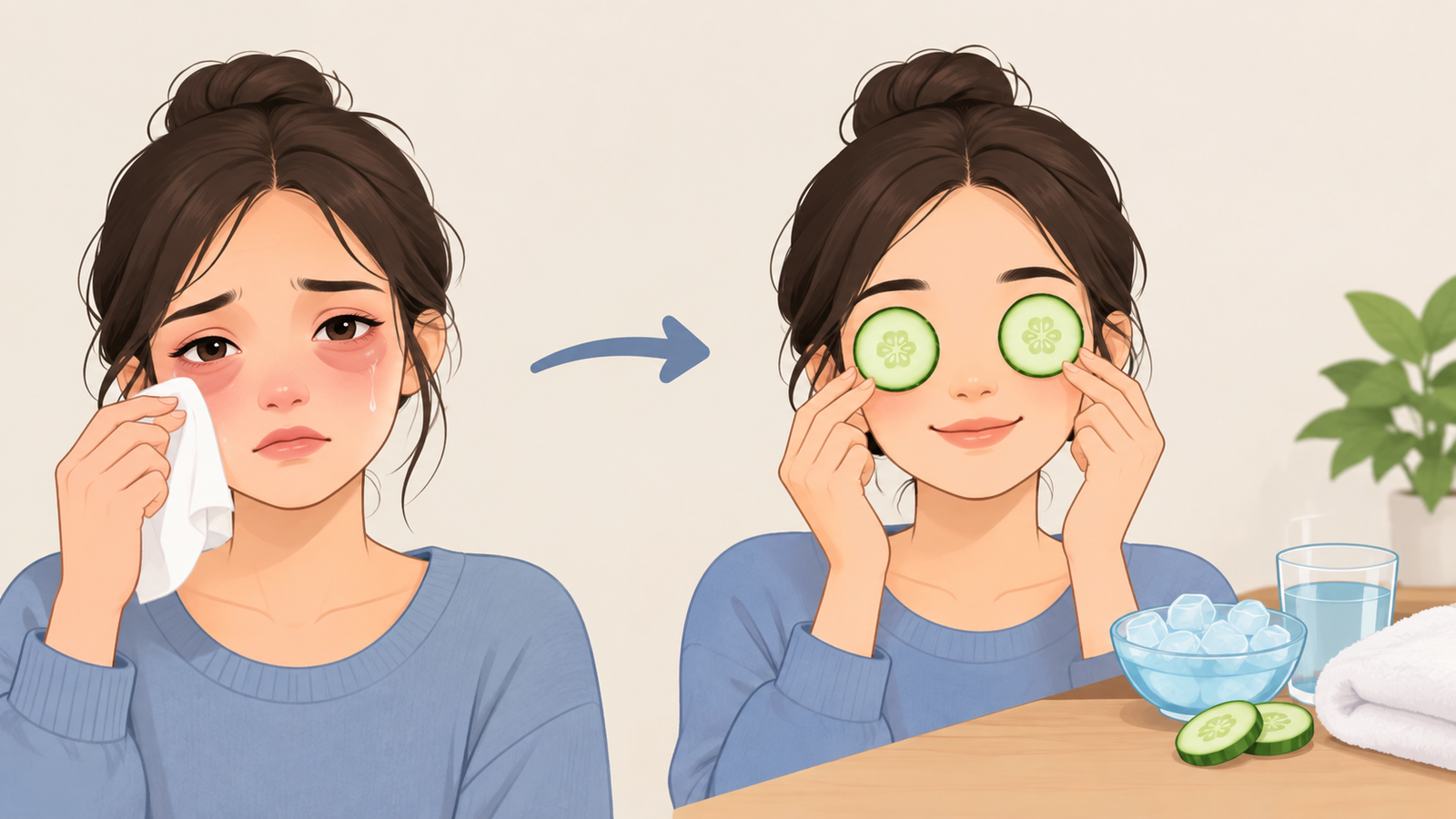
Crying can leave your eyes looking swollen, red, and tired, especially around the eyelids and under-eye area. This happens because tears can increase fluid around the eyes, while rubbing your eyes may irritate the delicate skin. Fortunately, there are several simple ways to reduce puffiness and make your eyes look refreshed.
If you’re wondering how to get rid of puffy eyes, the quickest approach is usually to cool the area, avoid rubbing your eyes, stay hydrated, and give the swelling some time to settle.
Why do eyes get puffy after crying?
Before exploring remedies, it’s important to understand the common causes of puffy eyes. When you cry, your eyes produce more tears than usual. Some of the surrounding tissues can retain fluid, causing temporary swelling.
Rubbing or wiping your eyes repeatedly can make the problem worse by irritating the skin. Lack of sleep, any allergies, dehydration, salty foods, and naturally occurring under-eye bags can also contribute to swelling eyes.
The good news is that puffiness caused by crying is usually temporary and gradually improves.
How to get rid of puffy eyes in 5 minutes
If you need a quick solution, you may be able to make your eyes look less swollen within a few minutes.
1. Use a cold compress
Using a cold compress is one of the simplest ways to help reduce puffy eyes. Soak a clean washcloth in cold water, gently wring it out, and place it over your closed eyes for several minutes.
A chilled gel eye mask or a cold spoon wrapped in a clean cloth can also help soothe the area and reduce the appearance of puffiness.
2. Rinse your face with cool water
Splashing cool water over your face can help you feel refreshed and may temporarily reduce the appearance of facial puffiness. Don’t use very cold or icy water if it feels uncomfortable.
3. Keep your head elevated
If you’re lying down, prop your head up with an extra pillow. Keeping your head elevated can help prevent additional fluid from collecting around the eyes.
4. Don’t rub your eyes
Even though your eyes may feel irritated after crying, rubbing can increase redness and swelling. Instead, gently dab the area dry using a clean, soft towel.
Natural Ways to Reduce Puffy Eyes at Home
If you prefer natural options, several easy methods can be used at home. A cool, clean compress is one of the best home remedies for puffy eyes because it is simple and doesn’t require special products.
Chilled cucumber slices are another commonly used option. Place clean, chilled slices over closed eyes for a few minutes. They can provide a cooling sensation and help the area feel more comfortable.
Getting enough water is also helpful, particularly if you haven’t had much to drink. Try to avoid excessive salty foods immediately after crying, since high sodium intake can encourage water retention.
A gentle, cool compress and adequate rest are generally more useful than harsh DIY treatments.
How to get rid of swollen eye bags
If crying makes your under-eye area look especially swollen, cooling the skin and keeping your head elevated can help. Gentle care is important because the skin underneath the eyes is thin and sensitive.
Don’t massage or press the area aggressively. If you regularly have noticeable eye bags even when you haven’t been crying, factors such as genetics, aging, allergies, sleep habits, and fluid retention may be involved.
In that situation, the best approach may be different from treating temporary puffiness after crying.
Is It Possible to Get Rid of Puffy Eyes Permanently?
If you’re searching for how to get rid of puffy eyes permanently or how to get rid of puffy eyes forever, it’s important to know that there isn’t one permanent solution for every type of eye puffiness.
Temporary swelling caused by crying usually disappears on its own. However, persistent puffiness can have different causes, including genetics, allergies, lack of sleep, aging, or fluid retention.
If puffiness happens frequently or remains for a long time, identifying the underlying cause is more useful than repeatedly treating the swelling.
Treatment for puffy eyes
The right treatment for puffy eyes depends on what’s causing them. For temporary puffiness after crying, cooling the area, resting, staying hydrated, and avoiding eye rubbing are usually reasonable first steps.
For puffiness related to allergies, treating the allergy may help. If you are considering a cream for puffy eyes, look for products specifically formulated for the delicate eye area and follow the product instructions. Avoid putting products directly into your eyes.
Persistent, painful, or unusual swelling should be evaluated by a healthcare professional, particularly if it affects only one eye or occurs with significant redness, discharge, vision changes, or pain.
If you’re looking for how to get rid of puffy eyes after crying, start with simple measures: use a cool compress, avoid rubbing your eyes, stay hydrated, and rest with your head slightly elevated. Most temporary puffiness improves naturally with time. For persistent facial swelling under eye or recurring puffiness, focus on finding the underlying cause rather than relying only on quick fixes.
FAQs
1. How to get rid of puffy eyes quickly after crying?
Apply a cool compress to your closed eyes for several minutes, keep your head elevated, drink some water, and avoid rubbing your eyes. These steps can help reduce the appearance of temporary swelling.
2. What Are the Natural Ways to Reduce Puffy Eyes at Home?
A cool washcloth, chilled cucumber slices, adequate hydration, rest, and keeping your head elevated are simple home options. Avoid harsh ingredients or aggressive rubbing around the eyes.
3. What is the best remedy for eye puffiness?
For puffiness caused by crying, a cool compress is a simple first option. If puffiness is persistent, the best remedy for eye puffiness depends on its underlying cause.
4. Can puffy eyes disappear overnight?
Yes. Puffiness caused by crying can improve significantly after several hours of rest. Sleeping with your head slightly elevated may help minimize fluid buildup around the eyes.
5. When should I worry about swollen eyes?
Seek medical advice if swelling is severe, persistent, painful, affects vision, occurs with discharge or significant redness, or mainly affects one eye without an obvious explanation.
Reference
https://www.mayoclinic.org/diseases-conditions/bags-under-eyes/symptoms-causes/syc-20369927
https://www.hopkinsmedicine.org/health/expert-qa/how-to-get-rid-of-bags-under-your-eyes
0 200

No Comments