
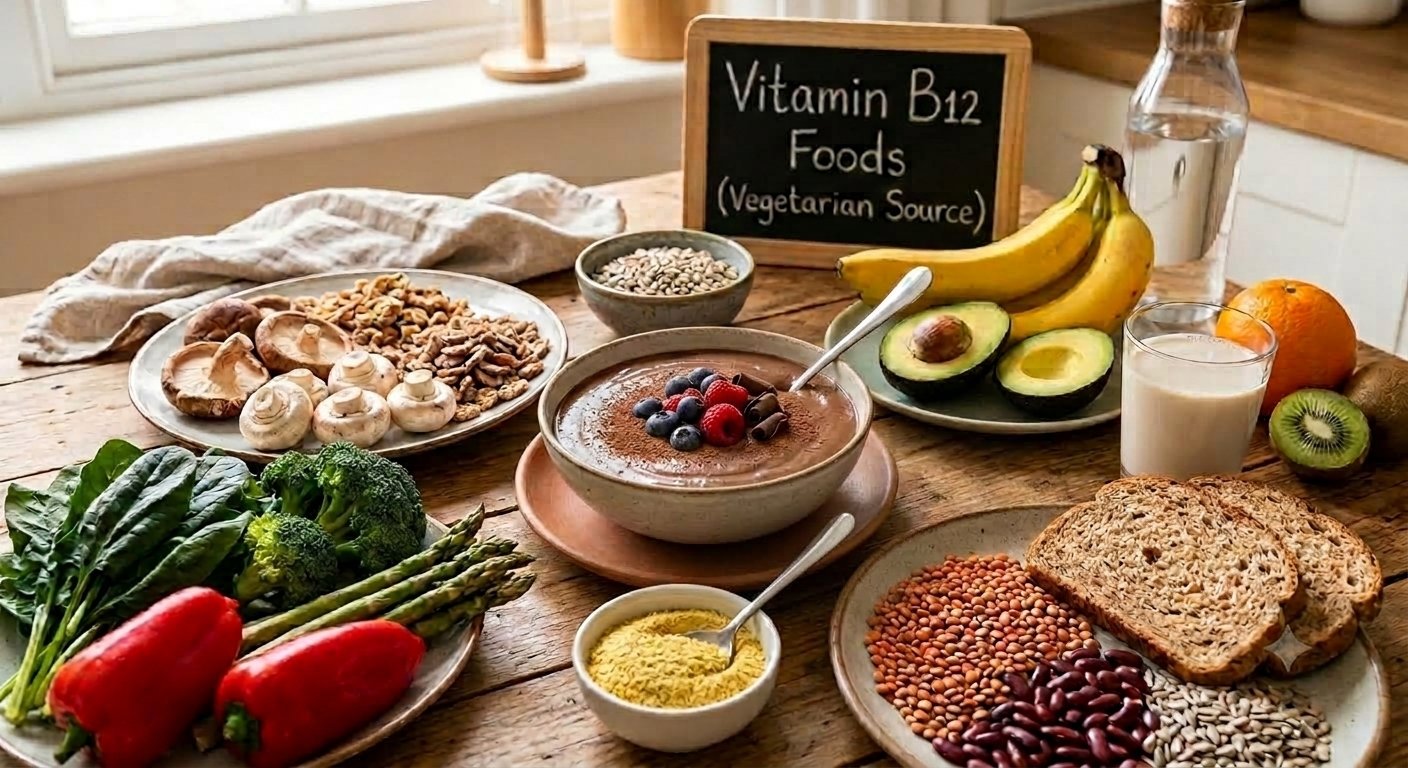
Vitamin B12 is an essential nutrient that supports healthy red blood cells, nerve function, DNA production, and normal energy metabolism. Yet, many people may not get enough B12 from their regular diet, especially if they eat little or no animal-based food.
Knowing which Vitamin B12 Foods provide reliable amounts can make it easier to build a balanced diet. Which foods provide the most vitamin B12? Can vegetarians and vegans get enough? And do fruits, vegetables, or dry fruits actually contain this important vitamin?
Why Does Your Body Need Vitamin B12?
Your body relies on vitamin B12 for several essential functions. It helps produce healthy red blood cells, supports the nervous system, and contributes to DNA production. B12 also supports the normal process of converting food into energy.
A lack of B12 may develop slowly, so the early signs can be easy to miss. Some people may experience tiredness, weakness, pale skin, numbness, tingling, balance problems, or changes in memory and concentration.
Because the body can store vitamin B12 for a long time, deficiency may not appear immediately after intake becomes inadequate. This makes it important to include dependable vitamin B12 foods regularly, particularly when following a restricted diet.
What Food Is Highest in Vitamin B12?
Many naturally high-B12 foods are found in meat, seafood, eggs, and dairy products. Liver and shellfish are particularly concentrated sources, while fish, meat, eggs, and dairy products can also provide useful amounts.
If you are looking for rich B12 foods, some of the most useful choices include:
-
Beef liver: One of the richest natural sources of B12.
-
Clams and shellfish: Very high in B12 and also provide iron.
-
Sardines: Provide B12 along with protein and healthy fats.
-
Salmon: A useful source of B12, protein, and omega-3 fats.
-
Beef: Provides B12, protein, and iron.
-
Eggs: A convenient B12 source for people who eat them.
-
Milk and dairy: Easy everyday sources for many vegetarians.
-
Fortified cereals: Can provide added B12 and may suit vegetarians and vegans.
-
Fortified plant milk: A useful option when B12 has been added.
If you are also interested in understanding food additives and reading food labels, learning what food contains red 40 can help you become more aware of what is in packaged foods. The amount of B12 can vary depending on the food, serving size, brand, and preparation. When choosing packaged foods, check the nutrition label to see how much B12 they provide.
Can Vegetarians Get Enough B12 From Food?
Yes, many vegetarians can get enough B12 from their diet, depending on which foods they eat. People who consume eggs and dairy have more natural options than those who avoid all animal-derived foods.
Useful b12 foods for vegetarian diets include:
-
Eggs
-
Milk
-
Yogurt
-
Cheese
-
Fortified breakfast cereals
-
Fortified plant-based milk
-
Fortified nutritional yeast
For people searching for Vitamin B12 foods vegetarian Indian options, milk, curd, paneer, cheese, and eggs can be practical choices when they fit their dietary preferences.
However, being vegetarian does not automatically guarantee adequate B12. If your diet contains few reliable vitamin B12 foods, fortified foods or supplements may be needed.
Can Vegans Get Enough B12 Without Animal Foods?
Vegans can get enough B12, but ordinary plant foods are generally not dependable natural sources. This means a vegan diet requires more attention to fortified foods and, when appropriate, B12 supplements.
Some vitamin B12 foods vegan options include fortified plant milk, fortified breakfast cereals, nutritional yeast, and other foods with added B12.
Always check the nutrition label because not every plant-based product contains B12. For example, Greek yogurt is not vegan but can suit people who eat dairy. You can also explore keto diet greek yogurt to see how it fits into different diets.
Do Fruits, Vegetables, or Dry Fruits Actually Contain B12?
This is one of the most common sources of confusion about B12. Most fruits and vegetables do not naturally provide meaningful amounts of vitamin B12.
Therefore, searches for b12 foods, vegetables, fruits, or Vitamin B12 vegetables and fruits can create unrealistic expectations. Unlike vitamin C or folate, B12 is not naturally abundant in ordinary fruits and vegetables.
The same applies to dry fruits. Almonds, raisins, dates, walnuts, and other dried fruits can provide fiber, minerals, healthy fats, or other nutrients, but they should not be considered reliable B12 sources. So, if you are searching for Vitamin B12 rich dry fruits, remember that dry fruits are not a dependable way to meet your B12 requirement. Fortified foods are a better plant-based option.
Which Foods Are Rich in Both B12 and Iron?
Some animal foods provide both vitamin B12 and iron, making them useful sources of multiple nutrients.
Examples include:
-
Liver
-
Beef
-
Shellfish
-
Sardines
-
Other fish
-
Eggs
Plant foods such as lentils, beans, tofu, spinach, and seeds can provide iron, but they generally do not provide reliable B12. People following vegetarian or vegan diets may therefore need to obtain these nutrients from different food sources.
Eating a varied diet is more useful than depending on a single food to meet every nutritional need.
Which Symptoms May Point to a Vitamin B12 Deficiency?
Because B12 deficiency may progress gradually, its symptoms can differ from person to person. Common signs include:
-
Persistent tiredness or weakness
-
Pale skin
-
Numbness or tingling
-
Muscle weakness
-
Balance problems
-
A sore or swollen tongue
-
Memory or concentration changes
-
Shortness of breath associated with anemia
People sometimes search phrases such as “Vitamin B12 deficiency ruined my life” when dealing with persistent symptoms. These symptoms do not necessarily mean you have a B12 deficiency, so testing may be needed for confirmation.
Can Vitamin B12 Deficiency Be a Sign of Cancer?
Vitamin B12 deficiency itself is not a specific sign of cancer. There are many more common explanations for low B12, including inadequate dietary intake, absorption problems, pernicious anemia, gastrointestinal conditions, and certain medications.
Some illnesses or cancer treatments can affect nutrient absorption or B12 levels, which is why unexplained or persistent deficiency should be properly evaluated.
Fatigue and similar symptoms can have many causes, so they should not automatically be linked to a serious illness. Understanding topics such as junk food vs healthy food can also help you make more balanced everyday food choices.
How Much B12 Does Your Body Need Every Day?
Most adults need about 2.4 micrograms (mcg) of vitamin B12 per day. Requirements are slightly higher during pregnancy and breastfeeding. Your needs may vary depending on age, diet, health conditions, medications, and your body’s ability to absorb B12. Rather than focusing on one “superfood,” aim to include reliable vitamin B12 foods regularly. People who eat few or no animal products may need fortified foods or supplements to maintain adequate intake
Final Thoughts
Vitamin B12 is important for healthy blood cells, nerves, and normal body functions. Fish, meat, eggs, and dairy are reliable sources, while fortified foods can help vegetarians and vegans meet their needs. Fruits, vegetables, and dry fruits provide other nutrients but are not reliable B12 sources. If you have deficiency symptoms or eat few vitamin B12 foods, talk to a healthcare professional about your diet and testing.
FAQ
1. What food is highest in B12?
Liver and certain shellfish are among the richest natural sources of vitamin B12. Fish, meat, eggs, and dairy products can also provide useful amounts.
2. Are there vitamin B12 foods for vegetarians?
Yes. Eggs and dairy products can provide B12 for many vegetarians. Fortified cereals, plant milks, and nutritional yeast can also be useful.
3. Can vegans get enough B12?
Yes. Vegans can obtain B12 from fortified foods and appropriately used supplements. Ordinary fruits and vegetables are not reliable natural B12 sources.
4. Do fruits and vegetables contain vitamin B12?
Most fruits and vegetables do not naturally contain meaningful amounts of B12. Fortified foods are a more dependable plant-based source.
5. What are B12 deficiency foods to avoid?
There is no universal list of B12 deficiency foods to avoid. Instead, focus on reliable B12 sources and avoid depending on foods that contain little or no B12.
Reference
https://my.clevelandclinic.org/health/diseases/22831-vitamin-b12-deficiency
https://ods.od.nih.gov/factsheets/VitaminB12-HealthProfessional/
0 200

No Comments