
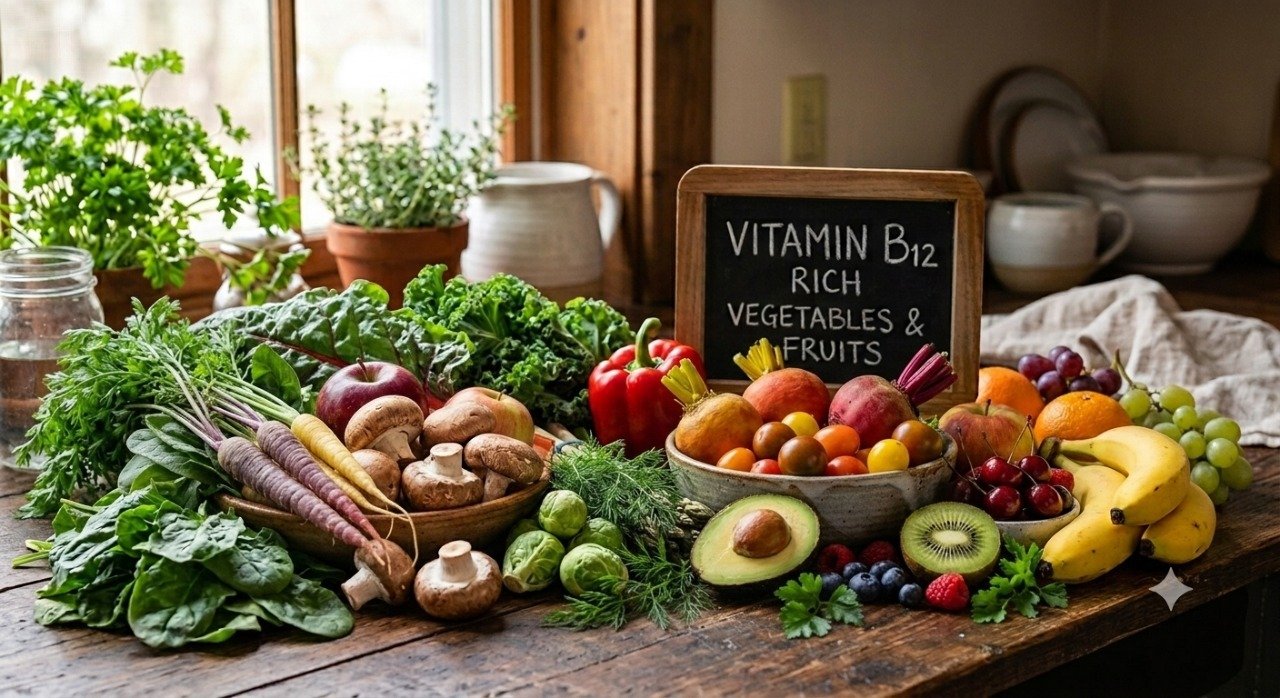
Vitamin B12 Vegetables and Fruits is a topic worth exploring if you want to maintain a balanced diet and understand where this essential nutrient comes from. Vitamin B12 supports red blood cell formation, nerve function, and DNA production. However, many people assume that ordinary fruits and vegetables provide enough of this vitamin, which is not usually the case. Understanding which foods contain B12 can help you make better dietary choices.
Why Does Your Body Need Vitamin B12?
Vitamin B12 is an essential nutrient that helps your body perform several important functions. Choosing suitable vitamin B12 foods can help you include reliable sources of this nutrient in your daily diet.
Some important benefits of vitamin B12 include:
-
Red blood cell production: Helps form healthy red blood cells and supports oxygen transport.
-
Nerve health: Helps maintain normal nerve function.
-
Energy production: Vitamin B12 helps the body process nutrients and supports normal energy metabolism.
-
DNA production: Supports the formation of genetic material in your cells.
-
Brain function: Contributes to normal neurological function.
Vitamin B12 also plays a role in maintaining healthy blood cells and preventing certain types of anemia associated with deficiency.
Do Vegetables and Fruits Naturally Contain Vitamin B12?
Most ordinary fruits and vegetables do not naturally contain meaningful amounts of vitamin B12. Unlike some other nutrients, B12 is produced by certain microorganisms rather than by plants themselves.
People searching for food vitamin B12 sources should understand that plant foods are not generally dependable sources unless they are fortified.
For example:
-
Apples, bananas, and oranges provide fiber and other nutrients but are not reliable sources of B12.
-
Spinach, carrots, and broccoli contain useful vitamins and minerals but generally provide little or no B12.
-
Fortified breakfast cereals and certain plant-based milk products may contain added vitamin B12.
Checking nutrition labels can help you identify fortified foods that provide this nutrient.
Which Vegetables Are Linked to Vitamin B12?
Vegetables contribute valuable nutrients to meals, but most varieties cannot supply the amount of vitamin B12 your body requires. Some fermented foods and algae products are discussed as potential sources, but their B12 content and usability can vary considerably.
Here are vegetables worth including for their other nutritional benefits:
-
Spinach: Provides folate, fiber, and other essential nutrients.
-
Broccoli: Contains vitamin C, fiber, and several plant compounds.
-
Mushrooms: Their nutritional composition varies by species and growing conditions, so they should not be treated as a dependable source of vitamin B12.
-
Beetroot: Provides folate and other beneficial plant compounds.
These foods support a balanced diet, but they should not replace dependable B12 sources. Nutritious vitamin B12 vegetables may still provide too little B12 to meet your daily needs.
Can Fruits Provide Vitamin B12?
Fruits are valuable sources of fiber, antioxidants, and vitamins, but most do not naturally provide vitamin B12.
Bananas, apples, oranges, berries, and avocados can contribute to a nutritious diet. However, eating more fruit alone will not reliably correct low B12 levels.
People also search for vitamin B12 rich dry fruits, such as almonds, cashews, raisins, and dates. These foods provide healthy fats, minerals, fiber, or natural carbohydrates, but they are not dependable natural sources of vitamin B12.
Include fruits and dry fruits in your meals for their broader nutritional value rather than relying on them to meet your B12 requirements.
Where Can Vegetarians and Vegans Find Vitamin B12?
People who avoid animal products need to plan their meals carefully to ensure they obtain vitamin B12 from reliable sources.
Useful options include:
-
Fortified breakfast cereals: Some varieties contain added vitamin B12.
-
Fortified plant-based milk: Soy, oat, or almond milk may provide B12 when fortified.
-
Fortified nutritional yeast: Certain products contain added B12; check the label.
-
Dairy products: Milk, yogurt, and cheese provide B12 for people who include dairy in their diet.
-
Eggs: Supply vitamin B12 for those who eat them.
These foods can help you build a balanced Vitamin B12 foods vegetarian diet. People following a vegan diet generally need fortified foods or a suitable supplement because unfortified plant foods are not reliable sources.
How Can You Meet Your Daily Vitamin B12 Needs?
A few simple habits can make it easier to include reliable B12 sources in your routine.
Adding sprouts to your meals can also provide useful nutrients, and learning about the benefits of eating sprouts daily
can give you more ideas for a balanced diet.
-
Add fortified cereal or milk to breakfast when suitable.
-
Include dairy products or eggs if they fit your eating pattern.
-
Read food labels to check the vitamin B12 content per serving.
-
Choose a variety of vegetables, fruits, whole grains, and protein-rich foods for overall nutrition.
These steps help you build a balanced vitamin B12 foods vegetarian diet without relying on foods that contain little or no B12.
Which Symptoms May Indicate Low Vitamin B12?
Vitamin B12 deficiency can develop when your body does not get enough of this nutrient or cannot absorb it properly. People following vegan diets without reliable B12 sources may have a higher risk.
Common symptoms of vitamin B12 deficiency include:
-
Unusual tiredness or weakness
-
Pale skin
-
Pins-and-needles sensations or reduced feeling in the fingers and toes
-
Difficulty concentrating
-
Balance problems
-
A sore or swollen tongue
These symptoms may develop gradually and can have other causes. Learning about deficiency-of-vitaminb12 can help you understand its possible causes, warning signs, and effects on overall health.
Conclusion
Vitamin B12 Vegetables and Fruits can help you understand the difference between nutritious plant foods and dependable B12 sources. Fruits and vegetables contribute fiber, vitamins, and minerals, but most do not naturally provide enough B12. Fortified foods, dairy products, eggs, and suitable supplements can help people meet their needs according to their dietary preferences. Choosing reliable sources and recognizing deficiency symptoms can support long-term health.
Frequently Asked Questions About Vitamin B12 Vegetables and Fruits
1. Which fruit contains the most vitamin B12?
Most ordinary fruits do not naturally contain meaningful amounts of vitamin B12. Fortified products are more reliable sources.
2. Which vegetables are rich in vitamin B12?
Most vegetables are not rich in B12. Fortified foods are generally more dependable, while vegetables remain important for other nutrients.
3. Can vegetarians get enough vitamin B12 from food?
Yes. Vegetarians may obtain B12 from dairy products, eggs, and fortified foods. Vegans usually need fortified foods or a suitable supplement.
4. Do bananas contain vitamin B12?
Bananas provide fiber, potassium, and other nutrients, but they are not a reliable source of vitamin B12.
5. What is the best plant-based source of vitamin B12?
Fortified breakfast cereals, fortified plant-based milk, and fortified nutritional yeast can provide B12. Check product labels because not all varieties are fortified.
Reference:
- https://ods.od.nih.gov/factsheets/VitaminB12-HealthProfessional/
- https://pmc.ncbi.nlm.nih.gov/articles/PMC4042564/

No Comments