

Belly fat can be difficult to reduce, but regular exercise and healthy habits can support overall fitness. Belly Fat Exercises such as jumping jacks, planks, and crunches help strengthen your core and improve stamina. You can perform these simple movements at home without gym equipment. Here are seven exercises to add to your routine, including a practical stomach fat loss exercise approach.
What Causes Belly Fat?
Belly fat can develop for several reasons, and it is not always related to eating habits alone. Your lifestyle, daily activity, sleep, and natural body changes can all influence how your body stores fat.
Some common factors include:
-
Excess calorie intake: Regularly eating more calories than your body uses can contribute to fat gain.
-
Limited physical activity: Spending long periods sitting may reduce daily calorie expenditure.
-
Poor sleep: Inadequate sleep can influence hunger and appetite.
-
Stress: Ongoing stress may affect eating habits and hormone levels.
-
Age and hormonal changes: Changes in hormones and body composition can influence fat distribution.
-
Genetics: Family history can affect where your body tends to store fat.
Nutrition also plays an important role in overall health. Learn more about vitamin B12 deficiency and its possible signs.
For example, belly fat in women may be influenced by hormonal changes, pregnancy, menopause, and age. Understanding these factors can help you develop realistic fitness habits.
7 Best Belly Fat Exercises to Try at Home
These seven exercises combine cardio and core movements to strengthen your abdominal muscles, improve stamina, and support overall fitness. You can do them at home without gym equipment. Along with regular exercise, healthy eating and hydration habits are important; explore these tips about lemon water for weight loss to learn more about its role in a balanced routine.
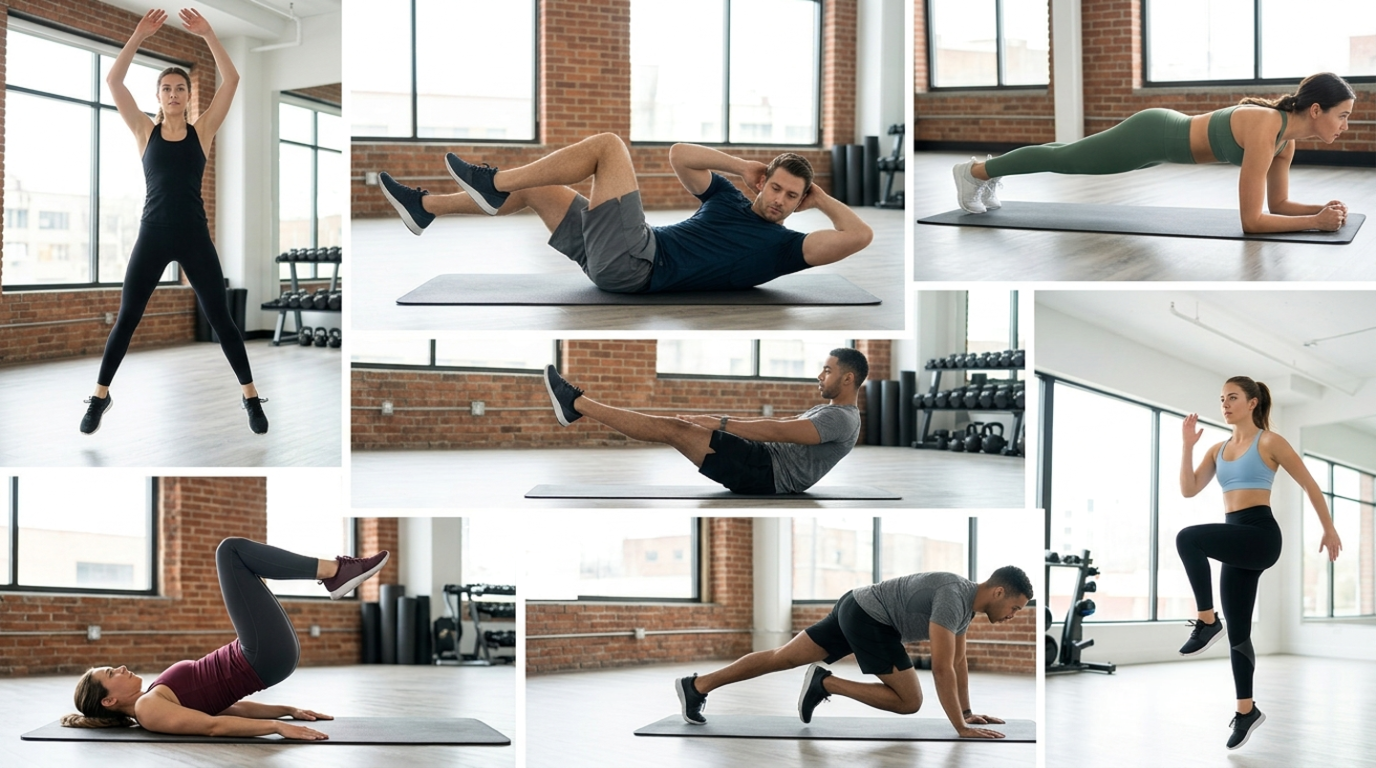
1. Jumping Jacks
Jumping jacks get your whole body moving while increasing your heart rate. They engage your legs, shoulders, and core.
How to do it:
-
Stand with your feet together.
-
Jump your feet apart while raising your arms overhead.
-
Jump back to the starting position.
Try: 2 sets of 20–30 repetitions.
2. Bicycle Crunches
Bicycle crunches are a popular abs exercise at home that engages your abdominal muscles and obliques.
How to do it:
-
Lie on your back with your hands behind your head.
-
Bring your right elbow toward your left knee.
-
Switch sides in a cycling motion.
Try: 2 sets of 12–15 repetitions per side.
3. Plank
Planks help build core strength while engaging your shoulders, back, and abdominal muscles.
How to do it:
-
Place your forearms on the floor.
-
Extend your legs behind you.
-
Keep your body straight and tighten your core.
Try: Hold for 15–30 seconds, 2–3 times.
4. Mountain Climbers
Mountain climbers combine cardio and core training. They also help improve coordination and stamina.
How to do it:
-
Start in a high plank position.
-
Bring one knee toward your chest.
-
Switch legs and continue alternating.
Try: 2 sets of 20–30 repetitions.
5. Reverse Crunches
Reverse crunches target your abdominal muscles and help strengthen your core, including its lower portion.
How to do it:
-
Keep your knees bent and lie flat on the floor.
-
Bring your knees toward your chest.
-
Gently lift your hips and lower them slowly.
Try: 2 sets of 10–12 repetitions.
6. Leg Raises
Leg raises are a useful lower abs workout that engages your abdominal muscles and hip flexors.
How to do it:
-
Lie on your back with your legs straight.
-
Slowly lift both legs.
-
Lower them without arching your lower back.
Try: 2 sets of 10–12 repetitions.
7. High Knees
High knees are a cardio exercise that increases your heart rate while engaging your legs and core.
How to do it:
-
Stand upright with your feet hip-width apart.
-
Lift one knee toward your waist.
-
Alternate legs quickly while moving your arms.
Try: 2 sets of 20–30 repetitions.
How to Perform Belly Fat Exercises Safely?
Doing exercises with the correct form is important for making your workout comfortable and effective. Keep these simple precautions in mind:
-
Warm up for 5–10 minutes before starting.
-
Begin with fewer repetitions if you are a beginner.
-
Maintain proper posture during each movement.
-
Avoid holding your breath while exercising.
-
Take short breaks between sets.
-
Stop if you experience pain or unusual discomfort.
You can gradually increase the intensity as your strength and stamina improve. A balanced diet also includes different sources of essential nutrients, such as vitamin B12 vegetables and fruits, along with other nutrient-rich foods.
How Often Should You Do These Exercises?
Consistency matters more than completing too many repetitions in one session. A balanced weekly routine can help you stay active without making your workouts overwhelming.
A nutritious diet also supports an active lifestyle. Egg nutrition is worth considering when planning balanced meals, as eggs provide protein, vitamins, and minerals.
Consider this simple schedule:
-
Monday: Jumping jacks, planks, and bicycle crunches.
-
Tuesday: Mountain climbers and high knees.
-
Wednesday: Rest or light physical activity.
-
Thursday: Reverse crunches, leg raises, and planks.
-
Friday: Jumping jacks and mountain climbers.
-
Saturday: Repeat your preferred exercises.
-
Sunday: Rest and recovery.
Muscle recovery is also important when following a workout schedule. Factors such as hydration and muscle fatigue may contribute to muscle cramp at night. A good night’s sleep can also help your body recover.
Start with 15–20 minutes per session and adjust the duration according to your fitness level. Regular exercise to lose belly fat should be part of a balanced fitness routine that also includes other forms of physical activity.
Which Daily Habits Support Belly Fat Loss?
Exercise is only one part of a healthy routine. Your everyday choices also influence your overall fitness and body composition. Staying hydrated is another simple daily habit, and the benefits of lemon water include supporting fluid intake as part of a balanced lifestyle.
Here are some habits worth following:
-
Eat balanced meals: Include vegetables, fruits, whole grains, and protein-rich foods.
-
Watch portion sizes: Pay attention to how much you eat throughout the day.
-
Stay hydrated: Drink enough water to maintain normal body functions.
-
Get enough sleep: Maintain a consistent sleep schedule.
-
Stay physically active: Include regular movement in your daily routine.
-
Limit sugary drinks: Choose water and other unsweetened beverages more often.
A balanced diet also means getting essential nutrients from different food sources. Explore these vitamin B12 foods to learn about foods that can help meet your daily B12 needs.
If you are wondering how to lose belly fat, remember that combining regular exercise with balanced eating and consistent sleep is more useful than relying on one workout or a particular drink.
Conclusion
Building a stronger core and improving overall fitness takes consistency, patience, and healthy daily habits. The seven Belly Fat Exercises discussed above offer a simple way to add movement to your home workout routine without needing special equipment.
A balanced diet is also important for overall health. Include foods that provide essential nutrients, and explore these foods with B12 to discover different sources of vitamin B12.
Start with exercises that match your fitness level and gradually increase your activity. Remember, abdominal exercises strengthen your muscles, but they cannot target fat loss in one specific area.
Frequently Asked Questions About Belly Fat Exercises
1. Which exercise is best for reducing belly fat?
Jumping jacks, mountain climbers, and bicycle crunches are useful exercises to include in a fitness routine. Combining cardio and core-strengthening movements supports overall fitness.
2. Can I lose belly fat by exercising at home?
Yes. Home workouts can increase physical activity, strengthen muscles, and support overall fat loss when combined with balanced eating habits.
3. How many minutes should I exercise daily to reduce belly fat?
You can begin with 15–20 minutes of exercise and gradually increase your activity. Your ideal routine depends on your fitness level and overall activity.
4. Do belly fat exercises work without dieting?
Exercise supports fitness and calorie expenditure, but eating habits also influence body composition. Combining regular movement with balanced meals can support better results.
5. Can walking lose belly fat?
Walking can support overall fat loss by increasing daily physical activity and calorie expenditure. Brisk walking can be a useful addition to a balanced fitness routine.
References:
- https://pmc.ncbi.nlm.nih.gov/articles/PMC8290478/
- https://health.clevelandclinic.org/tips-for-losing-belly-fat
0 200

No Comments